Ace of Pentacles and Six of Pentacles Together in Tarot

- Arcana
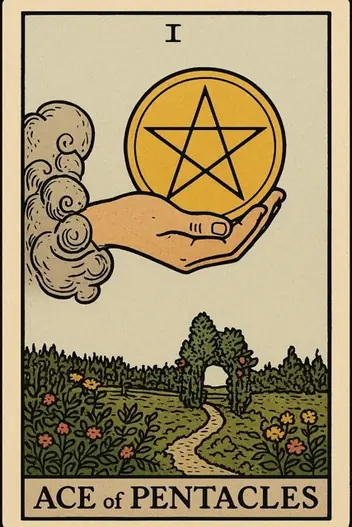
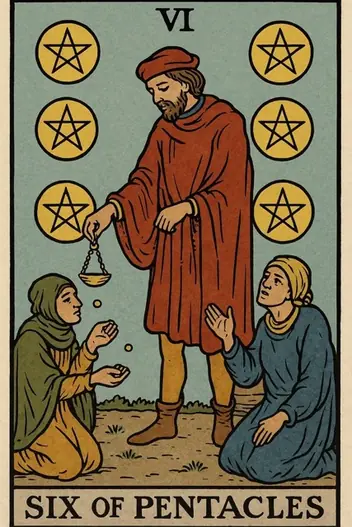
- Ace of Pentacles — Minor Arcana, Pentacles; Six of Pentacles — Minor Arcana, Pentacles
- Elements
- Ace of Pentacles — Earth; Six of Pentacles — Earth
- Elemental interaction
- Same element — energies intensify each other
- Numerology
- 1 + 6 = 7
When the Ace of Pentacles—the seed of material opportunity and tangible new beginnings—meets the Six of Pentacles—the archetype of generosity, reciprocity, and measured giving—we encounter a powerful psychological and strategic dynamic. This pairing is not about passive receiving or impulsive spending; it is about deliberate resource management and the conscious creation of value cycles. Psychologically, this combination activates the adult ego state: the part of you that can assess worth, set boundaries, and invest wisely in both yourself and others.
In practice, this duo asks a pragmatic question: What are you planting today that will yield a fair and sustainable harvest tomorrow? It bridges the gap between raw potential (Ace) and ethical distribution (Six), forcing a confrontation with your beliefs about worth, dependency, and power. Whether you are starting a new project, negotiating a relationship, or planning a financial strategy, this pairing demands you think in terms of systems, not transactions. It is a call to build structures where resources flow both ways, ensuring that your generosity does not become self-sacrifice and your ambition does not turn into greed.
What Do Ace of Pentacles and Six of Pentacles Mean Together?
The psychological core of the Ace of Pentacles and Six of Pentacles combination is the integration of initiative with equity. The Ace represents a fresh start—a seed of possibility in the material world, such as a job offer, a new investment, or the beginning of a savings plan. The Six of Pentacles then acts as the governor on this energy, introducing the need for balance. Together, they create a mindset where opportunity is not just seized, but managed. You are not just gathering resources; you are deciding how they will be shared, reinvested, or leveraged.
This pairing often reflects a maturation of financial or relational intelligence. The seeker is moving from a scarcity mindset (hoarding the Ace) or a reckless one (giving away the Ace) toward a strategic generosity. The key insight here is that true abundance is cyclical: you must give to receive, but you must also protect your seed capital. In Jungian terms, this is the Trickster archetype being tamed by the King—the raw, chaotic potential of new wealth is being channeled through a structured, ethical framework. Practically, this means you should audit your current exchanges: Are you giving more than you can afford? Are you receiving but failing to reciprocate? The answer will reveal your next move.
Bold text is used to highlight the most critical psychological shifts: The goal is not equality, but fairness. In any system—romantic, professional, or personal—this combination urges you to define what "fair" means for you, without guilt or entitlement. It is a call to act from a place of centered power, where your giving is a choice, not a compulsion.
Your pair is already on the table. Ask your question and draw the clarifying card
or simply focus on it
Career Meaning of Ace of Pentacles and Six of Pentacles
Strategic Opportunities:
Start small, scale smart. The Ace of Pentacles is a seed—do not over-extend. Use the Six of Pentacles’ energy to share resources strategically, like mentoring a junior colleague or investing in a low-risk partnership. This builds your reputation and network without draining your capital.
Strategic Opportunities:
Create a feedback loop. The best way to grow your career is to give value first. Offer a free audit, a sample of your work, or a thoughtful introduction. This triggers the Six of Pentacles’ reciprocity principle, often leading to paid opportunities.
Calculated Risks:
Avoid the "helper" trap. Do not give away your core services or time without a clear boundary. The shadow of the Six of Pentacles is enabling others to take advantage. If a client or boss expects free work, this combo says: renegotiate or walk away. Your seed capital (time, money, energy) is precious—protect it.
Professionally, this combination is a masterclass in resource allocation. The Ace of Pentacles represents a new income stream, a project, or a skill investment. The Six of Pentacles asks: How will you distribute the fruits of this labor? The psychological shift here is from scarcity to stewardship. You are not just a worker; you are a manager of your own economy. Bold financial warning: Do not confuse generosity with martyrdom. If you are in a negotiation, this pairing suggests you can afford to be generous—but only after you have secured your own base. For entrepreneurs, it is a sign to create tiered offerings: a free entry point (Six) that leads to a paid premium product (Ace). For employees, it might mean mentoring others (Six) to position yourself for a promotion (Ace). The golden rule: Give enough to build goodwill, but never so much that you deplete your reserves.
What Do Ace of Pentacles and Six of Pentacles Say About Love?
If you are single:
This combination suggests you are evaluating a new connection through a pragmatic lens. Look for signs of reciprocal effort, not just chemistry. Ask yourself: Does this person offer emotional or practical support that matches what I bring? Avoid one-sided dynamics where you feel like a charity case or a benefactor.
If you are in a relationship:
You may be in a phase of renegotiating roles and resources. This could involve finances, emotional labor, or time. The key is to communicate your needs clearly and ensure that the "give and take" does not tip into resentment or dependency.
In love, the Ace of Pentacles and Six of Pentacles reveal the infrastructure of a healthy partnership. This is not about grand romantic gestures; it is about the small, consistent acts of exchange that build trust. Psychologically, this pairing challenges the fantasy of unconditional love and replaces it with the reality of mutual investment. Bold relationship advice: Stop keeping score, but do track patterns. If you are always the one initiating plans, paying for dates, or offering emotional support while your partner remains passive, this combo warns of an imbalance that will erode the foundation. Conversely, if you are afraid to receive, you may be blocking intimacy by refusing to let others care for you. The healthiest path is conscious reciprocity: give freely, but only to those who demonstrate a willingness to match your effort in their own way.
Uncover hidden insights
Let our advanced Tarot system interpret these archetypes specifically for your personal path.
What If Ace of Pentacles or Six of Pentacles Appears Reversed?
When the cards are reversed, the constructive dynamic of exchange breaks down, bringing fears and cognitive distortions to the forefront.
If the Ace of Pentacles is Reversed:
Potential is blocked. This is the syndrome of missed opportunity or recklessness. You may receive an offer but reject it out of fear or pride. Or, conversely, invest resources in a clearly doomed project. Advice: do not make decisions while in a state of anxiety. An upside-down Ace is a call to check reality, not to follow impulse.
If the Six of Pentacles is Reversed:
A disruption of balance. This can be an internal resistance to giving or receiving help. Either you become greedy (unwilling to share), or, conversely, you fall into the position of an "eternal debtor," losing self-respect. Warning: avoid extremes — be neither a miser nor a beggar. Seek partnership, not hierarchy.
If BOTH are Reversed:
Complete imbalance. This is a situation where resources exist but are not working, and connections are broken. You may have money but lack the desire to spend or invest it. Or you give help, but it is not appreciated. A logical way to correct this: stop all financial flows and reassess your value system. You need to understand why you need resources at all and with whom you want to share them.
Shadow Side & Pitfalls
The shadow of the Ace of Pentacles and Six of Pentacles emerges when the seeker confuses exchange with obligation. One common pitfall is performative generosity—giving to others as a way to feel superior or to avoid facing your own financial or emotional poverty. This is the Toxic Benefactor archetype, where the giver secretly resents the recipient for needing help. On the flip side, the seeker may fall into learned helplessness, positioning themselves as the perpetual receiver, waiting for someone else to hand them the Ace. This is a cognitive bias toward passivity, where you avoid the risk of starting your own project by relying on others' resources.
Another shadow manifestation is hoarding the Ace out of fear. You have a great idea or a financial windfall, but you refuse to share or invest it because you are terrified of loss. This leads to stagnation and isolation. The Six of Pentacles requires flow; without it, the Ace becomes a dead weight. The psychological defense here is rationalization: "I'll share when I'm secure enough," but the truth is, security never comes from hoarding. Finally, poor judgment arises when the seeker ignores the context of the exchange. Giving money to a friend who is not ready to receive it, or accepting help from someone with strings attached, creates unconscious debt. The key is to check your motives: Are you giving to control, or receiving to avoid growth? If so, step back and reassess.
Synthesis: Strategic Conclusion
Constructive use of this pair's energy requires the courage to be vulnerable in asking and generous in giving. The Ace of Pentacles is your potential, which often requires an external impulse for activation. The Six of Pentacles is the social mechanism that provides this impulse. Your task is not to wait for a miracle, but to consciously enter the system of exchange.
The deep strategic advice is as follows: do not try to be both giver and receiver in the same context. Separate the roles. In business, you can be a mentor to juniors (the Six), but a student to seniors (their Ace). In relationships, you can give support in one area (e.g., emotional) and receive it in another (e.g., financial). This relieves tension and makes the exchange sustainable.
The key clarity this combination provides: your value lies not in how much you have, but in how you participate in exchange. If you feel stagnation, ask yourself: "What am I holding onto too tightly? Or conversely, what am I asking for but am too shy to offer in return?" The answer to this question will open the path to realizing the Ace of Pentacles.
Where to Go From Here
The Ace of Pentacles and Six of Pentacles together deliver a clear message: Your next step involves planting a seed with integrity and sharing it wisely. Whether you are starting a new venture, deepening a relationship, or managing your finances, the path forward requires a balance of ambition and generosity. But this is a general archetype—your specific situation, with its unique history and desires, will reveal the exact form this energy should take.
To unlock that personalized insight, use the Fortune Cards app. While this article gives you the map, the app helps you navigate your own terrain. It applies the wisdom of Tarot to your specific question, offering a deep, contextual interpretation of this exact combination. You can use it on the web or download it now to discover how the Ace of Pentacles and Six of Pentacles are manifesting in your life—and what to do about it.
Interpretation by the Fortune Cards editorial team, based on the Rider–Waite tradition and Jungian archetypes. About our methodology · Updated: 2026-08-26
Other Combinations with Ace of Pentacles
Other Combinations with Six of Pentacles
Explore Individual Card Meanings
Table of Contents
- What Do Ace of Pentacles and Six of Pentacles Mean Together?
- Career Meaning of Ace of Pentacles and Six of Pentacles
- What Do Ace of Pentacles and Six of Pentacles Say About Love?
- What If Ace of Pentacles or Six of Pentacles Appears Reversed?
- Shadow Side & Pitfalls
- Synthesis: Strategic Conclusion
- Where to Go From Here
Ready to find answers to your questions?
Start your first reading now and look at your situation with fresh clarity. The cards are ready to reveal deeper meaning.