The Emperor and Three of Swords Together in Tarot
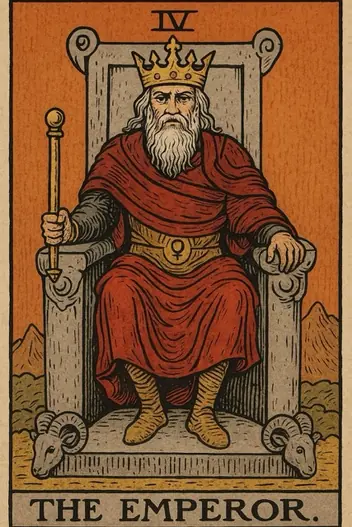

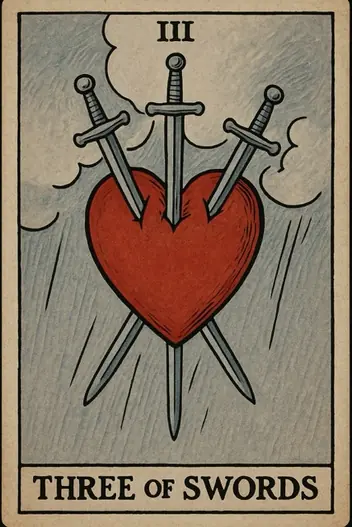
- Arcana
- The Emperor — Major Arcana; Three of Swords — Minor Arcana, Swords
- Elements
- The Emperor — Fire; Three of Swords — Air
- Elemental interaction
- Friendly elements — energies support each other
- Numerology
- 4 + 3 = 7
This combination represents a stark psychological collision: the structured, controlling energy of The Emperor meets the piercing, painful clarity of The Three of Swords. In real life, this often manifests as a leader—whether a boss, a partner, or your own inner critic—who must confront an uncomfortable truth that disrupts the established order. The Emperor seeks stability, rules, and command; the Three of Swords demands that a hidden wound be acknowledged and dissected. Together, they force a decision: either use authority to suppress the pain, or wield it strategically to heal the underlying fracture.
This pairing is not about passive suffering. It is about active confrontation with a reality that challenges your sense of control. The psychological tension here is high: you may feel torn between maintaining a rigid facade and allowing vulnerability to break through. The pragmatic lesson is that truth, even when painful, is a necessary tool for rebuilding a stronger foundation.
Core Dynamics & Interpretation
The core dynamic of The Emperor and Three of Swords is the clash between rational structure and emotional rupture. The Emperor archetype represents the need for order, discipline, and authority—a mindset that values systems, boundaries, and long-term stability. The Three of Swords, however, represents a sudden, sharp insight or betrayal that cuts through this carefully maintained structure. Psychologically, this is the moment when a cognitive dissonance becomes unbearable: the belief that you are in control is shattered by undeniable evidence to the contrary.
In practice, this combination often appears when a person is forced to make a difficult decision based on painful facts. For example, a manager may discover a trusted employee has been dishonest, requiring a termination that disrupts team morale. Or an individual may realize that a long-held personal rule (e.g., "I must never show weakness") is actually causing more harm than good. The key insight is that suppressing the pain is not an option—the Emperor’s strength must be used to manage the crisis, not deny it. This requires a shift from rigid control to strategic adaptation: accepting the loss, learning from the data, and restructuring the system to prevent recurrence.
The psychological state here is one of guarded vulnerability. You are aware of a deep hurt, but you refuse to let it destabilize your entire life. This is a sign of maturity, but it also carries the risk of emotional numbness if you over-identify with the Emperor’s need for control. The healthy path is to use the Three of Swords as a diagnostic tool: identify the exact source of the pain, assess its impact on your structure, and then make calibrated adjustments rather than sweeping changes.
Your pair is already on the table. Ask your question and draw the clarifying card
or simply focus on it
The Emperor and Three of Swords in Love Tarot
If you are single:
This combination suggests you may be attracted to someone who appears strong and authoritative, but you sense a hidden emotional wound beneath their surface. Proceed with caution: their need for control may mask an inability to be vulnerable. Prioritize clear communication over fantasy.
If you are in a relationship:
You are likely facing a painful truth about power dynamics in your partnership. This could be a breach of trust, a long-standing resentment, or a fundamental mismatch in values. The Emperor’s energy demands that you address this issue with directness and structure, not emotional outbursts.
In relationships, this pairing signals a critical juncture where authority and emotional honesty must coexist. The Emperor represents one partner’s desire for order—perhaps a need for clear roles, boundaries, or a decision-maker role. The Three of Swords reveals that this structure has been built on a lie or a hidden wound. For example, a partner who insists on being the sole financial decision-maker may be masking a fear of losing control, while the other partner feels silenced and betrayed.
The key to resolution is to treat the relationship as a system that needs repair. Schedule a calm, structured conversation where both parties can state their truths without blame. The Emperor’s discipline can help you stay focused on solutions rather than accusations. Bold relationship advice: Do not use authority to silence the pain. Instead, use it to create a safe container for the truth to be heard. If you can integrate the wound (Three of Swords) into a new, more flexible structure (Emperor), the relationship can emerge stronger. If not, this combination may signal the necessary end of a partnership that was never truly equal.
Ask your specific question
Don't rely on generic meanings. Get a customized reading tailored specifically to your energies.
Career and Finances
Strategic Opportunities:
Use this painful insight to renegotiate contracts or roles. A difficult truth about a project’s failure can lead to a more efficient workflow.
Strategic Opportunities:
The Emperor’s authority combined with the Three of Swords’ clarity makes you an excellent crisis manager. You can diagnose problems others avoid.
Calculated Risks:
Avoid publicly humiliating a subordinate or colleague based on the painful truth you’ve uncovered. Emotional discharge will harm your credibility.
In a professional context, this combination is a call to lead through truth, not force. You may be in a position of authority where you must deliver bad news—a layoff, a budget cut, or a failed product launch. The Emperor gives you the discipline to do this with composure, but the Three of Swords warns that the message will be painful to hear. Your job is to frame it as data for improvement, not as a personal attack.
Financially, this pair often indicates a necessary loss that clears the path for stability. For example, you might need to cut a losing investment, fire an underperforming employee, or close a division that is draining resources. The pain is real, but the Emperor’s strategic mind sees it as a cost of doing business. Bold financial warning: Do not ignore the Three of Swords’ signal. If you try to suppress the bad news with more control or denial, the losses will compound. Instead, use this moment to restructure your financial plan with a clear-eyed assessment of risks. The long-term payoff is a more resilient, honest foundation.
The Emperor and Three of Swords: Warning Signs
The shadow of this combination is authoritarian denial—using the Emperor’s power to silence the Three of Swords’ truth. This manifests as a leader who punishes the messenger, a partner who gaslights the other into doubting their pain, or an inner critic that dismisses your own feelings as weakness. The cognitive bias at play is confirmation bias: you only seek evidence that supports your existing structure, ignoring data that challenges it.
Another pitfall is emotional rigidity. You may recognize the pain but refuse to let it change anything, clinging to a dysfunctional system out of fear of chaos. This leads to a brittle stability that will eventually shatter under pressure. Self-sabotage can also occur if you over-identify with the victim role (Three of Swords) and reject any responsibility for your own authority. In this case, you may feel powerless and resentful, blaming external forces for your pain while refusing to take strategic action.
Reversed Positions: What Changes?
When cards appear reversed, the dynamic is distorted but does not disappear. This points to hidden, suppressed, or unrealized aspects of the conflict.
The Emperor Reversed:
Abuse of power or, conversely, a complete loss of control. Instead of structure, there is chaos and recklessness. The pain of the Three of Swords may result not from tyranny, but from weakness and an inability to manage the situation. Advice: acknowledge your incompetence or tyranny. Restore lost boundaries, not through aggression, but through honesty.
Three of Swords Reversed:
Resistance to pain, denial of the problem. The person refuses to see the obvious rupture or betrayal. Emotions are suppressed so deeply that it threatens psychosomatic illness. Warning: ignoring the conflict will not make it safer. It will transition into a chronic phase.
BOTH Reversed:
Complete imbalance and internal collapse. This indicates a state where a person can neither control the situation nor experience their feelings. This results in paralysis of will and emotional apathy. Logical method of correction: start small. Restore one simple routine (The Emperor) and allow yourself one minute of honest sadness (Three of Swords).
The Emperor and Three of Swords Combined Message
How can the Emperor's energy be constructively used to balance the Three of Swords? The answer is paradoxical: you must apply a structural approach not to suppressing the pain, but to integrating it. The Emperor is an excellent tool for creating a safe space where this pain can be experienced. Your task is to become the "Emperor of your soul," establishing firm boundaries against toxic external influences, while opening the inner floodgates for feelings.
The first step is to create a ritual for experiencing the pain. Set aside a specific time (e.g., 15 minutes a day) for consciously experiencing sadness, anger, or disappointment. Use the Emperor's logic to analyze these feelings, but not to devalue them. Ask yourself: "What structure can I create so that my pain becomes a source of strength, not weakness?" The second step is to make a decision based on facts, not emotions. The Emperor helps separate reality (the betrayal happened) from fantasies (I could have prevented it). Accept the fact of the loss and use your will to build a new, more resilient reality.
A deep strategic piece of advice: use the crisis as a bifurcation point. The Three of Swords destroys the old structure, while the Emperor provides you with the blueprints for a new one. Do not try to glue the broken pieces back together. Ask yourself: "What structure in my life (work, relationships, habits) was so fragile that it shattered from a single blow?" Now you have the power and clarity to build something more durable, founded on honesty with yourself. Your strength lies not in the absence of pain, but in the ability to forge order from the chaos it has created.
Where to Go From Here
The Emperor and Three of Swords together deliver a clear message: truth is the foundation of lasting power. You must face a painful reality with discipline and courage, not as a victim or a tyrant, but as a strategic leader of your own life. The wound is not your enemy—it is the data you need to build a stronger structure.
However, this archetypal guidance is only a starting point. The true power of Tarot lies in how these cards interact with your unique situation. To get a deeply personalized interpretation of The Emperor and Three of Swords for your specific question—whether about a relationship, career dilemma, or personal block—use the Fortune Cards app. You can access it on the web or download it now. It will analyze your exact context and provide actionable, psychologically grounded advice that no generic article can match.
Interpretation by the Fortune Cards editorial team, based on the Rider–Waite tradition and Jungian archetypes. About our methodology · Updated: 2026-08-26
Other Combinations with The Emperor
Other Combinations with Three of Swords
Explore Individual Card Meanings
Ready to find answers to your questions?
Start your first reading now and look at your situation with fresh clarity. The cards are ready to reveal deeper meaning.