The Emperor and Wheel of Fortune Tarot as Feelings
- Arcana
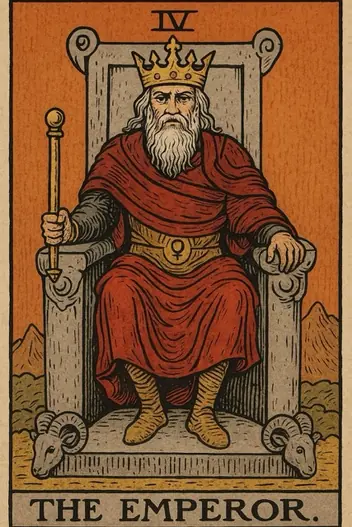
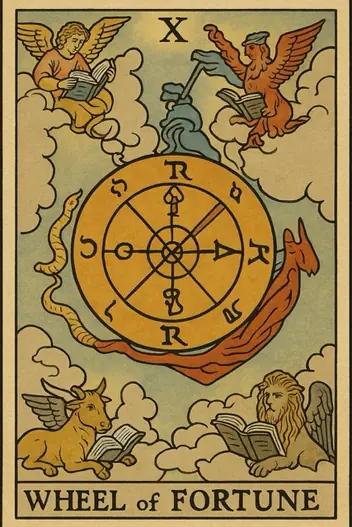
- The Emperor — Major Arcana; Wheel of Fortune — Major Arcana
- Elements
- The Emperor — Fire; Wheel of Fortune — Fire
- Elemental interaction
- Same element — energies intensify each other
- Numerology
- 4 + 10 = 14 → 5
When the rigid authority of The Emperor collides with the cyclical, unpredictable force of The Wheel of Fortune, you face a fundamental psychological tension: the desire to control versus the reality of change. The Emperor represents structure, discipline, and strategic mastery—the part of you that builds foundations, sets boundaries, and enforces order. The Wheel of Fortune, conversely, embodies fate, timing, and the inevitability of ups and downs—the external forces that no amount of planning can fully anticipate.
This combination is not about choosing one over the other. Instead, it demands a pragmatic integration: how to maintain your authority and direction when life throws you off course. The wise leader knows when to tighten the reins and when to adapt to the turning wheel. This article will analyze the psychological archetypes at play, offering concrete strategies for relationships, career, and personal growth.
The Emperor and Wheel of Fortune Combination Meaning
The core dynamic here is the tension between agency and surrender. The Emperor archetype pushes you to take decisive action, to build systems, and to enforce your will. The Wheel of Fortune reminds you that some variables are simply beyond your control—economic shifts, timing of opportunities, or the actions of others. The psychological maturity required is the ability to distinguish between what you can influence and what you must accept.
In practice, this means you are likely at a point where your established structures are being tested by external change. Perhaps a promotion is delayed, a relationship hits an unexpected snag, or a long-term plan requires a pivot. The healthy response is not to abandon your discipline but to apply it more strategically. The Emperor’s strength lies in adapting structures, not rigidly defending them. Think of a captain steering a ship through a storm: the wheel (fortune) turns, but the captain (emperor) must still hold the rudder and adjust the sails.
The key psychological insight is that this combination often signals a karmic lesson in humility. The seeker may feel they have everything under control, only to be reminded that life has its own timetable. The goal is to maintain your center of authority without becoming brittle or tyrannical. When you can hold both the need for order and the acceptance of change, you achieve a state of adaptive leadership.
Your pair is already on the table. Ask your question and draw the clarifying card
or simply focus on it
What Do The Emperor and Wheel of Fortune Say About Love?
If you are single:
This combination suggests a potential partner who is stable, ambitious, and values structure, but the timing of meeting them may feel delayed or orchestrated by fate. Don't force a connection; focus on building your own life foundation first.
If you are in a relationship:
You or your partner may be trying to impose too much control over the relationship's direction. The Wheel of Fortune indicates that external events (job changes, family issues) will test your bond—flexibility is essential.
In relationships, this pairing often points to a power struggle between stability and spontaneity. One person may be the "Emperor" type—logical, protective, and routine-oriented—while the other represents the "Wheel"—adaptable, social, and open to change. The healthiest dynamic is when both partners acknowledge that structure provides safety, but change provides growth. Bold advice: schedule regular "check-in" conversations to discuss how external pressures are affecting your dynamic. This prevents resentment from building. If you are the more controlling partner, practice letting go of small things to avoid micromanaging your partner's life. If you are the more spontaneous one, respect your partner's need for predictability by giving advance notice of changes.
Ask your specific question
Don't rely on generic meanings. Get a customized reading tailored specifically to your energies.
Career Meaning of The Emperor and Wheel of Fortune
Strategic Opportunities:
Leverage your current authority or expertise to capitalize on a cyclical market trend (e.g., a seasonal business cycle, a regulatory change, or a new industry standard).
Strategic Opportunities:
Use your organizational skills to create a contingency plan for the next downturn or disruption. This is a time to build resilience, not just growth.
Calculated Risks:
Avoid over-leveraging or making major investments based on short-term luck. The Wheel of Fortune can bring sudden windfalls, but the Emperor warns against mistaking luck for skill.
Professionally, this is a pivotal moment for decision-making. The Emperor’s influence suggests you have the authority, experience, or resources to shape your career path. However, the Wheel of Fortune introduces volatility. Bold strategic insight: you should not be reactive; instead, use your position to influence the timing of key moves. For example, if you're considering a job change, wait for a concrete offer (Emperor's structure) rather than quitting impulsively based on a "feeling" (Wheel's impulse). Financially, this is a time to balance risk and security. Bold warning: avoid gambling or speculative investments no matter how promising they seem. Instead, diversify your income streams and build an emergency fund that can weather the wheel's inevitable lows. The core advice is to act like a CEO of your own life: plan meticulously but remain adaptable to market shifts.
Shadow Side & Pitfalls
When this energy is blocked or distorted, the seeker falls into two primary traps: rigid control or reckless passivity. The shadow of The Emperor manifests as tyranny, micromanagement, and an inability to accept feedback. The shadow of The Wheel of Fortune shows up as fatalism, procrastination, and blaming external circumstances. Combined, these create a cognitive bias where you either overestimate your control or underestimate your agency.
For example, a manager might insist on a failing strategy (Emperor's stubbornness) while ignoring market shifts (Wheel's reality). Conversely, an employee might blame "bad luck" for missed promotions (Wheel's victimhood) while refusing to build skills or network (Emperor's discipline). The key pitfall is the illusion of total control—believing that you can outplan fate. This leads to anxiety when plans fail and resentment when life doesn't follow your script. Self-sabotage occurs when you become so afraid of losing control that you avoid taking any risks, missing opportunities that require a leap of faith. The antidote is radical acceptance: acknowledge that while you cannot control the wheel, you can control your response to its turns.
Reversed The Emperor and Wheel of Fortune Explained
The Emperor Reversed:
This represents an abuse of power or a complete loss of control. Instead of managing change, the person becomes a tyrant or, conversely, an apathetic observer. Advice: Abandon micromanagement. Your rigidity right now is a defensive reaction to fear. Acknowledge that you cannot control everything, and delegate some authority.
The Wheel of Fortune Reversed:
This signifies resistance to the inevitable. The person clings to the past, refusing to see that the situation has already changed. Warning: attempting to stop the Wheel will lead to injury. The strategically wiser move is to step off it while it's moving, rather than being thrown off.
Both Reversed:
Complete imbalance: chaos without structure and tyranny without flexibility. This is a crisis of governance. The logical way to correct this: start small. Restore one simple ritual or rule (The Emperor) to regain a foothold, and acknowledge that the old order is destroyed (The Wheel). Only then can you build a new system.
The Emperor and Wheel of Fortune Combined Message
Constructive use of this energy requires the courage to embrace uncertainty. Your task as the Emperor is not to predict the future, but to build a system resilient to any future. This means creating redundant resources (a financial cushion, backup plans, a broad network of contacts) that allow you to maneuver when the Wheel turns.
Strategically, the strongest move is to transform chaos into fuel for growth. When the Wheel of Fortune brings a crisis, use your power (the Emperor) to conduct an audit. Cut away weak links, strengthen the strong ones. This is not a time for defense — it is a time to seize new territory while competitors are disoriented. A deep strategic insight: do not try to "freeze" luck. Instead, create a "conveyor belt" to process it. If you are lucky — scale it. If you are unlucky — analyze and adapt.
The synthesis of these cards is mature leadership. It is the understanding that life is cyclical, but your response to these cycles is the only thing entirely within your power. Embrace the role of the architect who builds not on sand, but on rock, yet knows that even rock is subject to the erosion of time.
Your Next Step: Personal Context Matters
The Emperor and Wheel of Fortune together deliver a powerful message: build your castle on solid ground, but leave the windows open for the winds of change. Your authority and discipline are your greatest assets, but they must be applied with flexibility and humility. The core truth is that you are not a victim of fate, nor are you its master—you are a skilled navigator of life's cycles. Your next step is to audit your current structures: are they serving you, or are they just comfortable habits? Then, identify one area where you are resisting necessary change and take one small, structured action to adapt.
Ready to apply this to your specific situation? While this analysis provides a deep understanding of the archetypes, the true power of Tarot lies in personalized context. Your unique question—about a relationship, a career move, or a life transition—deserves a reading tailored to you. Use the Fortune Cards app to get an instant, AI-powered interpretation of The Emperor and Wheel Of Fortune for your exact query. Simply open the app, ask your question, and receive a deep, personalized reading that integrates your personal context and current life circumstances. Download the app on the web or from your app store today, and unlock the specific guidance you need right now.
Interpretation by the Fortune Cards editorial team, based on the Rider–Waite tradition and Jungian archetypes. About our methodology · Updated: 2026-08-26
Other Combinations with The Emperor
Other Combinations with Wheel of Fortune
Explore Individual Card Meanings
Table of Contents
- The Emperor and Wheel of Fortune Combination Meaning
- What Do The Emperor and Wheel of Fortune Say About Love?
- Career Meaning of The Emperor and Wheel of Fortune
- Shadow Side & Pitfalls
- Reversed The Emperor and Wheel of Fortune Explained
- The Emperor and Wheel of Fortune Combined Message
- Your Next Step: Personal Context Matters
Ready to find answers to your questions?
Start your first reading now and look at your situation with fresh clarity. The cards are ready to reveal deeper meaning.