Eight of Swords and Six of Pentacles Meaning in Tarot
- Arcana
- Eight of Swords — Minor Arcana, Swords; Six of Pentacles — Minor Arcana, Pentacles
- Elements
- Eight of Swords — Air; Six of Pentacles — Earth
- Elemental interaction
- Opposing elements — energies create tension
- Numerology
- 8 + 6 = 14 → 5
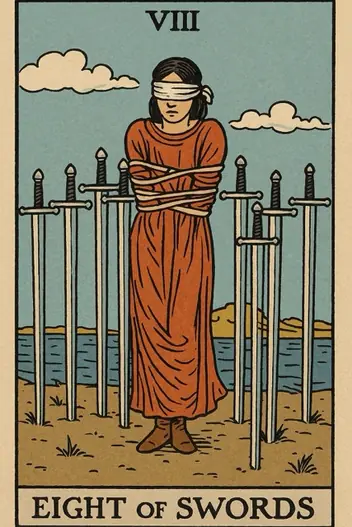
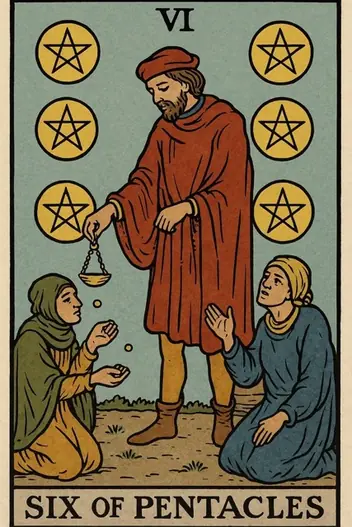
When the Eight of Swords meets the Six of Pentacles, we witness a psychological collision between self-imposed paralysis and conditional rescue. The Eight of Swords represents a mind trapped by its own limiting beliefs—feeling bound, blindfolded, and unable to see a way out. The Six of Pentacles, by contrast, depicts a figure of power distributing resources, often symbolizing generosity, patronage, or a transactional exchange of support. Together, they ask: Are you waiting for someone to untie you, or are you paying a hidden price for that help? This combination reveals a dynamic where the seeker’s perceived helplessness may attract aid, but at the cost of autonomy or self-respect.
At its core, this pairing is about power asymmetry and dependency. The Eight of Swords whispers, “You are stuck, and you cannot move alone.” The Six of Pentacles responds, “Then someone will help you—but on their terms.” The key insight here is that the seeker’s mental cage is often self-constructed, yet the solution offered by the Six of Pentacles can inadvertently reinforce that cage if the seeker remains passive. The pragmatic path forward involves recognizing when help is genuine versus when it comes with strings attached.
Eight of Swords and Six of Pentacles: How These Energies Interact
The psychological state created by the Eight of Swords and Six of Pentacles is one of learned helplessness mixed with strategic dependency. The seeker feels trapped (Eight of Swords) and may believe that the only escape is through external intervention (Six of Pentacles). This is a dangerous cognitive bias: the belief that one’s agency is completely surrendered to a benefactor. In Jungian terms, this activates the Puer Aeternus (eternal child) archetype, where the individual avoids adult responsibility by waiting for a rescuer.
However, the Six of Pentacles also carries an economic logic—it is about exchange, not charity. When these cards merge, the seeker must ask: What am I trading for this help? The answer often involves self-esteem, autonomy, or future obligation. For example, a person may accept financial aid from a controlling parent, trading immediate relief for long-term guilt or dependence. The interpretation here is not to reject all help, but to evaluate the terms of the transaction.
The real-world implication is a decision fork: either the seeker uses the offered resources as a stepping stone to rebuild their own agency, or they remain in the role of the perpetual recipient. The most important insight is that the Eight of Swords’ blindfold can only be removed by the seeker themselves—no external gift can do that for them.
Eight of Swords and Six of Pentacles in Love and Relationships
If you are single:
This combination suggests you may be attracting partners who offer support but subtly keep you dependent. Beware of relationships where you feel rescued but not empowered. The dynamic is often unbalanced—one person gives, the other feels indebted.
If you are in a relationship:
You or your partner may be playing a rescuer-victim script. One person feels stuck (Eight of Swords) while the other provides solutions (Six of Pentacles), creating a cycle of codependency.
In relationships, the Eight of Swords and Six of Pentacles reveal a power imbalance that feels safe but is ultimately restrictive. The partner in the Eight of Swords position may complain about feeling trapped, yet unconsciously rely on the other partner’s generosity to maintain the status quo. The Six of Pentacles partner, meanwhile, may derive self-worth from being the “fixer.” Bold relationship advice: Stop rescuing your partner from their own fears, and stop waiting to be saved from yours. Healthy love requires both parties to stand on equal ground. If you are the one giving, ask yourself if your support fosters growth or dependency. If you are the one receiving, ask if you are using your partner’s help as a crutch instead of a tool.
Your pair is already on the table. Ask your question and draw the clarifying card
or simply focus on it
Eight of Swords and Six of Pentacles for Career and Money
Strategic Opportunities:
Leverage mentorship or financial aid as a temporary scaffold, not a permanent structure. Use grants, loans, or guidance to build your own capacity.
Strategic Opportunities:
Negotiate clear terms for any support you receive. Document agreements to avoid future obligation creep.
Calculated Risks:
Avoid accepting help that comes with hidden control. If a boss or investor offers resources in exchange for your autonomy, it is a trap.
In a professional context, this card pair often appears when a person feels overwhelmed and under-resourced (Eight of Swords) but has an opportunity to receive assistance (Six of Pentacles). The pragmatic analysis here focuses on resource management and leverage. You may be offered a loan, a promotion with strings attached, or a partnership where you hold less power. Bold financial warning: Do not trade long-term equity for short-term relief. For example, accepting a low-interest loan from family may seem like a lifeline, but it can create emotional debt that outlasts the financial one. In negotiations, your position is weak if you appear desperate. Instead, frame your request for help as a collaborative investment—what can you offer in return, even if intangible (e.g., time, skills, future loyalty)? The key is to move from a “beggar” mindset to a “partner” mindset.
Ask your specific question
Don't rely on generic meanings. Get a customized reading tailored specifically to your energies.
Eight of Swords and Six of Pentacles Reversed Meaning
When the Eight of Swords is reversed, the illusion of the trap disappears, but the risk of impulsive recklessness emerges. You may reject help too abruptly, without assessing its true value. Advice: don't burn bridges. Before turning down an offer, pause and analyze it objectively.
If the Six of Pentacles is reversed, it points to internal resistance to accepting resources due to pride or fear of dependency. You may sabotage your own opportunities, believing you are "unworthy" or "can manage on your own." Advice: acknowledge that asking for help is a sign of strength, not weakness. Find at least one person you trust and ask them for concrete support.
When both cards are reversed, a complete imbalance arises: you are simultaneously paralyzed by fear and rejecting any support. This is a state of deep self-sabotage. A logical way to correct it is to start small. Take one concrete step: write down three things you can ask others for, and ask for them today. Break the cycle of isolation through action.
Negative Meaning of Eight of Swords and Six of Pentacles
The shadow of this combination is manipulative dependency and martyrdom. The seeker may unconsciously exaggerate their helplessness (Eight of Swords) to attract sympathy and resources (Six of Pentacles). This is a form of learned helplessness that becomes a strategy for control. In Jungian terms, this is the Victim archetype in its most toxic form—using vulnerability as a weapon. Alternatively, the giver (Six of Pentacles) may become a covert narcissist, offering help only to maintain power over the recipient. Cognitive biases at play include the sunk cost fallacy (staying in a bad situation because you’ve already invested in help) and the confirmation bias (seeking out advice that validates your helplessness). The greatest pitfall is mistaking patronage for partnership—when the seeker receives help but fails to build their own agency, they remain in a cage of their own making, now decorated with someone else’s generosity.
Eight of Swords and Six of Pentacles: The Combined Message
Constructive use of this combination's energy requires a conscious choice between fear and action. The Eight of Swords is the voice of your inner critic, telling you that you cannot cope. The Six of Pentacles is the reality where resources are already available. Your task is to neutralize cognitive distortions through rational analysis.
Strategic advice: begin with an audit of your beliefs. Write down three specific fears related to accepting help (for example, "I will be rejected," "I will owe something," "it's insincere"). Then, for each fear, find one objective piece of evidence that it is false. This will shatter the illusion of the Eight of Swords. After that, make a list of three people who can genuinely help you and write to them with a specific request. The Six of Pentacles demands action, not contemplation.
Ultimately, this combination teaches you the balance between autonomy and interdependence. You are not obligated to do everything alone, but neither should you become a passive recipient. Accept help as a resource for growth, not as confirmation of your weakness. Only then will you transform paralysis into movement, and fear into strength.
Applying This to Your Situation
The Eight of Swords and Six of Pentacles together deliver a clear message: You are more capable than you believe, but the help you receive today must be used to free yourself tomorrow. This is not a card pair of permanent dependency, but of strategic leverage. Your task is to identify which thoughts are binding you, and which resources can genuinely help you cut those ties—without creating new ones. The core message is about reclaiming your agency through mindful acceptance of support.
While this analysis provides the archetypal meaning, your specific situation may twist these energies in unique ways. To get a deep, personalized interpretation of this exact combination for your question, use the Fortune Cards app. Whether on the web or downloaded, the app applies Tarot to your unique context, revealing the hidden dynamics of your relationship, career, or personal block. Take the next step—let the cards speak directly to your life.
Interpretation by the Fortune Cards editorial team, based on the Rider–Waite tradition and Jungian archetypes. About our methodology · Updated: 2026-08-26
Other Combinations with Eight of Swords
Other Combinations with Six of Pentacles
Explore Individual Card Meanings
Table of Contents
- Eight of Swords and Six of Pentacles: How These Energies Interact
- Eight of Swords and Six of Pentacles in Love and Relationships
- Eight of Swords and Six of Pentacles for Career and Money
- Eight of Swords and Six of Pentacles Reversed Meaning
- Negative Meaning of Eight of Swords and Six of Pentacles
- Eight of Swords and Six of Pentacles: The Combined Message
- Applying This to Your Situation
Ready to find answers to your questions?
Start your first reading now and look at your situation with fresh clarity. The cards are ready to reveal deeper meaning.