Six of Wands and Page of Pentacles Together in Tarot
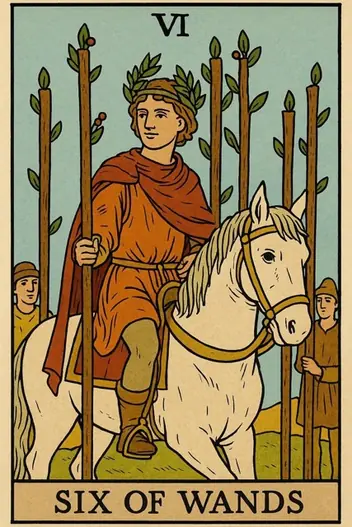
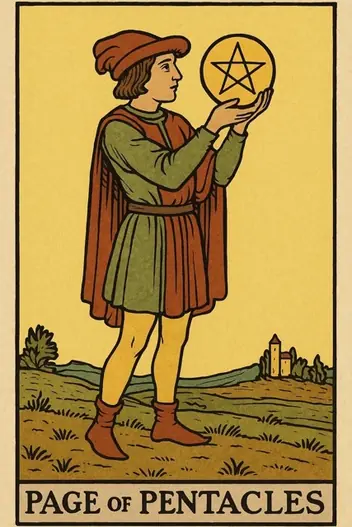
- Arcana
- Six of Wands — Minor Arcana, Wands; Page of Pentacles — Minor Arcana, Pentacles
- Elements
- Six of Wands — Fire; Page of Pentacles — Earth
- Elemental interaction
- Neutral elements — energies coexist without conflict
- Numerology
- 6 + 11 = 17 → 8
When the Six of Wands—a card of public recognition, victory, and social validation—meets the Page of Pentacles—an archetype of diligent study, practical ambition, and humble beginnings—we witness a fascinating psychological tension. The Six of Wands craves applause; the Page of Pentacles craves competence. Together, they ask: Can you accept praise for work that is still in its infancy? This combination often appears when a person receives external validation for a project, skill, or relationship that they themselves feel is unfinished or unrefined. The collision creates a strategic crossroads: either you become intoxicated by the spotlight and overpromise, or you use the acclaim as fuel for disciplined, long-term growth.
Psychologically, this pairing represents the integration of the ego (Six of Wands) with the student archetype (Page of Pentacles). The healthy response is gratitude without complacency. The shadow response is either impostor syndrome (feeling undeserving of the win) or hubris (believing the win is final). The core message is that recognition is not the destination—it is a checkpoint on a longer road of mastery.
What Do Six of Wands and Page of Pentacles Mean Together?
The central dynamic here is the balance between external validation and internal development. The Six of Wands brings a surge of confidence, often from a promotion, a successful project, or social approval. However, the Page of Pentacles insists that this is not the time to rest. Instead, it signals the beginning of a new learning phase that requires humility, patience, and hands-on effort. The psychological state is one of productive tension: you feel seen and celebrated, yet you also feel the weight of needing to prove yourself further. This is a powerful motivational state if managed correctly.
The key insight is that this combination warns against conflating a single victory with long-term mastery. The Page of Pentacles is a student—curious, detail-oriented, and unafraid of starting from the bottom. The Six of Wands is a victor—confident, visible, and commanding respect. When they merge, the message is clear: use your current recognition as a platform for disciplined learning, not as an excuse to stop growing. In practical terms, this might look like someone who wins an award but immediately enrolls in a course to deepen their expertise, or a couple who feels publicly admired but privately commits to therapy to strengthen their foundation.
Another critical layer is the risk of overcommitting. The Page of Pentacles is associated with new beginnings and financial planning, while the Six of Wands is about being in the spotlight. Together, they can indicate a person who is tempted to take on too many projects to maintain their image. The wise path is to say no to opportunities that don't align with your long-term skill-building goals, even if they offer immediate social status.
What Do Six of Wands and Page of Pentacles Say About Love?
If you are single:
This combination suggests you may be attracting attention from someone who admires your public persona or achievements, but the connection is still in a very early, experimental stage. Focus on whether this person is interested in you as a person, not just your image.
If you are in a relationship:
You or your partner may be receiving external praise (e.g., a career win, social popularity) that shifts the power dynamic. Use this as an opportunity to reconnect on a foundation of mutual growth, not competition.
In relationships, the Six of Wands and Page of Pentacles together often describe a dynamic where one partner is experiencing a moment of public success, while the other is quietly building something new—perhaps a new skill, a home project, or a personal goal. The psychological challenge is envy versus admiration. If the "winning" partner uses their status to dominate or dismiss, resentment will grow. If they instead invite their partner into the learning process—sharing the spotlight and encouraging the other's new venture—the relationship can deepen.
Key relationship advice:
Do not let external validation replace internal intimacy. The Page of Pentacles urges you to keep showing up with curiosity and effort, even after the applause fades. Plan practical, shared goals (like a savings plan for a trip or a joint hobby class) to ground your relationship in tangible growth rather than public perception. If you feel like an impostor in the relationship—like you don't deserve your partner's admiration—this card pair tells you to earn your confidence through consistent, small acts of care and learning, not by chasing more praise.
Your pair is already on the table. Ask your question and draw the clarifying card
or simply focus on it
Career Meaning of Six of Wands and Page of Pentacles
Strategic Opportunities:
Use a recent success (a completed project, a promotion, positive feedback) as leverage to negotiate for resources that support your long-term education—such as a training budget, a mentor, or time for skill development.
Strategic Opportunities:
This is an excellent time to document your process (write case studies, create portfolios, record lessons learned) to turn your current win into a repeatable system. The Page of Pentacles loves data and structure.
Calculated Risks:
Beware of overpromising on future deliverables based on the hype of your current success. Do not accept a role or project that requires expertise you haven't yet built. The Page of Pentacles warns that shortcuts lead to shoddy foundations.
Professionally, this card pair is a powerful indicator of a career inflection point. You have likely just received some form of recognition—a raise, a public award, a client testimonial, or a leadership role. However, the Page of Pentacles insists that this is the moment to double down on the fundamentals, not to coast. Strategically, this means investing your bonus or raise into certifications, tools, or a financial cushion that supports further learning. The psychology here is about shifting from a "proven expert" mindset to a "lifelong student" mindset, which paradoxically builds more sustainable authority.
Financial warning:
The Six of Wands can trigger lifestyle inflation—spending money to maintain a certain image. The Page of Pentacles, a frugal and practical card, advises against this. Bold your financial plan: allocate 70% of any windfall to savings or education, 20% to celebration, and 10% to generosity. This balanced approach prevents the hollow feeling of "buying" validation. Also, beware of the halo effect—assuming that because you succeeded in one area, you are immune to mistakes in another. The Page of Pentacles demands careful, detailed risk assessment for every new venture.
What If Six of Wands or Page of Pentacles Appears Reversed?
When cards appear in reversed positions, the constructive dynamic of "success through learning" breaks down.
If the Six of Wands is reversed:
This indicates blocked potential or public humiliation. The person may possess knowledge and diligence (Page), but receives no recognition. Warning: do not fall into perfectionism or wait to be appreciated "someday." You need to change your promotion strategy or environment, not study even more.
If the Page of Pentacles is reversed:
This is a sign of internal resistance to routine and discipline. Success (Six) has gone to their head, and the person refuses the "boring" work of building a foundation. Advice: acknowledge that without diligence, your triumph is a house of cards. Start small: get your finances or schedule in order.
If BOTH are reversed:
Complete imbalance. Sabotage of success through laziness or pride. You either do not want to learn, or cannot receive recognition. Logical way to correct: temporarily set aside ambitions (Six) and focus on restoring basic skills (Page). Return to the fundamentals.
Your unique Tarot reading
See how these cards interact with your destiny. Start a free personal reading now.
Shadow Side & Pitfalls
The shadow of the Six of Wands is narcissistic overidentification with success. When combined with the Page of Pentacles, this can manifest as a person who pretends to be a humble learner while secretly craving more applause. They may perform curiosity or diligence for social approval, rather than genuinely engaging in the messy process of learning. This leads to a surface-level mastery where the person knows just enough to look good, but not enough to solve real problems.
Another pitfall is analysis paralysis from perfectionism. The Page of Pentacles can become obsessive about details, and the Six of Wands can make the person terrified of making a mistake that tarnishes their reputation. The result is a freeze response: you avoid starting new projects because you fear they won't be as successful as your last one. This is a form of self-sabotage through high standards. The cognitive bias at play is the sunk cost fallacy—believing that your past success must dictate your future path, when in reality, you are allowed to start over as a beginner in a new field.
Finally, there is the risk of exploiting others for personal gain. The Six of Wands can tempt you to take credit for team efforts, while the Page of Pentacles (in its shadow) can be used to justify micromanagement or hoarding information. The antidote is radical transparency: acknowledge your team's contributions publicly, and use your position to mentor others, not to elevate yourself alone.
Six of Wands and Page of Pentacles Combined Message
How to constructively use the energy of the Six of Wands to balance or activate the Page of Pentacles? The key lies in cyclicality. Perceive your current success not as a peak, but as a plateau offering a view of the next mountain. The energy of triumph (Six of Wands) should become the fuel for your next learning cycle (Page).
Your strategic task is to institutionalize your success. If the Six of Wands has granted you power and influence, use them to create a system, rules, or a school that will work for you. In this context, the Page of Pentacles is not merely a student but the architect of future stability. Do not just celebrate the victory — document it, analyze it, and create educational materials based on it for others.
This synthesis gives birth to the archetype of the "Wise Leader" — one who not only leads others to victory but also nurtures the next generation. Your next step is not to chase new recognition, but to ask yourself: "What system of knowledge or resources can I leave behind?". The answer to this question will be your true victory.
Your Next Step: Personal Context Matters
The Six of Wands and Page of Pentacles together deliver a clear, pragmatic message: Accept the applause, but don't let it define you. Your current victory is a platform, not a pedestal. The real work begins now—learning the next skill, refining your craft, and building a foundation that can sustain future success. Whether in love or career, the healthiest response is to feel grateful for recognition while staying grounded in the humble, curious energy of a student.
To unlock the full meaning of this combination for your specific situation, use the Fortune Cards app. While this article explains the general archetypes, the true power of Tarot lies in its personalization. The app allows you to input your exact question—about a relationship, a career decision, or a personal challenge—and receive a deep, nuanced interpretation of the Six of Wands and Page of Pentacles tailored to your unique context. Try it now on the web or download the app to get the clarity you need to turn your recognition into lasting growth.
Interpretation by the Fortune Cards editorial team, based on the Rider–Waite tradition and Jungian archetypes. About our methodology · Updated: 2026-08-26
Other Combinations with Six of Wands
Other Combinations with Page of Pentacles
Explore Individual Card Meanings
Table of Contents
- What Do Six of Wands and Page of Pentacles Mean Together?
- What Do Six of Wands and Page of Pentacles Say About Love?
- Career Meaning of Six of Wands and Page of Pentacles
- What If Six of Wands or Page of Pentacles Appears Reversed?
- Shadow Side & Pitfalls
- Six of Wands and Page of Pentacles Combined Message
- Your Next Step: Personal Context Matters
Ready to find answers to your questions?
Start your first reading now and look at your situation with fresh clarity. The cards are ready to reveal deeper meaning.