Death and Page of Pentacles Together in Tarot
- Arcana
- Death — Major Arcana; Page of Pentacles — Minor Arcana, Pentacles
- Elements
- Death — Water; Page of Pentacles — Earth
- Elemental interaction
- Friendly elements — energies support each other
- Numerology
- 13 + 11 = 24 → 6
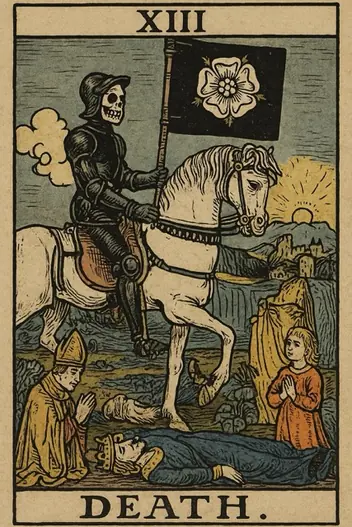
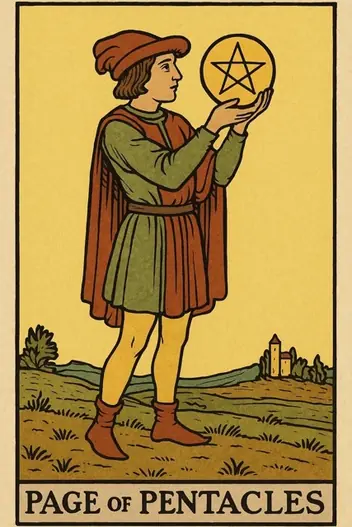
The collision of the Death card and the Page of Pentacles in a Tarot reading signals a profound psychological pivot: the conscious termination of an old structure to make way for a new, tangible beginning. This is not a chaotic or emotional ending; it is a calculated, almost surgical, release. The Death card represents the archetype of transformation—a necessary psychological death of outdated habits, beliefs, or attachments. The Page of Pentacles, conversely, embodies the archetype of the focused student—curious, diligent, and grounded in the material world.
When these two energies merge, the message is clear: you are being asked to let go of a project, relationship, or mindset that has run its course in order to invest your energy into something that requires patient, practical effort. The emotional weight of the ending is offset by the intellectual excitement of a new learning curve. The challenge lies in managing the tension between the grief of loss and the discipline required to build something new from the ashes.
What Do Death and Page of Pentacles Mean Together?
At its core, this combination describes a transition from passive acceptance to active construction. The Death card forces you to confront what is no longer viable—whether it’s a career path, a financial habit, or a relationship dynamic. The Page of Pentacles then steps in, not with grand promises, but with a humble notebook and a willingness to learn. This is a deeply Jungian process of individuation: you must first die to the old persona before you can embody a more authentic, grounded version of yourself.
Psychologically, this pairing triggers a state of strategic grief. You may feel a sense of loss or disorientation, but it is accompanied by a clear, almost analytical awareness of what must come next. The Page’s energy prevents you from wallowing in the past; instead, it channels your emotional energy into concrete, measurable steps. This is not a time for grand gestures or impulsive decisions. The work ahead is incremental, requiring patience and a tolerance for ambiguity. You are learning to trust the process, even when the final outcome is still invisible.
The real-world implication is a call to audit your current commitments. Ask yourself: Which habits, relationships, or projects are draining your resources without offering growth? The Death card demands you cut these ties. The Page of Pentacles then asks: What new skill or craft can you begin to study today? The combination rewards those who can hold the paradox of endings and beginnings simultaneously, without rushing either phase.
Your pair is already on the table. Ask your question and draw the clarifying card
or simply focus on it
What Do Death and Page of Pentacles Say About Love?
If you are single:
This combination suggests you need to release an idealized version of a past partner or a fantasy relationship before you can attract someone who aligns with your current reality. Focus on practical compatibility, not emotional rescue.
If you are in a relationship:
The dynamic here is about transforming a stagnant pattern into a collaborative project. One partner may be ending a role (e.g., “the caretaker” or “the provider”) while the other begins to develop new skills or interests.
In relationships, this pairing often points to a power shift that feels uncomfortable but is ultimately necessary for growth. The Death card may represent the end of a specific phase—such as moving from dating to a committed partnership, or deciding to separate after prolonged unhappiness. The Page of Pentacles warns against rushing into a new relationship to fill the void. Instead, invest in your own personal development first. Bold advice: Use this time to learn a new skill or pursue a hobby that builds your self-esteem independently of your partner. For couples, this is a powerful signal to jointly enroll in a class, start a savings plan, or work on a shared project that requires discipline and mutual respect. The key is to avoid power struggles; the ending must be collaborative, not adversarial.
Uncover hidden insights
Let our advanced Tarot system interpret these archetypes specifically for your personal path.
Career Meaning of Death and Page of Pentacles
Strategic Opportunities:
Pivot to a new industry or role that requires you to learn a specific, marketable skill (e.g., data analysis, project management, trade certification).
Strategic Opportunities:
Restructure your financial habits by closing old accounts, paying off small debts, and opening a dedicated savings or investment account for a new goal.
Calculated Risks:
Do not quit your current job without a concrete plan. The Page of Pentacles thrives on step-by-step learning, not blind leaps. Avoid speculative investments or get-rich-quick schemes.
This is a pragmatic and sobering combination for career and finances. It does not promise immediate wealth or promotion; instead, it demands a strategic downsizing before any real growth can occur. The Death card may signal a department restructuring, a layoff, or the end of a long-term project. The Page of Pentacles advises you to view this as an opportunity to upskill rather than a personal failure. Bold financial warning: Do not use credit cards or loans to fund a new venture right now. The Page’s energy is about saving, budgeting, and learning the fundamentals. If you are considering a career change, this combination strongly favors apprenticeships, internships, or part-time courses over full-time commitments. The path to success is slow, deliberate, and built on a foundation of practical knowledge.
Shadow Side & Pitfalls
The shadow of Death and Page of Pentacles emerges when the seeker clings to the old structure out of fear, or conversely, romanticizes the new beginning without doing the necessary groundwork. The primary cognitive bias here is the sunk cost fallacy: staying in a dead-end job or relationship because you have already invested so much time or money. The Death card’s energy is blocked, leading to chronic dissatisfaction and passive resentment. Alternatively, the Page’s shadow manifests as analysis paralysis—endlessly researching, planning, and learning without ever taking action.
Another pitfall is intellectualizing grief. The seeker may focus so heavily on the practical steps (the Page) that they avoid processing the emotional loss (the Death). This leads to burnout or a hollow success. Self-sabotage can also appear as perfectionism: refusing to start a new project until you have “all the answers,” thus ensuring the old pattern remains unchanged. The antidote is to set a firm deadline for the ending and allow yourself a brief, structured mourning period before diving into the new work. The goal is not to eliminate fear, but to act in spite of it.
Reversed Positions: What Changes?
If Death is reversed and the Page of Pentacles is upright, this indicates blocked potential. You are resisting inevitable changes, clinging to a dying situation. This leads to energy depletion and financial losses. Advice: find an "anchor" in the form of a concrete task (e.g., clearing your desk or closing one old debt). This small action will unblock the flow.
If the Page of Pentacles is reversed and Death is upright, this speaks to internal resistance to learning. You know the old methods don't work, but you sabotage new beginnings through laziness or perfectionism. This manifests as "I'll start studying on Monday." Warning: procrastination here equals regression. Start with the simplest action right now.
If BOTH cards are reversed, this is complete imbalance. You are stuck between fear of the future and unwillingness to let go of the past. This is a state of paralysis of the will. The only way to fix this is to artificially create a "micro-death": voluntarily give up one habit or thing that is holding you back. Then take one micro-step: read one page of a textbook.
Synthesis: Strategic Conclusion
Constructive use of this card pair requires iron discipline and a clear vision of the ultimate goal. The energy of Death grants you permission to err — you have already lost the "old world," so you can experiment without fear. The Page of Pentacles gives you the tool for this experiment. Your strategy is to act like a scientist in a laboratory: formulate hypotheses, conduct small experiments, and record the results.
The key strategic advice: divide your life into three zones. The first zone is the "graveyard" (what you are letting go of). The second is the "workshop" (your learning and practice). The third is the "garden" (results that will appear in 6-12 months). Do not try to manage all zones simultaneously. Focus on the "workshop." Your main task for the coming month is to complete 30 small, concrete actions (e.g., 30 pages of a textbook, 30 minutes of practice, 3 phone calls). This is not magic; it is reprogramming neural pathways through repetition.
This synthesis provides clarity: you are not a victim of circumstances. You are an architect of destruction and a builder in one person. Embrace chaos as building material, and routine as a tool. Only in this way can something solid and real grow from the ashes of old structures.
Your Next Step: Personal Context Matters
The Death and Page of Pentacles combination ultimately asks you to trust the process of disciplined renewal. It is not a card of sudden transformation, but of patient reconstruction after a necessary collapse. The ending is real, but it is not the final word. Your next step is to identify what old pattern you are ready to release, and then commit to a single, small, practical action toward something new. This is the beginning of a long, rewarding journey—if you can stay grounded.
To truly understand how this combination applies to your specific situation—your unique relationship, career, or personal question—you need a personalized reading. Use the Fortune Cards app to get a deep, tailored interpretation of Death and Page of Pentacles for your exact context. The app analyzes your question and the surrounding cards to provide actionable, psychologically-informed guidance. Whether you are on the web or using the mobile app, you can unlock the specific message these archetypes have for you right now. Download Fortune Cards today and discover the next step on your path.
Interpretation by the Fortune Cards editorial team, based on the Rider–Waite tradition and Jungian archetypes. About our methodology · Updated: 2026-08-26
Other Combinations with Death
Other Combinations with Page of Pentacles
Explore Individual Card Meanings
Table of Contents
Ready to find answers to your questions?
Start your first reading now and look at your situation with fresh clarity. The cards are ready to reveal deeper meaning.