Death and King of Cups Together in Tarot
- Arcana
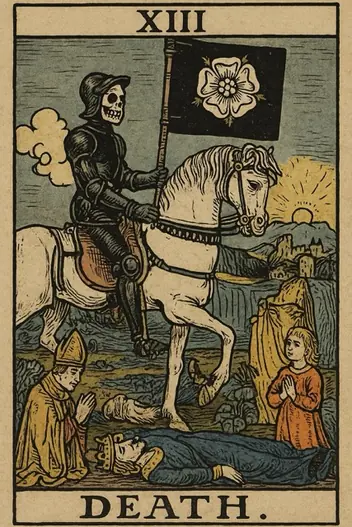
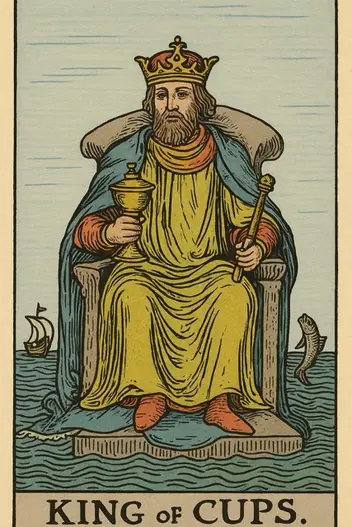
- Death — Major Arcana; King of Cups — Minor Arcana, Cups
- Elements
- Death — Water; King of Cups — Water
- Elemental interaction
- Same element — energies intensify each other
- Numerology
- 13 + 14 = 27 → 9
When the King of Cups meets Death, you face a paradox: the need to maintain emotional composure while navigating a total collapse of the old structure. This pairing pits the archetype of controlled feeling against the archetype of inevitable ending. The King of Cups represents mature emotional intelligence, empathy, and the ability to hold space for others without losing oneself. Death represents the termination of a cycle, the clearing of dead wood, and the painful necessity of letting go. Together, they create a psychological crucible: you must grieve without drowning, lead without clinging, and transform without losing your center.
This combination often appears when a person in a position of emotional authority—a therapist, a parent, a leader, or a partner—must oversee or endure a major transition. The core challenge is not to suppress the pain of loss, but to channel it into wisdom. The King of Cups does not avoid the storm; he steers the ship through it. The Death card demands you cut ties with what no longer serves you, but the King of Cups insists you do so with dignity, compassion, and strategic restraint. In practical terms, this means accepting that some relationships, roles, or beliefs must die, while simultaneously managing your own and others' emotional fallout with precision.
What Do Death and King of Cups Mean Together?
The psychological state created by Death and King of Cups is one of controlled surrender. You are asked to release control over outcomes while maintaining control over your emotional reactions. This is a high-level executive function: the ego's attachment to the past must dissolve, but the heart's capacity for empathy must remain intact. Think of a surgeon performing a life-saving operation—clinical detachment is required, but so is deep care for the patient. The Death card provides the scalpel; the King of Cups provides the steady hand.
In real-world terms, this combination signals a period where you must be the calmest person in the room during a crisis. Others may panic, resist change, or regress into denial. Your role is to model emotional stability without becoming emotionally numb. The King of Cups knows that true strength lies in feeling the weight of loss without being crushed by it. He also knows when to set a firm boundary—Death does not negotiate. If you are in a leadership position, this means making unpopular decisions with grace. If you are in a personal transformation, this means grieving the old self while actively building the new one.
The key insight here is that emotional intelligence is not about avoiding pain, but about metabolizing it effectively. The Death card forces you to confront what you have been avoiding—a relationship that has expired, a career that has plateaued, a belief that no longer fits. The King of Cups gives you the tools to process that confrontation without self-destruction. Together, they create a powerful synergy: you can let go of the past without letting go of your emotional maturity. This is the difference between a messy breakup and a conscious separation; between a chaotic job resignation and a strategic career pivot.
Your pair is already on the table. Ask your question and draw the clarifying card
or simply focus on it
Death and King of Cups in Love Tarot
If you are single:
This pairing suggests you are ready to release an old pattern of choosing partners who are emotionally unavailable or chaotic. The Death card clears the slate; the King of Cups asks you to lead with emotional clarity rather than romantic fantasy.
If you are in a relationship:
This combination signals a fundamental shift in the dynamic. One partner may need to end a toxic cycle, or the couple must navigate a major life transition—moving, illness, or career change—with emotional maturity as the guiding principle.
In relationship readings, Death and King of Cups often point to the end of a codependent pattern. The King of Cups represents the ability to love without losing oneself, while Death represents the necessary destruction of a structure that was built on fear or obligation. If you are in a relationship, this may mean having a difficult conversation about boundaries, or acknowledging that the relationship has run its course despite the love that remains. The King of Cups does not abandon ship; he ensures the disconnection is handled with respect and closure.
The most important relationship advice here is to avoid emotional martyrdom. Do not stay in a dying situation because you feel responsible for the other person's feelings. The King of Cups knows that true compassion sometimes means letting go. Death confirms that holding on only prolongs suffering. If you are single, this combination warns against rushing into a new relationship to avoid the pain of loss. Instead, use this energy to complete unfinished emotional business—forgive yourself, forgive an ex, or release an outdated ideal of what love should look like. The King of Cups is not cold; he is clear. He knows that the greatest gift you can give another person is your own emotional integrity.
What Do Death and King of Cups Indicate for Your Career?
Strategic Opportunities:
End a stagnant project or role to free up resources for something more aligned with your long-term vision. This is a time for strategic pruning.
Strategic Opportunities:
Take on a leadership role in a restructuring or downsizing process. Your ability to stay calm will be noticed and valued.
Calculated Risks:
Avoid making permanent financial decisions in the midst of emotional upheaval. The King of Cups warns against using money to soothe grief or buy control.
In the professional realm, Death and King of Cups is a powerful indicator of executive-level transformation. You may be asked to manage a layoff, close a department, or pivot your entire business model. The emotional weight of these decisions is significant, but the King of Cups equips you to handle them with strategic empathy. You can deliver bad news without being cruel, and you can make hard choices without losing your team's trust. This is not a time for impulsive career changes; it is a time for calculated endings.
A critical financial warning: do not use money to avoid emotional pain. The Death card often triggers a desire to control the uncontrollable—some people overspend on renovations, start expensive hobbies, or make risky investments to feel alive again. The King of Cups advises you to sit with the discomfort instead. Review your budget with detachment. Cut costs that are tied to an old identity (e.g., a membership you no longer use, a car payment for an image you no longer want). This combination favors liquidity and flexibility over attachment to assets. If you are in a negotiation, remember that the King of Cups wins through emotional leverage, not aggression. Stay calm, listen deeply, and know when to walk away.
Deepen your understanding
Find out exactly what this reading means for your current life situation with our oracle.
Reversed Positions: What Changes?
When cards appear reversed, the dynamic becomes distorted, creating traps.
Death Reversed:
This signifies blocked potential and a protracted crisis. You are clinging to the past, afraid of change. The energy of the King of Cups is directed not towards managing transitions, but towards suppressing fear. Advice: Acknowledge your resistance. Stop "keeping up appearances" and allow yourself to experience the fear of loss so it no longer controls you.
King of Cups Reversed:
This indicates emotional instability and loss of control. In a moment of crisis, you become not a leader, but a victim of your own feelings. Instead of wisely managing chaos, you either fall into hysterics or resort to manipulation. Warning: your decisions now are dictated by resentment and jealousy, not strategy. Regain your footing through structure and discipline.
Both Reversed:
Complete imbalance. Death without transformation and emotions without control. This is a state of paralysis, where change is frightening and managing it is impossible. The only logical way to rectify the situation is to consciously stop. Pause, abstain from all decisions for 48 hours. Return to basic needs (sleep, food, safety) to restore your capacity for rational analysis.
What Are the Risks of Death and King of Cups?
The shadow of this combination emerges when the seeker uses emotional control as a defense against feeling. The King of Cups can become the "wounded healer" who helps everyone but himself, or the "ice king" who suppresses grief until it erupts as passive-aggression or burnout. When Death is present, this suppression is dangerous—it turns a necessary ending into a prolonged, painful denial. You may find yourself maintaining a facade of calm while internally collapsing, or using your emotional intelligence to manipulate others into staying in a situation that needs to end.
Another pitfall is over-identifying with the caretaker role. The King of Cups may feel responsible for everyone's emotional experience during a transition, leading to exhaustion and resentment. Death demands that you let others feel their own pain without trying to fix it. If you are a leader, this means allowing your team to grieve without micromanaging their process. If you are in a relationship, this means letting your partner experience the full weight of the ending without cushioning it. The shadow here is not the ending itself, but the refusal to let the ending be felt.
Cognitive biases to watch for include loss aversion (clinging to a dying situation because you fear the pain of loss more than the pain of staying) and the sunk cost fallacy (staying because you have already invested so much time or emotion). The King of Cups offers a solution: emotional accounting. Ask yourself: "If I had no history with this person or project, would I choose to stay today?" If the answer is no, Death has already arrived. Your job is to honor that truth with dignity.
What Is the Overall Message of Death and King of Cups?
Constructive use of the energy of Death and the King of Cups requires you to assume the role of an "emotional surgeon." Your task is to perform an operation to remove what is obsolete, but to do so with maximum precision and minimal trauma for all involved. Do not try to avoid the pain or rush the process. Your strength lies in your ability to remain at the center of the storm and maintain clarity of mind.
The psychological secret of this combination is that control comes through letting go. You cannot manage change by trying to stop it. Instead, use your maturity to determine exactly what must leave, and create a dignified ritual of farewell to the past. This could be the completion of a project or the end of a relationship. The key is to do it consciously.
Your strategic conclusion: do not be afraid to be a "tough diplomat." Combine uncompromising commitment to your goals (Death) with flexibility in your means (King of Cups). Only in this way can you navigate transformation without losing yourself and while preserving valuable connections. Accept the fact that leadership in a crisis is a lonely path, but it is precisely this solitude that grants you the freedom to make the right decisions.
Your Next Step: Personal Context Matters
The core message of Death and King of Cups is that true emotional mastery requires the courage to let go. You can be both compassionate and decisive. You can grieve and lead. You can close a chapter without closing your heart. This combination does not promise that the transition will be easy, but it does promise that you have the inner resources to navigate it with integrity. The key is to trust your emotional intelligence as your compass, and to accept that some things must die so that something more authentic can be born.
To apply this wisdom to your specific situation, use the Fortune Cards app. While this article provides the general archetype, the real power of Tarot lies in personal context. Your unique question, your timing, and your other influencing cards matter deeply. The Fortune Cards app offers a deep, personalized interpretation of this exact combination for your specific question—whether it’s about love, career, or inner growth. You can use the app on the web or download it now to get the clarity and strategic insight you need to move forward with confidence.
Interpretation by the Fortune Cards editorial team, based on the Rider–Waite tradition and Jungian archetypes. About our methodology · Updated: 2026-08-26
Other Combinations with Death
Other Combinations with King of Cups
Explore Individual Card Meanings
Table of Contents
- What Do Death and King of Cups Mean Together?
- Death and King of Cups in Love Tarot
- What Do Death and King of Cups Indicate for Your Career?
- Reversed Positions: What Changes?
- What Are the Risks of Death and King of Cups?
- What Is the Overall Message of Death and King of Cups?
- Your Next Step: Personal Context Matters
Ready to find answers to your questions?
Start your first reading now and look at your situation with fresh clarity. The cards are ready to reveal deeper meaning.