Death and Six of Wands Tarot Combination
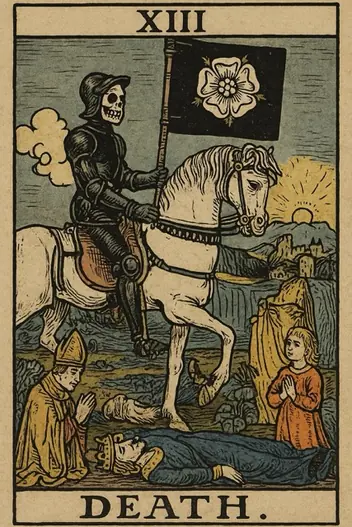

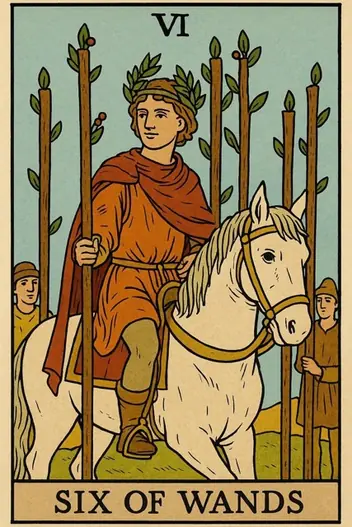
- Arcana
- Death — Major Arcana; Six of Wands — Minor Arcana, Wands
- Elements
- Death — Water; Six of Wands — Fire
- Elemental interaction
- Opposing elements — energies create tension
- Numerology
- 13 + 6 = 19 → 1
The collision of Death and the Six of Wands creates a fascinating tension. Death represents an inevitable, non-negotiable ending—a psychological or structural transformation that clears the ground. The Six of Wands, conversely, signals public recognition, victory, and the satisfaction of a completed goal. Together, they depict a scenario where you must let go of something valuable to achieve something even greater, or where your success is actually the catalyst for a necessary ending.
This combination is not about passive fate. It is about active strategic sacrifice. The pragmatic Jungian view here is that the ego must surrender its attachment to a specific outcome (Death) to receive a more authentic, lasting form of validation (Six of Wands). The question is not if change will happen, but how intelligently you can navigate the transition from loss to recognition.
Death and Six of Wands Together: Meaning
The core dynamic of Death and the Six of Wands is a paradox of power through surrender. Psychologically, this represents a cognitive reframe: you stop seeing an ending as a failure and start seeing it as the necessary price of admission for a public win. The Six of Wands brings the ego’s desire for applause, status, and completion. Death demands that you dismantle the very identity that built that success to make room for a more resilient one.
In practical terms, this combination often appears when a major project, relationship phase, or career milestone is concluding. The victory is real, but it is also a trap if you cling to it. The energy here pushes you to harvest the lessons and recognition from what you are ending, rather than trying to extend its life. The most powerful mindset is one of ruthless objectivity: “What about this success is no longer serving my long-term growth?” The strategic action is to accept the applause while quietly preparing the exit.
The shadow risk is hubris. You might mistake a temporary win for a permanent solution. Death ensures that even a victory parade has a destination. The psychological maturity required here is the ability to enjoy recognition without becoming dependent on it. This is a test of emotional detachment from external validation, a core Jungian principle for individuation.
Your pair is already on the table. Ask your question and draw the clarifying card
or simply focus on it
Death and Six of Wands for Career and Money
Strategic Opportunities:
Leverage a recent completion or layoff as a platform for a public speaking, consulting, or leadership role. The Death card’s ending creates a vacuum; the Six of Wands says you can fill it with authority.
Strategic Opportunities:
Use a successful project or promotion as leverage to negotiate a new role or company. The recognition you have earned is a currency for a strategic exit.
Calculated Risks:
Avoid overextending your public persona. Do not accept a high-profile role that requires you to ignore the emotional or structural changes still in process. The Death card warns that a hollow victory will collapse.
In career terms, this pairing is a strategic pivot point. You have the resume, the results, and the reputation (Six of Wands), but you must be willing to walk away from what is comfortable to pursue what is next. For entrepreneurs, this might mean selling a successful business to start a more innovative one. For employees, it means using a promotion as a springboard to a different industry or role. The financial warning is clear: Do not become the “king of a dying hill.” If the industry, company, or role is structurally declining (Death), no amount of personal success (Six of Wands) will save it. Bold the strategic tip: The smartest career move is to use your victory as a down payment on a completely new direction.
Death and Six of Wands Love Outcome
If you are single:
This combination suggests that a recent emotional closure or a conscious decision to stop a pattern (like chasing unavailable people) is about to yield unexpected, high-quality attention from someone new. Do not rush into a new relationship to avoid the grief of the ending.
If you are in a relationship:
This pair signals a power shift. One partner may be receiving a promotion, public accolade, or personal breakthrough that forces the relationship to renegotiate its identity. The relationship itself must “die” in its old form to accommodate the new success.
In relationships, Death and the Six of Wands often point to a transition from a codependent dynamic to a more individuated partnership. The victory (Six of Wands) might belong to one person—a career win, a creative breakthrough, or a personal transformation. The Death card asks the other partner to let go of envy, fear of being left behind, or the need to control the narrative. The key relationship advice here is to celebrate the individual win without making it a competition. If both partners can openly acknowledge the ending of the old, comfortable phase, they can build a stronger, more equal bond.
For singles, this is a powerful signal to use your recent closure as a foundation for authentic self-presentation. The Six of Wands suggests that when you stop trying to force a relationship, your newfound confidence attracts people who see your worth. Bold the psychological insight: The most attractive version of you is the one who has completed a painful chapter and is no longer desperate to rewrite it.
Ask your specific question
Don't rely on generic meanings. Get a customized reading tailored specifically to your energies.
Death and Six of Wands Reversed: What Changes?
When cards appear reversed, the constructive dynamic breaks down, giving way to resistance and falsehood.
Death Reversed:
You cling to what is outdated, refusing to let go of the past. This creates an internal tension that blocks recognition. Advice: You will not receive the laurels (Six of Wands) until you undergo purification (Death). Your stubbornness is perceived by others as weakness, not strength.
Six of Wands Reversed:
You have undergone a transformation but cannot receive recognition. This can indicate imposter syndrome or self-sabotage of your own success. You are afraid to step into the spotlight. Warning: Do not confuse modesty with cowardice. If you do not claim your achievements, your competitors will take them for themselves.
BOTH Reversed:
Complete imbalance. The person is in a state of "chronic crisis" with no hope of triumph. This can indicate depression or prolonged professional stagnation. Logical way to correct: You need an external authority (psychologist, coach) or a radical change of environment to break out of this cycle.
The Shadow Side of Death and Six of Wands
The shadow of Death and the Six of Wands is grandiose self-destruction. The seeker may believe they are so successful that they are immune to change. They might ignore the Death card’s warning signs—burnout, a toxic work culture, a dying relationship—because the Six of Wands’ applause is too intoxicating. This leads to a crash that is far more humiliating than a graceful exit would have been.
Another common cognitive bias is “survivorship bias.” The seeker may think, “I succeeded despite the chaos, so I can keep going.” In reality, the Death card is telling them that the chaos is the structure, and it is about to collapse. The shadow manifests as a refusal to grieve. Instead of acknowledging the loss inherent in any transition, they double down on the victory narrative. This creates a brittle ego that shatters when the limelight fades. The pragmatic warning is: if you feel you must “prove” your success to others, you are already in the shadow of the Six of Wands.
Overall Meaning of Death and Six of Wands
How can the energy of Death be used constructively to activate the Six of Wands? The key lies in accepting the temporary nature of success. Your task is not to build an eternal monument, but to win the current battle. Death grants you realism and an absence of illusions: you know that everything is fragile. The Six of Wands gives you the will to act. The synthesis of these energies gives birth to a pragmatic leader who is not afraid to "kill" a failed project, product, or relationship in order to immediately gain recognition for that bold decision.
A deep strategic counsel: Use the principle of "Creative Destruction" (Schumpeter). Do not wait for external circumstances to strike (Death). Strike yourself, but do it spectacularly (Six of Wands). If you feel that a department, business, or relationship has reached a dead end, initiate change. Act as the "forest ranger." Your reward (recognition, promotion, respect) will be proportional to the courage with which you carry out these changes. This is not cruelty—it is the highest form of responsibility for the system.
Your Next Step: Personal Context Matters
Death and the Six of Wands is a powerful call to strategic surrender. It asks you to accept that your greatest success may also be the thing you must leave behind. The core message is clear: you can have the recognition, but only if you are willing to let go of the identity that earned it. This is not a loss; it is a promotion to a higher level of authenticity.
While this article provides a deep analysis of the archetypal energies, the true interpretation depends on your unique situation. The Fortune Cards app offers a personalized reading for this exact combination. It analyzes the specific cards, your question, and the context of your life to give you a customized, actionable plan. Use the app on the web or download it today to get a deep, tailored interpretation of Death and the Six of Wands for your relationship, career, or personal growth question. Your next step is not in the cards—it is in how you apply them.
Interpretation by the Fortune Cards editorial team, based on the Rider–Waite tradition and Jungian archetypes. About our methodology · Updated: 2026-08-26
Other Combinations with Death
Other Combinations with Six of Wands
Explore Individual Card Meanings
Table of Contents
Ready to find answers to your questions?
Start your first reading now and look at your situation with fresh clarity. The cards are ready to reveal deeper meaning.