Love Tarot: The Devil and Ace of Pentacles
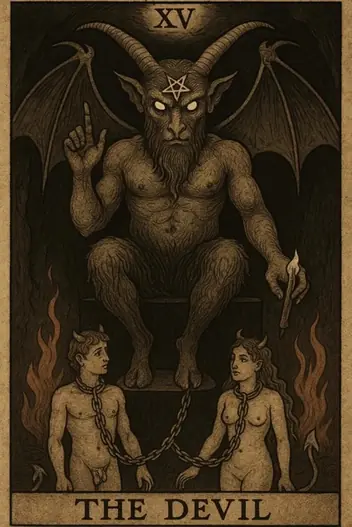

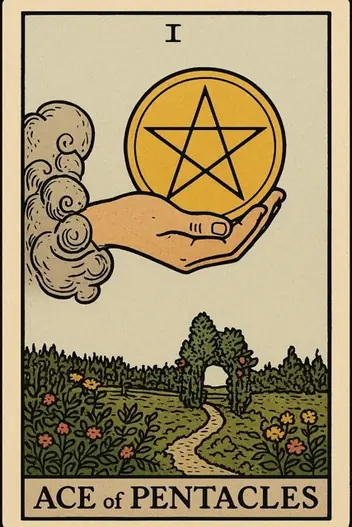
- Arcana
- The Devil — Major Arcana; Ace of Pentacles — Minor Arcana, Pentacles
- Elements
- The Devil — Earth; Ace of Pentacles — Earth
- Elemental interaction
- Same element — energies intensify each other
- Numerology
- 15 + 1 = 16 → 7
These two cards create a powerful tension between compulsive attachment and material potential. The Devil represents the shadow side of desire—addiction, obsession, and the chains of limiting beliefs. The Ace of Pentacles, by contrast, is a seed of tangible opportunity, a new venture, or a financial foundation. When they collide, you are not dealing with pure liberation or pure greed. You are dealing with a situation where your deepest, most unconscious drives are directly tied to a concrete, real-world outcome. The psychological state here is one of high-stakes fixation: you want the result so badly that you may overlook the cost to your autonomy.
This combination often appears when a person is at a crossroads of material gain versus personal freedom. The Ace offers a tempting reward—a job, a relationship, a financial windfall—but the Devil whispers that you must pay for it with your time, your values, or your emotional health. The key is not to reject the opportunity outright, but to recognize where your attachment becomes a chain. Pragmatically, this is a call to examine the fine print of any new offer, especially if it feels too good to be true.
What Do The Devil and Ace of Pentacles Mean Together?
The core dynamic is a psychological contract between instant gratification and long-term consequence. The Devil archetype operates on hedonic adaptation and fear of scarcity—you cling to what you have because you believe you cannot survive without it. The Ace of Pentacles, however, offers a genuine new beginning in the material world. This means the seeker is likely facing a choice that feels both liberating and imprisoning. For example, a lucrative job offer that requires unethical compromises, or a new relationship that feels intensely passionate but also controlling.
The mindset here is one of calculated entrapment. You are aware of the trap, yet you rationalize it because the payoff seems worth it. This is where cognitive dissonance becomes dangerous: you tell yourself you are in control, but the Devil card shows you are not. The healthy interpretation is to use the Ace as a mirror. Ask yourself: What is this opportunity offering me that I believe I cannot get elsewhere? The answer reveals the shadow belief—often related to self-worth, security, or fear of failure. The strategic move is to engage with the opportunity but set strict boundaries to prevent it from consuming your identity.
Your pair is already on the table. Ask your question and draw the clarifying card
or simply focus on it
The Devil and Ace of Pentacles in Love Tarot
If you are single:
This pair warns against projecting savior fantasies onto a materially successful or charismatic partner. You may be attracted to someone who offers status or security but who also triggers your deepest insecurities. Evaluate whether the attraction is genuine affection or a fix for a personal void.
If you are in a relationship:
This combination suggests a power imbalance where one partner controls resources—money, time, emotional validation—and the other feels dependent. The relationship may be held together by fear of losing comfort or stability, not by mutual respect.
In relationships, The Devil and Ace of Pentacles often signal a transactional dynamic masked as love. One partner may be providing material security while the other provides emotional or physical compliance. The psychological trap is that both parties believe they are getting what they want, yet neither feels truly free. The key relationship advice is to identify the unspoken contract. What are you trading for comfort? Is it your voice, your autonomy, your dreams? The Ace of Pentacles offers the chance to build a new foundation, but only if you are willing to renegotiate the terms of the partnership. If you are in a toxic dynamic, this card pair can indicate that leaving requires a significant material sacrifice—but staying may cost you your soul. Prioritize emotional intelligence over financial security when making your decision.
Career Meaning of The Devil and Ace of Pentacles
Strategic Opportunities:
A new job, investment, or business idea that aligns with your core skills. This is a chance to monetize a talent or obsession you have kept hidden. If you are passionate about something, this card says the market may reward it.
Strategic Opportunities:
A chance to break free from a dead-end situation by leveraging a specific resource—capital, a mentor, a contract. The Ace offers a fresh start, but you must act decisively.
Calculated Risks:
Avoid any deal that requires you to sacrifice your ethical standards or long-term reputation. The Devil’s shadow here is short-term greed. Watch for contracts with hidden clauses, partnerships that demand excessive control, or offers that pressure you to commit before you have all the facts.
In career and finance, this combination is a high-risk, high-reward scenario. You are likely facing a situation where the potential for financial gain is real, but the psychological cost is equally real. For example, a promotion that demands 80-hour weeks, or a business partnership with a charismatic but manipulative figure. The pragmatic approach is to conduct a cost-benefit analysis that includes your mental health. Bold financial warning: If the deal requires you to compromise your core values, it is not an Ace of Pentacles—it is a gilded cage. The best strategy is to accept the opportunity but negotiate for autonomy and clear boundaries upfront. Use the Ace’s energy to build something sustainable, not to feed an addiction to success.
Get a personalized interpretation
Unlock the combined meaning of your cards in the context of your unique question — for free.
Reversed Positions: What Changes?
Reversed cards shift the vector of energy from external to internal, creating space for reflection.
If The Devil is Reversed:
Blocked Potential or Recklessness. You have recognized your dependency (on work, a person, money), but you don't know how to proceed. Energy is spent not on achievement, but on struggling with yourself. Advice: Stop self-analysis. Take one concrete step toward liberation (for example, refuse overtime work this week).
If the Ace of Pentacles is Reversed:
Internal Resistance or Weakness. The opportunity exists, but you are afraid to use it due to fear of failure or feelings of guilt. You are refusing a resource that lies in the palm of your hand. Warning: This is a position of "false modesty." You do not take money, power, or love because you subconsciously believe you are unworthy of them.
If BOTH are Reversed:
Complete Dynamic Imbalance. You are simultaneously afraid to take resources and afraid to abandon old dependencies. This is a state of paralysis of the will. Logical Method of Correction: Small steps. Start small—take on a minor responsibility or make a small investment. Snap yourself out of your stupor with a concrete action.
The Devil and Ace of Pentacles: Warning Signs
The shadow manifestation of this pair is soul-selling. The seeker may become so fixated on the material prize that they ignore red flags, rationalize exploitation, or betray their own moral code. Cognitive biases such as sunk cost fallacy (I’ve already invested so much) and confirmation bias (only seeing evidence that supports the decision) are rampant here. The Devil’s shadow also manifests as addictive behavior around money, work, or a partner—chasing the next high of achievement or approval. The pitfall is self-sabotage through over-commitment: saying yes to everything because you fear missing out, then becoming resentful when you are trapped. The most dangerous thought pattern is: "I can handle it. I’ll stop later." This is the Devil’s lie. The Ace of Pentacles requires discipline, not desperation. If you feel a compulsive urgency to grab the opportunity without considering the cost, step back. Pause and assess your true motivations. Are you building a legacy, or are you feeding a hunger that will never be satisfied?
What Is the Overall Message of The Devil and Ace of Pentacles?
How can one constructively harness the energy of the Devil to balance the Ace of Pentacles? The answer lies in a conscious contract with oneself. The Devil is the archetype of the manager, not the slave driver. He demands clear rules and boundaries. Your task is not to deny your ambition and desire to possess resources, but to channel them into discipline without obsession.
Imagine the Ace of Pentacles as a seed, and the Devil as fertilizer. Without fertilizer, the seed will not sprout. But if you use too much fertilizer, you will burn the roots. Your strategy is the "80/20 Rule" for ambition. Direct 80% of your energy toward achieving the goal, using your obsession as fuel. But reserve 20% for reflection, rest, and "disconnecting" from the race. This reserve is your anchor, preventing you from drowning in the illusion of control.
Deep strategic advice:
Define your "red line" for yourself—the point after which you will stop, even if you haven't reached the goal. This could be a specific sum of money, time spent on the project, or a stress level. Knowing your "red line" transforms you from an obsessed executor into a strategist. You use the Devil as a tool, not becoming his hostage. In this paradigm, the Ace of Pentacles is not a reward for suffering, but the result of competent risk management.
Where to Go From Here
The core message of The Devil and Ace of Pentacles is this: You have a real opportunity, but it comes with a shadow price. You are not doomed to be trapped, nor are you free to act without consequence. The key is to engage with the material world while maintaining your psychological sovereignty. This combination asks you to be honest about what you truly value, and to refuse any deal that trades your freedom for comfort.
Your unique situation is the missing piece. This analysis provides the general archetype, but the real insight comes from applying it to your specific question—your career, your relationship, your financial decision. The Fortune Cards app is designed to do exactly that. You can use it on the web or download it to get a deep, personalized interpretation of this exact combination for your specific question right now. Stop guessing. Stop rationalizing. Get the clarity you need to make a strategic, soul-aligned choice.
Interpretation by the Fortune Cards editorial team, based on the Rider–Waite tradition and Jungian archetypes. About our methodology · Updated: 2026-08-26
Other Combinations with The Devil
Other Combinations with Ace of Pentacles
Explore Individual Card Meanings
Table of Contents
- What Do The Devil and Ace of Pentacles Mean Together?
- The Devil and Ace of Pentacles in Love Tarot
- Career Meaning of The Devil and Ace of Pentacles
- Reversed Positions: What Changes?
- The Devil and Ace of Pentacles: Warning Signs
- What Is the Overall Message of The Devil and Ace of Pentacles?
- Where to Go From Here
Ready to find answers to your questions?
Start your first reading now and look at your situation with fresh clarity. The cards are ready to reveal deeper meaning.