The Devil and Five of Swords Together in Tarot
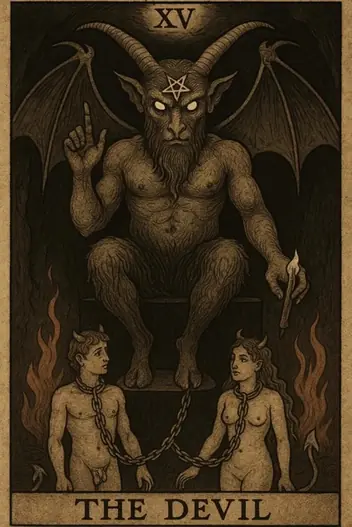

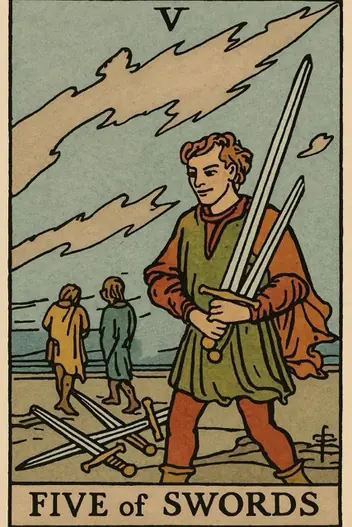
- Arcana
- The Devil — Major Arcana; Five of Swords — Minor Arcana, Swords
- Elements
- The Devil — Earth; Five of Swords — Air
- Elemental interaction
- Opposing elements — energies create tension
- Numerology
- 15 + 5 = 20 → 2
When the Devil and the Five of Swords appear together in a reading, you are confronting a high-stakes psychological battle between attachment and victory. The Devil represents bondage—to habits, desires, or toxic patterns—while the Five of Swords signals a conflict where winning comes at a severe cost. This pairing is rarely about simple external conflict; instead, it reveals an internal war where your ego, fear, and need for control push you toward Pyrrhic victories. The core question here is: Are you willing to destroy a part of yourself or your relationships to prove you are right? This combination demands ruthless honesty about what you truly value and what you are willing to lose.
Core Dynamics & Interpretation
The merger of the Devil and Five of Swords creates a psychological trap of zero-sum thinking. The Devil’s shadow—addiction, materialism, or obsessive attachment—fuels the Five of Swords’ combative energy, leading you to believe that someone must lose for you to win. This mindset is a classic cognitive distortion known as all-or-nothing thinking, where nuance is abandoned for a false sense of control. In practical terms, you may find yourself locked in a power struggle over money, status, or a relationship, unable to disengage because the Devil’s chains of pride or fear keep you fighting.
The key insight here is that the battle is often unnecessary. The Five of Swords is a card of hollow victory, and when paired with the Devil, it suggests that your opponent is not an external person but your own shadow self. You are projecting your insecurities onto others, creating conflicts that drain your resources and emotional energy. The real strategic move is to recognize the cost of winning—is the prize worth the isolation, guilt, or self-betrayal? This combination forces you to examine whether your need to be “right” is a mask for a deeper fear of losing control.
Career and Finances
Strategic Opportunities:
Reassess your competitive strategy. Are you fighting for a promotion, client, or project that is actually toxic for your growth? This pair can signal a chance to walk away from a “win” that will cost your reputation or peace of mind.
Strategic Opportunities:
Leverage your awareness of power dynamics. If you recognize a colleague is using underhanded tactics, you can choose to play a longer game—focus on building alliances and credibility rather than engaging in petty conflicts.
Calculated Risks:
Avoid any deal that feels coercive or unethical. The Devil and Five of Swords warn of financial traps, such as contracts with hidden clauses, loans with predatory terms, or partnerships based on leverage rather than mutual benefit.
In your professional life, this combination is a red flag for office politics and ethical compromises. You may be tempted to sabotage a rival, take credit for someone else’s work, or cut corners to get ahead. Bold warning: short-term wins here will damage your long-term reputation. The Five of Swords is the card of “winning the battle but losing the war.” Instead of focusing on defeating others, redirect your energy toward mastering your own skills and building a reputation for integrity. If you are in a negotiation, know your walk-away point—the Devil’s attachment to a specific outcome can blind you to better alternatives. Financially, this pair suggests a need to audit your debts, subscriptions, or material dependencies that may be draining your resources without your conscious awareness.
Your pair is already on the table. Ask your question and draw the clarifying card
or simply focus on it
The Devil and Five of Swords in Love Tarot
If you are single:
This pair warns against pursuing a connection based on intense chemistry or obsession rather than genuine compatibility. You may be drawn to someone who mirrors your own shadow traits—controlling, manipulative, or emotionally unavailable—and mistake this tension for passion.
If you are in a relationship:
You are likely in a power struggle where winning an argument has become more important than understanding your partner. The Devil’s grip on jealousy, possessiveness, or resentment is poisoning communication.
In relationships, this combination signals a toxic dynamic of manipulation and control. One partner may be using guilt, blame, or emotional blackmail to “win” conflicts, while the other feels trapped and defeated. The Five of Swords often leaves a bitter taste, even for the “victor.” Bold advice: stop keeping score. If you find yourself calculating who is right or wrong, you have already lost the relationship. The healthiest move is to disengage from the power struggle and ask: What am I afraid to lose here? Often, it is not the person but the illusion of control. Seek couples therapy or a neutral third party to break the cycle, as this pair rarely resolves without external intervention.
Reversed Positions: What Changes?
When cards appear reversed, their destructive energy is transformed, but not eliminated—it turns inward.
The Devil Reversed:
This indicates blocked obsession or a fear of one's own dark side. You may feel powerless but fail to act. Advice: Acknowledge your aggression and ambition instead of repressing them. This is the first step toward liberation.
Five of Swords Reversed:
Symbolizes defeat through surrender or internal resistance. You lost, not because of the opponent's strength, but due to your own passivity and fear of conflict. Warning: Do not confuse a tactical retreat with cowardice. Sometimes, refusing to fight is wisdom.
BOTH Reversed:
Complete imbalance. This is a state of toxic stagnation, where aggression is suppressed and dependency remains unconscious. You may suffer from depression, guilt, and a total loss of will. Corrective strategy: Immediate engagement with psychotherapy. A safe space is necessary to bring the shadows out and reclaim your agency.
Ask your specific question
Don't rely on generic meanings. Get a customized reading tailored specifically to your energies.
Shadow Side & Pitfalls
The shadow side of this combination is self-sabotage through compulsive conflict. The Devil’s chains can manifest as an addiction to drama, where you unconsciously pick fights to feel alive or in control. The Five of Swords then becomes a psychological crutch: you “win” the argument, but feel empty, guilty, or more isolated than before. This pattern often stems from a deep-seated belief that you are not worthy of peace or happiness, so you create chaos to confirm your negative self-image. Another common pitfall is projection: you accuse others of being controlling or manipulative, while ignoring your own similar behaviors. Beware of the cognitive bias known as the spotlight effect—you may overestimate how much others are watching or judging you, leading you to fight battles that don’t exist. The most dangerous outcome is a Pyrrhic victory where you achieve a goal (a promotion, a relationship, a financial gain) but at the cost of your values, mental health, or key relationships.
The Devil and Five of Swords Combined Message
How can the energy of this complex pair be used constructively? The key lies in sublimation. The Devil's energy (obsession, will, sexuality) must be directed not toward destroying others, but toward achieving an ambitious yet ethical goal. And the energy of the Five of Swords (mental sharpness, decisiveness) should be channeled into risk analysis and developing an uncompromising strategy.
Your task is to become an "ethical predator." Acknowledge your dark ambitions and desire for power, but use them as fuel for professional growth rather than for destroying relationships. For example, instead of manipulating a colleague, use your will to become so competent that your superiority is undeniable and objective.
Deep strategic advice: separate the essence of the conflict from its emotional coloring. Ask yourself: "What do I truly want to achieve?" If the answer is "victory at any cost," stop. If the answer is "achieving a concrete result that will improve my life," then use the Devil's aggression for focus and the Five of Swords' sharpness for precise strikes. Turn war into work, and obsession into discipline.
Applying This to Your Situation
The Devil and Five of Swords together deliver a stark message: you are fighting the wrong battle for the wrong reasons. The core lesson is to identify what truly binds you—be it pride, fear, or a toxic attachment—and to choose whether the victory you seek is worth the price. This combination is a call to step back, assess your motivations, and prioritize long-term peace over short-term control. The most powerful move you can make is to walk away from a fight that is not yours to win.
While this article provides the general archetype, the true meaning of The Devil and Five of Swords shifts dramatically based on your specific question and life context. The Fortune Cards app offers a deep, personalized Tarot reading that applies these insights directly to your unique situation. Whether you are navigating a relationship crisis, a career dilemma, or a personal growth challenge, the app can help you cut through the noise and find clarity. Use it on the web or download it now to get a precise, actionable interpretation of this combination for your exact question.
Interpretation by the Fortune Cards editorial team, based on the Rider–Waite tradition and Jungian archetypes. About our methodology · Updated: 2026-08-26
Other Combinations with The Devil
Other Combinations with Five of Swords
Explore Individual Card Meanings
Ready to find answers to your questions?
Start your first reading now and look at your situation with fresh clarity. The cards are ready to reveal deeper meaning.