The Hanged Man and Four of Cups Meaning in Tarot
- Arcana
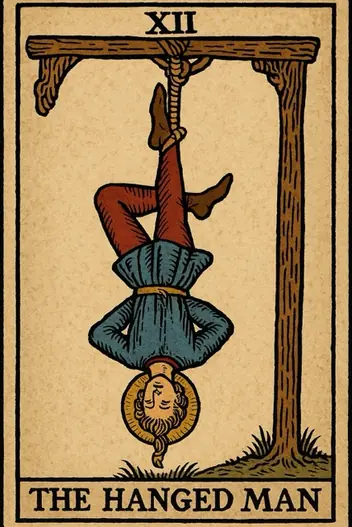
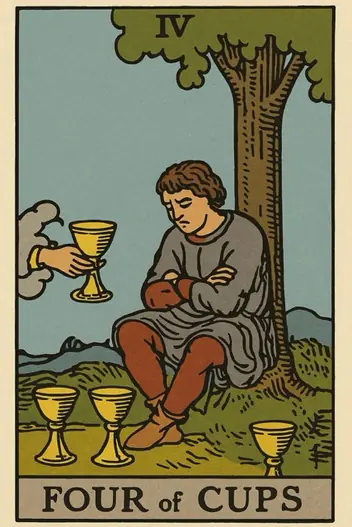
- The Hanged Man — Major Arcana; Four of Cups — Minor Arcana, Cups
- Elements
- The Hanged Man — Water; Four of Cups — Water
- Elemental interaction
- Same element — energies intensify each other
- Numerology
- 12 + 4 = 16 → 7
When the Hanged Man’s voluntary suspension collides with the Four of Cups’ emotional withdrawal, we encounter a state of profound psychological inertia. This is not a passive waiting period, but an active refusal to engage with opportunities because the seeker is trapped in a loop of rumination and discontent. The Hanged Man represents a necessary pause for perspective, while the Four of Cups signals a rejection of what’s being offered—often out of boredom, entitlement, or unrecognized depression. Together, they create a paradox: the seeker needs to stop, but has stopped in the wrong way.
The Hanged Man and Four of Cups: How These Energies Interact
The core dynamic here is a stalled psychological process where the seeker mistakes stagnation for enlightenment. The Hanged Man’s wisdom requires active introspection—a deliberate choice to see the world from a new angle. The Four of Cups, however, introduces apathy and emotional numbness, turning that suspension into a self-imposed prison. The seeker may feel they are “waiting for a sign,” but in reality, they are ignoring the signs already present.
This combination often manifests as a cognitive distortion where the seeker believes their suffering is noble or necessary. They may romanticize their own inertia, mistaking withdrawal for spiritual depth. The psychological risk is learned helplessness: the belief that no action will change the outcome, so why try? The pragmatic truth is that this pairing demands a brutal self-assessment: Are you pausing for growth, or are you hiding from discomfort?
The Hanged Man’s sacrifice is meant to be temporary, a strategic pause to gain clarity. The Four of Cups warns that this pause has become habitual avoidance. The key insight is that the solution is not to wait longer, but to change the quality of your waiting. Shift from passive suffering to active observation. Ask: “What am I refusing to see about my own choices?”
The Hanged Man and Four of Cups in Love and Relationships
If you are single:
This combination suggests you are rejecting potential partners before giving them a fair chance, often due to unrealistic expectations or unresolved past pain. The person you’re waiting for doesn’t exist—stop idealizing the absence.
If you are in a relationship:
You or your partner may be emotionally checked out, using silence as a weapon or a shield. The relationship is in a holding pattern, where neither party is willing to initiate change.
In relationships, this pairing signals a dangerous emotional stalemate. The Hanged Man’s suspension becomes a passive-aggressive power play: one partner waits for the other to “fix” the dynamic, while the Four of Cups reflects a withdrawal of affection and attention. Bold key relationship advice: Stop waiting for your partner to read your mind. The suspension will not resolve itself—you must actively choose to communicate your needs, even if it feels uncomfortable.
The psychological trap here is projection: you may be attributing your own dissatisfaction to your partner’s behavior, when the real issue is your fear of vulnerability. The Four of Cups’ “offered cup” represents a genuine opportunity for connection that you are ignoring because it doesn’t match your fantasy. The pragmatic path forward is to name the silence. Ask directly: “Are we waiting for something, or are we avoiding something?”
Your pair is already on the table. Ask your question and draw the clarifying card
or simply focus on it
The Hanged Man and Four of Cups: Career and Money
Strategic Opportunities:
Re-evaluate your current role with fresh eyes. The Hanged Man’s perspective can reveal hidden value in a job you’ve dismissed. Ask: “What am I learning here that I’ll need later?”
Strategic Opportunities:
Use the pause to research a completely different industry. The Four of Cups’ discontent is a signal, not a verdict. Treat it as data, not destiny.
Calculated Risks:
Do not resign impulsively. This combination warns against quitting out of boredom or resentment without a concrete plan. The grass is not greener—it’s just different dirt.
Professionally, this pairing is a warning against career apathy. The Hanged Man suggests you may be stuck in a role that requires a sacrifice (time, creativity, autonomy) without clear reward. The Four of Cups warns that you are overlooking a viable solution because it doesn’t fit your ego’s narrative. Bold financial warning: Do not turn down a promotion, raise, or new offer simply because it feels “not right.” Your emotional numbness may be masking a fear of success or a fear of change.
The practical strategy here is structured experimentation. Instead of quitting, test the waters: apply for one job, take one course, or attend one networking event. The goal is to break the cycle of passive waiting by introducing a small, low-risk action. Financially, this is a time to conserve cash. The Four of Cups’ rejection of opportunities can lead to missed income streams. Do not burn bridges until you have a clear, data-backed reason to leave.
Deepen your understanding
Find out exactly what this reading means for your current life situation with our oracle.
Negative Meaning of The Hanged Man and Four of Cups
The shadow side of this combination is chronic indecision masked as spiritual depth. The seeker may use introspection as a form of procrastination, convincing themselves they are “processing” when they are actually avoiding accountability. The cognitive bias at play is the sunk cost fallacy: staying in a bad situation because you’ve already invested so much time or emotion.
Another pitfall is emotional entitlement: the belief that the universe owes you a perfect opportunity, so you reject anything less. This leads to isolation and bitterness. The Four of Cups’ shadow is narcissistic withdrawal—a sense that you are “above” the mundane options offered to you. When combined with the Hanged Man’s willingness to suffer, this creates a martyr complex where the seeker feels noble in their unhappiness.
The most dangerous manifestation is clinical depression or burnout misdiagnosed as a “spiritual test.” If this combination appears repeatedly, the pragmatic step is to seek professional support, not another tarot reading. The shadow here is real suffering disguised as enlightenment.
The Hanged Man and Four of Cups Reversed: How to Read It
When cards appear reversed, the dynamics become more acute, yet also more transparent.
Reversed The Hanged Man:
This is reckless impatience and an impulsive exit from the "suspended" state. The person tears away from the situation without waiting for insight and commits chaotic actions. Instead of a wise sacrifice, it is destructive sabotage. Advice: force yourself to slow down. If you feel the urge to drop everything right now, take a 72-hour pause.
Reversed Four of Cups:
A state of active, conscious resistance. This is no longer apathy, but anger and resentment towards the world for not offering you something better. You see opportunities but deliberately reject them to prove you are right. Advice: identify one opportunity and agree to it, even if it seems not good enough. Action will shatter the illusion.
Both cards reversed:
Complete imbalance — a midlife crisis or a nervous breakdown. The person simultaneously fears change (Reversed The Hanged Man) and is angry at its absence (Reversed Four of Cups). The survival strategy is minimal but regular action. Go for a new walk, sign up for a course, make one phone call. The only way to break this cycle is to create a new loop of habits.
The Hanged Man and Four of Cups: Tarot Advice
How can the energy of The Hanged One be used constructively to balance the Four of Cups? The answer is paradoxical: make the sacrifice conscious and active. The Hanged One is not merely hanging — he chose to hang in order to see the world from a different angle. Your task is to stop being a passive victim and become a voluntary explorer of your own limitations.
Instead of waiting to feel interested (Four of Cups), begin actively seeking what will capture you. Strategic algorithm: "Pause — Analysis — Micro-Action."
Pause (The Hanged One):
Honestly acknowledge that you are stuck. Do not blame others. Tell yourself: "I choose to be here right now."Analysis (Synthesis):
Ask the question: "What benefit am I deriving from this state?" (Attention, safety, risk avoidance?). Write down the answer.Micro-Action (Solution):
Choose one action that will break your pattern. This could be giving up one habitual complaint or agreeing to one boring but new proposal.
Key insight:
The only real sacrifice The Hanged One demands of you is the sacrifice of your identity as a "misunderstood sufferer." Renounce it. As soon as you do, the Four of Cups will cease to be an empty chalice and become a vessel ready to be filled with new experience. Do not wait for the cup to fill itself — hold it out into the rain of possibilities.
Where to Go From Here
The Hanged Man and Four of Cups together deliver a powerful, uncomfortable truth: your waiting has become a cage, and only you hold the key. The core message is not about finding the “right” moment, but about changing your relationship with time itself. Stop waiting for permission to act. The suspension is over—you just haven’t noticed yet.
This article provides the general psychological archetype, but the real power of Tarot lies in its personal application. Your specific situation—your job, your relationship, your emotional history—changes the meaning of these cards dramatically. To get a deep, personalized interpretation of exactly how this combination applies to your question right now, use the Fortune Cards app. Available on the web or as a download, it will give you a tailored reading that accounts for your unique context. Your next step is not to wait—it’s to ask the right question.
Interpretation by the Fortune Cards editorial team, based on the Rider–Waite tradition and Jungian archetypes. About our methodology · Updated: 2026-08-26
Other Combinations with The Hanged Man
Other Combinations with Four of Cups
Explore Individual Card Meanings
Table of Contents
- The Hanged Man and Four of Cups: How These Energies Interact
- The Hanged Man and Four of Cups in Love and Relationships
- The Hanged Man and Four of Cups: Career and Money
- Negative Meaning of The Hanged Man and Four of Cups
- The Hanged Man and Four of Cups Reversed: How to Read It
- The Hanged Man and Four of Cups: Tarot Advice
- Where to Go From Here
Ready to find answers to your questions?
Start your first reading now and look at your situation with fresh clarity. The cards are ready to reveal deeper meaning.