Love Tarot: Page of Cups and Three of Pentacles
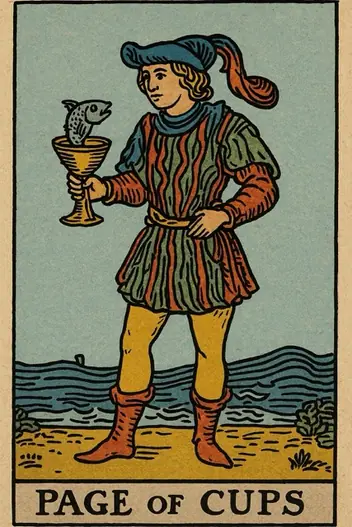
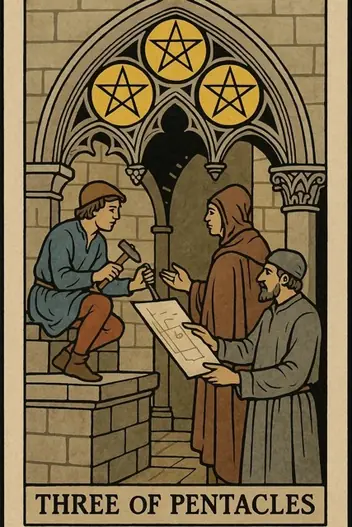
- Arcana
- Page of Cups — Minor Arcana, Cups; Three of Pentacles — Minor Arcana, Pentacles
- Elements
- Page of Cups — Water; Three of Pentacles — Earth
- Elemental interaction
- Friendly elements — energies support each other
- Numerology
- 11 + 3 = 14 → 5
When the Page of Cups—the archetype of emotional openness, intuitive curiosity, and nascent creative impulse—collides with the Three of Pentacles—the symbol of disciplined teamwork, skill-building, and tangible output—we get a powerful tension. This isn't about pure fantasy or cold execution. It’s about learning to channel raw feeling into a structured, valued product.
Psychologically, this pairing represents the integration of the emotional self (the Child archetype) with the professional self (the Craftsman archetype). It asks: How can I bring my genuine sensitivity and creativity into a collaborative environment without losing my footing? The answer lies in vulnerability as a strategic asset—not weakness, but a tool for deeper connection and higher-quality work.
Core Dynamics & Interpretation
The core dynamic here is apprenticeship with heart. The Page of Cups offers a fresh, unguarded perspective—a willingness to be moved, inspired, or even awkward in pursuit of a creative vision. The Three of Pentacles provides the structure: a mentor, a team, a blueprint, or a clear set of skills to master. Together, they suggest that the most authentic work often begins with a beginner’s mind and a collaborative spirit.
This is not a time for solitary genius or ego-driven artistry. Instead, the energy is social, iterative, and humble. You are being asked to show your work in progress, accept feedback, and refine your emotional expression through practical application. The psychological risk is imposter syndrome—feeling your inner "Page" is too naive or emotional to contribute to a serious project. The reward is mastery born from genuine curiosity, not forced performance.
In real-world terms, this combination often appears when someone is starting a new creative hobby, joining a collaborative team, or entering a mentorship. The key insight: your emotional sensitivity is your unique contribution, but it only becomes valuable when you learn to articulate it and apply it within a framework of shared effort.
What Do Page of Cups and Three of Pentacles Say About Love?
If you are single:
This combination suggests you may meet someone through a shared project, class, or creative pursuit. Focus on collaboration, not instant romance. The attraction will grow as you work together on something meaningful.
If you are in a relationship:
The dynamic calls for turning your partnership into a "creative workshop". This could mean learning a new skill together, improving communication as a team, or treating your emotional conflicts as problems to solve collaboratively.
In relationships, this pairing is about emotional skill-building through shared effort. The Page of Cups brings the desire to express feelings openly—perhaps through art, writing, or simple heartfelt gestures. The Three of Pentacles insists that this expression must be practiced, refined, and aligned with your partner's needs. It’s not enough to simply "feel deeply"; you must learn to communicate those feelings in a way that builds trust and mutual respect.
Key advice: Treat your relationship like a joint project. Schedule regular check-ins where you practice active listening (the Page's openness) and problem-solving (the Three's structure). Avoid the trap of performative vulnerability—where you share emotions just to get a reaction, rather than to genuinely connect. The goal is sustainable intimacy, built through consistent, collaborative effort.
Your pair is already on the table. Ask your question and draw the clarifying card
or simply focus on it
Career and Finances
Strategic Opportunities:
Seek mentorship or join a collaborative team where you can learn a new skill from someone more experienced. Your fresh perspective will be valued.
Strategic Opportunities:
Propose a creative pilot project that allows you to combine emotional intelligence (e.g., user experience, client relations) with technical execution.
Calculated Risks:
Avoid over-promising based on enthusiasm alone. The Page of Cups can be impulsive; the Three of Pentacles demands deliverables. Get clear on scope, deadlines, and your specific role before committing.
This is a powerful combination for career changers, freelancers entering a new niche, or creatives seeking formal training. The psychological frame is competence-building through vulnerability. You must be willing to look "inexperienced" in order to learn. Financially, this is not a time for high-risk speculation. Instead, invest in education, tools, or collaborative ventures that build long-term value.
Strategic tip: Use your emotional intuition to read the room in meetings or negotiations. The Page of Cups gives you a natural radar for unspoken tensions or hidden opportunities. The Three of Pentacles ensures you document, plan, and follow through on those insights. Bold financial warning: Do not spend money on "inspiration" without a clear execution plan. A course, coaching, or creative tool is only valuable if you commit to the practice.
Reversed Positions: What Changes?
If the Page of Cups is reversed:
This points to emotional immaturity or a creative block. You may be afraid to show your work, ashamed of your feelings, or conversely, demanding recognition without putting in the effort. Advice: lower the bar. Your goal is not a masterpiece, but simply to "get it done." Let off steam through art not intended for an audience.
If the Three of Pentacles is reversed:
This is a signal of dysfunction within the team or sabotage of the process. You may not be heard, your contribution may be devalued, or you yourself may refuse to follow the rules. Warning: do not confuse rebellion with self-expression. If the system is rotten – leave. If you simply don't want to learn – this is a path to stagnation.
If BOTH are reversed:
Complete imbalance – chaos without creativity. Emotions are overflowing, but there is neither structure nor desire to learn. This can manifest as a workplace meltdown or a complete retreat into fantasy. Method for correction: a hard pause. Take 48 hours of silence. Then start small: write one paragraph, draw one sketch, do one thing from your list.
Deepen your understanding
Find out exactly what this reading means for your current life situation with our oracle.
What Are the Risks of Page of Cups and Three of Pentacles?
The shadow of this combination emerges when the Page's emotional openness becomes unfocused sentimentality, and the Three's structure becomes rigid perfectionism. You may find yourself daydreaming about a project without doing the work, or conversely, criticizing your own creative efforts so harshly that you never share them.
A common cognitive bias here is the sunk cost fallacy—staying in a collaborative project that no longer inspires you, simply because you've invested time. Alternatively, you may over-identify with the "beginner" role, using it as an excuse to avoid taking responsibility for your output. The shadow also includes people-pleasing: saying yes to every request to be liked (Page of Cups) while burning out on unrealistic commitments (Three of Pentacles).
To avoid these pitfalls, set clear boundaries between exploration and execution. Give yourself permission to experiment (Page) within a defined time frame and budget (Three). Practice detached observation of your emotions—feel them, but don't let them dictate your professional decisions without rational review.
Synthesis: Strategic Conclusion
The strategic task of this combination is to digitize the emotion. Imagine the Page of Cups as raw clay, and the Three of Pentacles as the potter's wheel. Clay alone is formless, and the wheel without clay is useless. Your task is not to choose between them, but to learn to work in tandem.
To do this, you must embrace the concept of "unfinished work." Allow yourself to be an "apprentice" in a specific area. Acknowledge that your enthusiasm is valuable, but it is merely fuel. The mechanics are skills and teamwork. The deep strategic advice is: create a "sandbox" for your talent. Find an environment (a course, a hobby club, a startup at the idea stage) where mistakes don't cost you your career, and criticism is a tool for growth. Invest time in this environment, not in dreams of recognition.
Key clarity for decision-making:
if you are faced with a choice, ask yourself: "Does this action bring me closer to mastery, or does it only stroke my ego?" If the answer is "strokes my ego," set it aside. If it "brings me closer to mastery," then do it, even if it's scary. This combination promises growth not through comfort, but through competence born of dialogue.
Your Next Step: Personal Context Matters
The Page of Cups and Three of Pentacles together tell a story of heartfelt craftsmanship. The core message is simple but profound: Your unique emotional perspective becomes valuable only when you learn to share it skillfully within a team or structure. Whether you're starting a new relationship, learning a trade, or refining a creative project, this combination urges you to stay curious, stay humble, and focus on the process of improvement.
While this article provides the general archetype, the true magic happens when Tarot is applied to your unique situation. Your specific question, your current life context, and even the other cards in your spread will shift the meaning dramatically. That’s why I recommend using the Fortune Cards app—available on the web or as a download—to get a deep, personalized interpretation of this exact combination for your specific question right now. It will analyze your situation with the same psychological rigor, but tailored to you.
Interpretation by the Fortune Cards editorial team, based on the Rider–Waite tradition and Jungian archetypes. About our methodology · Updated: 2026-08-26
Other Combinations with Page of Cups
Other Combinations with Three of Pentacles
Explore Individual Card Meanings
Table of Contents
Ready to find answers to your questions?
Start your first reading now and look at your situation with fresh clarity. The cards are ready to reveal deeper meaning.