Six of Swords and Knight of Pentacles Meaning in Tarot
- Arcana
- Six of Swords — Minor Arcana, Swords; Knight of Pentacles — Minor Arcana, Pentacles
- Elements
- Six of Swords — Air; Knight of Pentacles — Earth
- Elemental interaction
- Opposing elements — energies create tension
- Numerology
- 6 + 12 = 18 → 9
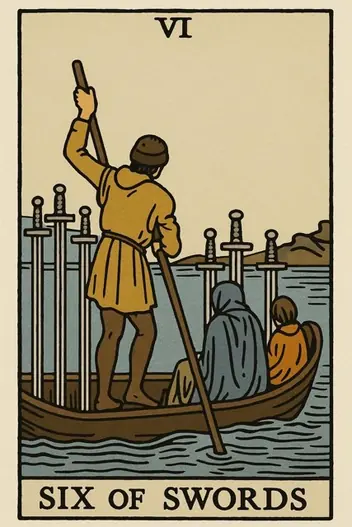
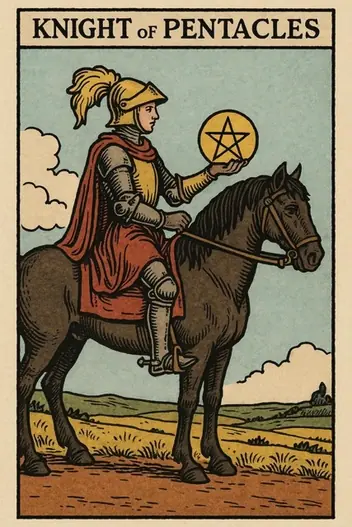
The Six of Swords represents a conscious, necessary transition away from turbulent emotions or outdated mental frameworks. It is the card of moving forward, but not necessarily with speed—it’s a journey across still waters, often carrying baggage from the past. The Knight of Pentacles, in contrast, is the archetype of methodical persistence: slow, steady, and utterly reliable. When these two cards appear together, they signal a pragmatic departure from emotional or intellectual chaos toward a stable, tangible future.
This combination is not about dramatic leaps or sudden breakthroughs. Instead, it describes a deliberate, step-by-step process of leaving behind what no longer serves you—whether that’s a relationship, a job, a belief system, or a painful memory—while grounding yourself in practical daily habits. The Knight of Pentacles provides the discipline; the Six of Swords provides the direction. Together, they form a blueprint for healing through routine.
Six of Swords and Knight of Pentacles: How These Energies Interact
The psychological state here is one of controlled release. The seeker is not fleeing in panic but is calmly rowing away from a storm, with the Knight of Pentacles ensuring the boat is well-stocked and the course is charted. This pairing often appears when someone has already made the difficult decision to move on but needs to execute that decision with patience and consistency.
The core dynamic is a tension between letting go and holding on. The Six of Swords demands you release emotional attachments, while the Knight of Pentacles insists you hold onto your routines, responsibilities, and self-discipline. This is not a time for impulsive changes. Instead, it’s a time to systematize your healing: schedule therapy sessions, stick to a budget, maintain a workout plan, or follow a structured career transition timeline. The key insight is that true emotional progress requires physical and behavioral anchors. Without the Knight’s diligence, the Six of Swords’ journey risks becoming aimless drifting. Without the Six’s clarity, the Knight’s efforts become repetitive stagnation.
Your pair is already on the table. Ask your question and draw the clarifying card
or simply focus on it
Six of Swords and Knight of Pentacles as Feelings
If you are single:
This combination suggests you are ready to leave behind a past relationship pattern or emotional wound, but you must do so with intentional, slow dating. Avoid rushing into a new romance; instead, focus on building a stable foundation through shared values and consistent, low-pressure interactions.
If you are in a relationship:
You and your partner are likely navigating a transition period—perhaps moving in together, resolving a long-standing conflict, or deciding on a major life change. The energy is heavy but necessary. Patience and practical planning are your best tools.
In relationships, the Six of Swords and Knight of Pentacles together signal a phase of quiet repair. There may be a sense of emotional distance as you both work through past grievances, but this is constructive distance, not abandonment. The key advice is to focus on small, daily acts of reliability—showing up on time, keeping promises, handling shared responsibilities—rather than grand romantic gestures. This combination warns against expecting immediate emotional catharsis. Instead, trust that consistency rebuilds trust over time. If you are single, this pairing urges you to stop analyzing past heartbreaks and start building a stable present. Join a class, volunteer, or take up a hobby that grounds you; the right person will find you when you are no longer adrift.
Six of Swords and Knight of Pentacles in Career Readings
Strategic Opportunities:
Transition to a more stable role—this is an excellent time to move from a chaotic industry or freelance work into a structured position with steady income.
Strategic Opportunities:
Invest in skill-building—take a certification, attend a workshop, or learn a new tool that aligns with a long-term career shift.
Calculated Risks:
Avoid quitting without a plan—the Knight of Pentacles warns against leaving a job before you have a clear, step-by-step transition strategy. Do not burn bridges.
For career, this combination is a green light for methodical change. You may feel stuck or unhappy in your current role, but the cards advise slow, deliberate movement rather than a dramatic exit. Update your resume, network consistently, and save an emergency fund before making a leap. In financial terms, this pairing favors conservative investments, debt reduction, and building savings over high-risk speculation. The Six of Swords suggests you are leaving behind a financial anxiety or past money mistake, while the Knight of Pentacles insists you create a budget and stick to it. A key warning: do not let the desire for a fresh start lead you to ignore practical obligations. Pay your bills, meet deadlines, and maintain your professional reputation even as you plan your exit.
Your unique Tarot reading
See how these cards interact with your destiny. Start a free personal reading now.
Six of Swords and Knight of Pentacles Reversed: What Changes?
When one or both cards are reversed, the constructive dynamic breaks down.
If the Six of Swords is reversed:
This indicates blocked potential or an unwillingness to leave the comfort zone, even if it is toxic. You are stuck in the past, clinging to an illusion of safety. Advice: acknowledge that your resistance to change is a form of self-sabotage. What you need is not more analysis, but decisive action—cutting off contact or changing your place of residence.
If the Knight of Pentacles is reversed:
Internal resistance and laziness come to the forefront. This is the classic scenario where a person has already left a bad situation but refuses to put in the effort to build a new one. They are waiting for a "miracle" or quick success. Warning: this is a path back to the past. Without methodical work, you will not be able to maintain the new equilibrium.
If BOTH are reversed:
Complete imbalance. You are simultaneously unable to leave the old and unwilling to build the new. This is a state of paralyzing apathy. The logical way to correct this: start with the smallest, most concrete action (cleaning, paying bills, a short walk). Restore a basic level of control to regain your capacity for movement.
When Six of Swords and Knight of Pentacles Signal Trouble
The shadow of this combination emerges when the need for stability becomes resistance to change. The Knight of Pentacles can turn into stubbornness, causing the seeker to stay in a draining situation for too long out of fear of the unknown. Meanwhile, the Six of Swords’ emotional distance can become avoidance, where the seeker physically moves on but fails to process their feelings. Cognitive biases at play include the "sunk cost fallacy"—staying in a job or relationship because you’ve already invested so much time—and "status quo bias", where the comfort of routine prevents necessary growth. Self-sabotage manifests as over-planning without action: creating endless to-do lists but never leaving the dock. If you feel stuck between a painful past and an uncertain future, ask yourself: Am I using "practicality" as an excuse to avoid discomfort?
Six of Swords and Knight of Pentacles: The Combined Message
Constructive use of this pair requires you to become a strategist of your own life. The Six of Swords grants you clarity of vision—you know where you are coming from and where you are heading. The Knight of Pentacles provides you with the toolkit—patience, diligence, and attention to detail. Your task is to unite these two qualities into a single process.
Strategic advice: break your transition down into micro-stages. Do not try to build a new life in a month. Instead, use the Six of Swords for a weekly review: "What am I letting go of this week? What old habit am I releasing?" Use the Knight of Pentacles for your daily routine: "What three concrete, measurable actions will I take today for my future?"
This combination is the best recipe for emerging from a crisis. It does not promise quick miracles, but it guarantees that every step you take will strengthen the foundation of your new reality. Key takeaway: you are not simply walking away from problems—you are building a system that will prevent them from arising again. This union teaches us that true freedom is achieved not through escape, but through creating a solid, sustainable world around yourself.
Applying This to Your Situation
The core message of Six of Swords and Knight of Pentacles is that healing and progress require both direction and discipline. You cannot think your way out of pain; you must act your way through it, one small step at a time. This combination promises that if you commit to the process—however slow—you will eventually reach calmer waters.
While this article provides a deep analysis of the general archetypes, the true power of Tarot lies in its application to your specific question and situation. The Fortune Cards app offers a personalized, AI-driven interpretation of this exact combination, tailored to your unique context. Whether you’re navigating a relationship dilemma, a career crossroads, or a personal transformation, the app can help you see exactly how these energies play out in your life. Use it on the web or download it now to get a deep, customized reading that turns archetype into actionable insight.
Interpretation by the Fortune Cards editorial team, based on the Rider–Waite tradition and Jungian archetypes. About our methodology · Updated: 2026-08-26
Other Combinations with Six of Swords
Other Combinations with Knight of Pentacles
Explore Individual Card Meanings
Table of Contents
- Six of Swords and Knight of Pentacles: How These Energies Interact
- Six of Swords and Knight of Pentacles as Feelings
- Six of Swords and Knight of Pentacles in Career Readings
- Six of Swords and Knight of Pentacles Reversed: What Changes?
- When Six of Swords and Knight of Pentacles Signal Trouble
- Six of Swords and Knight of Pentacles: The Combined Message
- Applying This to Your Situation
Ready to find answers to your questions?
Start your first reading now and look at your situation with fresh clarity. The cards are ready to reveal deeper meaning.