Ten of Cups and Six of Swords Tarot Combination
- Arcana
- Ten of Cups — Minor Arcana, Cups; Six of Swords — Minor Arcana, Swords
- Elements
- Ten of Cups — Water; Six of Swords — Air
- Elemental interaction
- Neutral elements — energies coexist without conflict
- Numerology
- 10 + 6 = 16 → 7
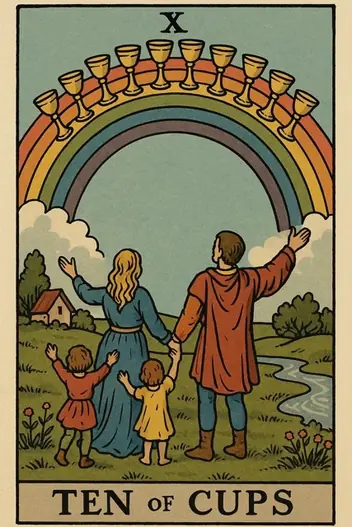
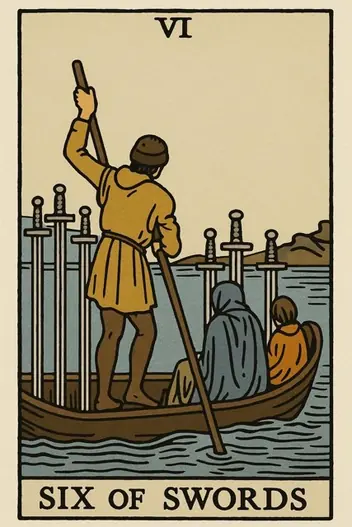
The intersection of the Ten of Cups and the Six of Swords represents a profound psychological transition: moving from a state of emotional fulfillment toward a journey of necessary, albeit painful, transition. The Ten of Cups offers a vision of complete domestic harmony, emotional security, and the archetypal "happy family" ideal. The Six of Swords, conversely, speaks of crossing troubled waters, leaving behind what is known, and carrying only what is essential for a new shore.
When these two archetypes collide, the seeker is not abandoning happiness for chaos. Rather, they are recognizing that true emotional maturity often requires leaving a comfortable, but stagnating, situation. This is not a loss of love, but a strategic retreat from a version of happiness that no longer serves growth. The core tension here is between the desire for stability and the necessity of forward momentum. The psychological state is one of bittersweet clarity: you see the beauty of what you have, but you also feel the pull of what must come next.
Ten of Cups and Six of Swords Card Meaning Explained
This combination signals a pivotal psychological shift where the seeker must reconcile their emotional needs with the practical demands of change. The Ten of Cups represents the collective unconscious ideal of a perfect ending—a completed cycle of emotional bonding and belonging. The Six of Swords, however, introduces the Jungian concept of individuation: the process of separating from the collective (family, tradition, comfortable norms) to pursue a more authentic self.
The core dynamic is transition without destruction. You are not burning bridges; you are ferrying your most valuable emotional cargo across a difficult passage. This suggests a highly conscious decision to leave a situation that is emotionally fulfilling but intellectually or spiritually limiting. For example, a loving family might be holding back an individual’s career ambition, or a happy relationship might be preventing necessary personal healing. The key insight is that this move is preventative, not reactive—you are leaving before the waters rise, not after the damage is done.
In practical terms, this pairing demands emotional intelligence over emotional indulgence. The seeker must suppress the immediate impulse to cling to comfort in favor of a longer-term vision of well-being. This is a strategic withdrawal that requires courage and foresight. The psychological state is one of controlled vulnerability: you feel the sadness of departure but maintain the discipline to navigate the crossing.
Your pair is already on the table. Ask your question and draw the clarifying card
or simply focus on it
Ten of Cups and Six of Swords in Career Readings
Strategic Opportunities:
Pivot toward a role that offers emotional fulfillment alongside professional growth. This could mean leaving a high-paying but soul-crushing job for a position with better work-life balance or deeper purpose.
Strategic Opportunities:
Use your current stability as a launchpad for a calculated career change. The Ten of Cups suggests you have a solid foundation (savings, reputation, network) to fund a transition.
Calculated Risks:
Avoid making a move purely out of dissatisfaction with your current situation. The Six of Swords warns against impulsive departures. Ensure your next step is well-researched and strategically timed, not an escape from boredom.
In the professional realm, this combination is a powerful signal for strategic career evolution. The Ten of Cups indicates you have already achieved a level of professional or financial security that many envy. However, the Six of Swords suggests that remaining here will lead to stagnation. This is not a call to quit your job impulsively, but to initiate a deliberate, phased transition toward work that aligns with your deeper values.
The critical financial warning:
Do not burn bridges. The Six of Swords emphasizes carrying only what is essential—maintain professional relationships, keep your network intact, and leave with grace. The biggest strategic mistake would be to overvalue the emotional security of your current position. You may need to accept a temporary reduction in income or status to reach a more authentic career path. Prioritize long-term psychological alignment over short-term financial comfort.
Ten of Cups and Six of Swords as Feelings
If you are single:
This pairing suggests you are ready to leave behind a pattern of seeking "perfect" partners or unrealistic relationship fantasies. You are moving toward a connection that requires emotional work and compromise rather than instant gratification.
If you are in a relationship:
You and your partner may be consciously choosing to evolve your relationship beyond its current comfortable form. This could mean moving in together, dealing with family issues, or healing old wounds that threaten your shared happiness.
The relationship dynamics here are ripe with potential for deep, lasting growth, but only if both parties are willing to navigate the emotional turbulence of change. The Ten of Cups provides the emotional safety net—the love and trust that makes the journey possible. The Six of Swords provides the direction and purpose—the understanding that staying static will eventually erode that very happiness.
Key relationship advice:
Do not mistake comfort for commitment. The most loving act you can perform may be to initiate a difficult conversation about the future. This is not about ending a relationship, but about redefining its terms to accommodate personal growth. If you are single, stop looking for a "soulmate" who completes you; instead, seek a partner who is willing to travel with you through uncertainty. The greatest risk is staying in a relationship that feels perfect but prevents you both from evolving.
Your unique Tarot reading
See how these cards interact with your destiny. Start a free personal reading now.
Ten of Cups and Six of Swords Reversed Meaning
Reversed cards intensify the internal conflict or point to its distorted forms.
If the Ten of Cups is reversed:
This indicates blocked potential or recklessness. The "ideal family" turns out to be a sham — you've recognized the toxicity of your environment, but the Six of Swords gives you the strength to leave. Advice: do not try to "fix" what was broken from the start. Your task is not repair, but evacuation.
If the Six of Swords is reversed:
This is a classic case of internal resistance to change. You know you need to leave, but you sabotage this process. Fear of the unknown paralyzes your will. Warning: stagnation in this position leads to depression and a loss of self-respect. You need an external trigger or a coach/therapist to get unstuck.
If BOTH are reversed:
Complete imbalance. You are stuck between two bad options: remaining in a ruined environment (reversed Ten) and lacking the strength to escape (reversed Six). The logical way to correct this: focus on micro-steps. Do not try to solve everything at once. Take one small action towards change — update your resume, book a consultation, say "no" to a toxic demand.
When Ten of Cups and Six of Swords Signal Trouble
The shadow manifestation of this pairing reveals a dangerous cognitive bias: the idealization of the past. The seeker may be tempted to romanticize the happiness they are leaving to the point of paralysis, convincing themselves that no future could be as good. This is the shadow of the Ten of Cups—a refusal to let go of a perfect image that no longer exists. Alternatively, the shadow of the Six of Swords emerges as avoidance disguised as progress. You might convince yourself you are "moving on" when you are actually running away from unresolved emotional issues.
Another pitfall is strategic indecision. The combination can create a false dichotomy: either stay in perfect happiness or leave for uncertain waters. In reality, the path forward may involve renegotiating the terms of your current situation rather than a clean break. The psychological trap is all-or-nothing thinking, which ignores the possibility of gradual, integrated change. Watch for self-sabotage where you unconsciously create problems to justify the departure, or conversely, over-analyze the decision until the opportunity passes.
Ten of Cups and Six of Swords: Tarot Advice
Constructive use of this dynamic requires cold calculation against a backdrop of warm feelings. How to use the energy of the Ten of Cups to balance the Six of Swords? Answer: transform the fear of loss into a resource for transition. Instead of fearing the loss of the "ideal family" (collective, partner), use memories of the good as fuel to create something better in the future. You are not denying the value of the past — you are grateful for it and moving forward.
Your strategic task is to synchronize the emotional and rational cards. The Six of Swords demands a rational plan: a route, a budget, a timeline. The Ten of Cups requires emotional nourishment: support from loved ones, self-belief, a sense that you are not alone. A profound piece of advice: find "travel companions" for your journey. You do not necessarily have to leave alone. Create a new "Ten of Cups" — a new community, a new team, a new support circle — even before you leave the old one. This will reduce fear and make the transition sustainable. You are not destroying happiness — you are restructuring it. It is this synthesis that gives you the clarity to make the right decision: not between "bad" and "good," but between "past" and "future."
Where to Go From Here
The core message of the Ten of Cups and Six of Swords is courageous evolution: you are being called to leave a version of happiness that has become a cage, and to carry your emotional wisdom into a new chapter. This is not a loss, but a necessary maturation of your emotional life. The journey will be bittersweet, but the destination offers a deeper, more authentic form of fulfillment than the comfort you leave behind.
This article provides the general archetype, but the true power of Tarot lies in its application to your unique situation. To get a deep, personalized interpretation of this exact combination for your specific question—whether about love, career, or personal growth—use the Fortune Cards app. Available on the web and for download, it offers instant, context-aware readings that translate these universal symbols into actionable insights for your life right now. Don't just read about the journey—take it with clarity.
Interpretation by the Fortune Cards editorial team, based on the Rider–Waite tradition and Jungian archetypes. About our methodology · Updated: 2026-09-17
Other Combinations with Ten of Cups
Other Combinations with Six of Swords
Explore Individual Card Meanings
Table of Contents
- Ten of Cups and Six of Swords Card Meaning Explained
- Ten of Cups and Six of Swords in Career Readings
- Ten of Cups and Six of Swords as Feelings
- Ten of Cups and Six of Swords Reversed Meaning
- When Ten of Cups and Six of Swords Signal Trouble
- Ten of Cups and Six of Swords: Tarot Advice
- Where to Go From Here
Ready to find answers to your questions?
Start your first reading now and look at your situation with fresh clarity. The cards are ready to reveal deeper meaning.