The Hierophant and Page of Cups Tarot as Feelings
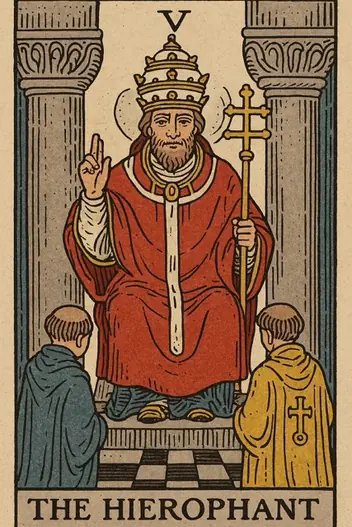
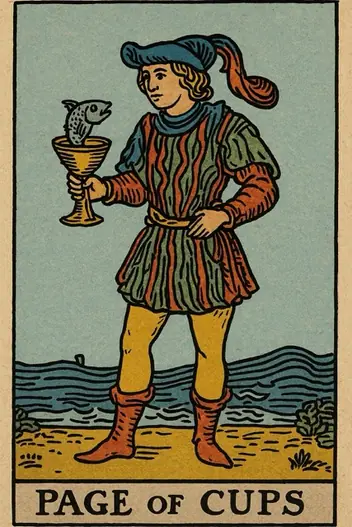
- Arcana
- The Hierophant — Major Arcana; Page of Cups — Minor Arcana, Cups
- Elements
- The Hierophant — Earth; Page of Cups — Water
- Elemental interaction
- Friendly elements — energies support each other
- Numerology
- 5 + 11 = 16 → 7
When The Hierophant—the archetype of structure, tradition, and collective wisdom—collides with The Page of Cups—the messenger of nascent emotional intelligence and creative intuition—the result is a powerful tension between conformity and inner feeling. In psychological terms, this pair represents the ego’s need for external validation through established systems clashing with the unconscious’s push toward authentic emotional expression.
This combination often surfaces when you are being asked to integrate a new, tender emotional insight into an existing framework—whether that’s a relationship, a career path, or a belief system. The key strategic question is: How do you honor your inner emotional truth without abandoning the structures that provide stability? The answer lies in pragmatic emotional diplomacy, not rebellion.
What Do The Hierophant and Page of Cups Mean Together?
The core dynamic here is a controlled emotional awakening. The Hierophant provides the container—the rules, the institution, the mentor—while the Page of Cups fills it with raw, unformed feeling. This is not a chaotic flood; it is a guided initiation into a deeper emotional life. You may find yourself in a role where you are both the student and the teacher, learning to express vulnerability within a safe, structured environment.
Psychologically, this combination activates the Persona and the Anima/Animus. The Hierophant represents the social mask you wear to fit into groups (family, company, religion), while the Page of Cups represents the inner, feeling-driven self that seeks connection. The challenge is to prevent the Page’s idealism from being crushed by the Hierophant’s rigidity. In practice, this means seeking out mentors or institutions that value emotional growth, not just rule-following. The most productive mindset here is one of disciplined curiosity—approach new feelings with the rigor of a scientist and the openness of an artist.
Your pair is already on the table. Ask your question and draw the clarifying card
or simply focus on it
Career Meaning of The Hierophant and Page of Cups
Strategic Opportunities:
Use existing institutional channels (training programs, mentorship hierarchies, company traditions) to introduce a creative or emotionally resonant project. Your emotional insight will be taken more seriously if framed within the organization’s language.
Strategic Opportunities:
Seek a mentor who values both competence and compassion. This person can help you navigate office politics while staying true to your intuitive ideas.
Calculated Risks:
Avoid over-sharing raw emotions in a professional setting. The Page of Cups’ openness can be misinterpreted as naivety. Also, resist the urge to rebel against established procedures simply because they feel outdated.
Professionally, this combination is a signal to innovate from within the system, not outside of it. You have a unique ability to humanize cold processes—for example, suggesting a team-bonding activity that aligns with company values, or pitching a creative solution that respects budget constraints. Financially, this is a conservative time for emotional spending. The Page of Cups can be impulsive with money when chasing a feeling (e.g., buying a gift to win approval). Bold warning: Do not invest in ventures that rely solely on “good vibes” or emotional appeals without a solid contractual foundation. Instead, use your intuition to spot undervalued assets in traditional markets.
What Do The Hierophant and Page of Cups Say About Love?
If you are single:
This pairing suggests a potential connection through shared values or a structured environment (e.g., a class, a club, or a workplace). Be wary of idealizing a partner who seems to “fit the mold” but lacks emotional depth.
If you are in a relationship:
Expect a period where you must negotiate between your partner’s need for routine and your own need for emotional novelty. The power dynamic may feel like a teacher-student relationship.
In relationships, The Hierophant and Page of Cups calls for emotional intelligence with clear boundaries. You may feel a pull to “fix” or “teach” your partner about your feelings, but the wiser path is to communicate your emotions within an agreed-upon framework. For example, schedule a weekly check-in to discuss emotional needs, rather than expecting spontaneous vulnerability. Boldly prioritize mutual respect over dramatic confessions. If you are single, this card pair warns against projecting a “savior” or “perfect student” fantasy onto a new romantic interest. Instead, evaluate whether the relationship’s structure supports your emotional growth—does it allow for both intimacy and independence?
Deepen your understanding
Find out exactly what this reading means for your current life situation with our oracle.
Reversed Positions: What Changes?
When cards appear in a reversed position, the constructive dialogue between structure and feeling is disrupted.
If The Hierophant is reversed:
You are facing a rebellion against authorities or a destruction of traditions without creating a new alternative. The Page of Cups in this situation can become infantile and capricious. Instead of learning from the system, you reject it, justifying your emotional outbursts. Advice: Do not confuse freedom of expression with permissiveness. Find a mentor who will not suppress you but will provide healthy boundaries.
If the Page of Cups is reversed:
This points to suppressed emotionality or, conversely, emotional immaturity. The Hierophant here can act as a rigid dogma that completely blocks any feelings. You become either overly cynical or, conversely, behave like a capricious child, demanding attention and violating boundaries. Warning: This is a state of high vulnerability, where you can be easily offended or misled by flattery.
If BOTH are reversed:
The dynamic is completely imbalanced. This is a scenario of a "false prophet" or a "toxic teacher." A person uses the mask of tradition and spirituality (reversed Hierophant) to manipulate the feelings of others (reversed Page). Or you yourself are in a state where your emotions are chaotic and your beliefs are hypocritical. Way to correct: A complete revision of your values is necessary, separating your true feelings from imposed social roles. Turn to a neutral observer (psychologist) to restore this connection.
The Hierophant and Page of Cups: Warning Signs
The shadow of this combination manifests as emotional manipulation or dogmatic naivety. You may unconsciously use the Hierophant’s authority to suppress the Page’s feelings (“This is how we do things, so your sadness is irrelevant”) or, conversely, use the Page’s emotionality to bypass necessary rules (“My feelings are more important than the contract”). A common cognitive bias here is confirmation bias: you seek out mentors or traditions that only validate your pre-existing emotional conclusions, avoiding any challenge to your worldview. Another pitfall is passive-aggressive rebellion—outwardly complying with a structure while inwardly resenting it, leading to simmering resentment or passive sabotage. The psychological risk is fragmentation of the Self, where you split your authentic feelings from your social role, leading to burnout or identity crisis.
Synthesis: Strategic Conclusion
To constructively harness the energy of this pair, one must grasp a simple truth: The Hierophant is the container, and the Page of Cups is the contents. A container without contents is an empty formality. Contents without a container is a dirty puddle on the floor. Your strategic task is to become the one who creates "rituals" for the expression of feelings.
Do not attempt to choose between spontaneity and order. Instead, formalize the process of emotional expression. For example, introduce a tradition of a weekly "family council" where everyone can speak their mind (Page), but strictly according to procedure and without insults (Hierophant). In a career context, this could mean implementing regular feedback sessions or "creative Fridays" where you work on pet projects, but with a deadline.
A deep strategic piece of advice: use symbolism and rituals as a bridge between these archetypes. If you need to take the initiative in love (Page), do so through a beautiful, yet traditional gesture (Hierophant) — write a letter, give flowers with a note. If you need to introduce innovations at work, present them as a continuation of corporate tradition, not as a revolution. Understand that tradition is simply a proven way of doing something important. Your task is to fill this proven method with new, sincere feeling. This is maturity: the ability to be spontaneous within a structure.
Your Next Step: Personal Context Matters
The core message of The Hierophant and Page of Cups is that true growth happens when you bring your most tender feelings into a structure that respects them. You are being asked to be both a respectful student of tradition and a courageous innovator of the heart. The path forward requires pragmatic emotional diplomacy: honor the rules that keep you safe, but never let them silence your inner voice.
Ready to see how this plays out in your specific situation? While this article outlines the archetypal dynamics, the real power of Tarot lies in personal context. Your unique question—about a particular person, a career decision, or a creative block—deserves a tailored reading. Use the Fortune Cards app now on the web or download it to get a deep, personalized interpretation of The Hierophant and Page of Cups for your exact question. Turn these insights into action today.
Interpretation by the Fortune Cards editorial team, based on the Rider–Waite tradition and Jungian archetypes. About our methodology · Updated: 2026-08-26
Other Combinations with The Hierophant
Other Combinations with Page of Cups
Explore Individual Card Meanings
Table of Contents
- What Do The Hierophant and Page of Cups Mean Together?
- Career Meaning of The Hierophant and Page of Cups
- What Do The Hierophant and Page of Cups Say About Love?
- Reversed Positions: What Changes?
- The Hierophant and Page of Cups: Warning Signs
- Synthesis: Strategic Conclusion
- Your Next Step: Personal Context Matters
Ready to find answers to your questions?
Start your first reading now and look at your situation with fresh clarity. The cards are ready to reveal deeper meaning.