The Hierophant and Page of Swords Tarot Combination
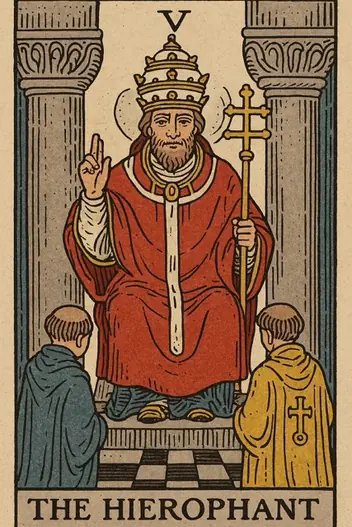
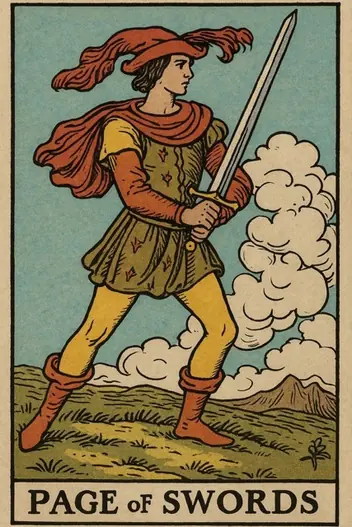
- Arcana
- The Hierophant — Major Arcana; Page of Swords — Minor Arcana, Swords
- Elements
- The Hierophant — Earth; Page of Swords — Air
- Elemental interaction
- Opposing elements — energies create tension
- Numerology
- 5 + 11 = 16 → 7
When The Hierophant—the archetype of established doctrine, mentorship, and collective norms—collides with the Page Of Swords—the restless, curious messenger of logic and critique—we witness a fascinating psychological tension. This pairing is not about harmony; it is about the friction between institutional wisdom and individual intellectual rebellion. The result is a high-stakes negotiation between trusting the system and questioning it.
In practical terms, this combination often surfaces when you are caught between following proven protocols and pursuing a raw, untested idea. The Hierophant demands respect for tradition, while the Page Of Swords challenges you to dissect every rule with critical precision. Your task is not to choose one over the other, but to integrate both: use the structure of the past as a scaffold for innovative thinking, rather than a cage.
The Hierophant and Page of Swords Together: Meaning
The psychological state created by The Hierophant and Page Of Swords is one of constructive skepticism. You are likely a person who values learning, but you are also deeply wary of dogma. This combination suggests a mental tug-of-war between your desire for security (The Hierophant’s safe, proven path) and your need for intellectual autonomy (the Page’s sharp, questioning mind). The key insight here is that this tension is not a weakness—it is a catalyst for mature growth.
In a reading, this pair often indicates a period where you must challenge a teacher, a system, or a long-held belief—but do so with respect and evidence. The Page Of Swords provides the analytical tools to ask “why?” and “how does this really work?”; The Hierophant provides the framework to ensure your critique is grounded, not just reckless rebellion. The mature response is to become a “critical insider”—someone who respects the institution enough to improve it from within.
Real-world implications are clear: you may be in a role where you need to navigate bureaucratic red tape while proposing a logical, data-driven change. Alternatively, you might be a student or mentee who feels the urge to challenge your mentor’s outdated methods. The danger lies in becoming cynical or dismissive (the Page’s shadow) or rigid and closed-off (The Hierophant’s shadow). The integration point is intellectual humility: knowing that tradition exists for a reason, but also that all systems evolve through thoughtful dissent.
Your pair is already on the table. Ask your question and draw the clarifying card
or simply focus on it
The Hierophant and Page of Swords in Love and Relationships
If you are single:
This combination suggests you are attracted to people who are intellectually stimulating but also grounded in their values. Be wary of dismissing a potential partner for being “too conventional” or “too rebellious.” Seek someone who can debate ideas without attacking your character.
If you are in a relationship:
You and your partner may be in a power struggle over who is “right” about a shared belief, family tradition, or future plan. The conflict is less about the topic and more about who holds authority in the relationship.
In relationships, The Hierophant and Page Of Swords often reveal a communication dynamic where one partner embodies the established rule (e.g., “this is how families celebrate holidays”) while the other challenges it with logic and alternatives (e.g., “why don’t we try something new this year?”). The key to resolution is to separate the person from the problem. Avoid turning a discussion about traditions into a personal attack. Instead, use the Page’s analytical energy to list pros and cons of both options, and use The Hierophant’s wisdom to find a third path that honors the past while adapting to the present.
Bold relationship advice:
If you feel your partner is being “too traditional,” ask yourself: Is the tradition serving a deeper emotional need (security, connection, identity) that I am dismissing? Conversely, if you are the one holding to tradition, ask: Is my attachment to this rule based on genuine value, or just fear of change? Emotional intelligence here means listening for the unmet need behind the argument.
Ask your specific question
Don't rely on generic meanings. Get a customized reading tailored specifically to your energies.
The Hierophant and Page of Swords for Career and Money
Strategic Opportunities:
Become the bridge between old-guard leadership and new, data-driven initiatives. Your ability to translate complex ideas into respectful proposals is your superpower.
Strategic Opportunities:
Pursue roles in compliance, auditing, or quality control where you must uphold standards while identifying flaws in the system. Your critical eye is an asset, not a liability.
Calculated Risks:
Avoid publicly undermining authority or burning bridges with mentors. The Page’s sharp tongue can backfire if you fail to show respect for the hierarchy you are trying to change.
In your professional life, this combination is a call to strategic diplomacy. You may be in a situation where you see clear inefficiencies in your organization’s processes, but the culture is “this is how we’ve always done it.” Your job is to frame your critique as an improvement, not a condemnation. For example, instead of saying “this system is outdated,” say “here is data showing how a modified approach could reduce costs by 15% while preserving our core values.” This is the art of intellectual persuasion.
Financially, The Hierophant encourages conservative, rule-based planning (e.g., following a budget, sticking to a retirement plan), while the Page Of Swords warns against impulsive, “smart” investments based on a hot tip or a clever loophole. The best financial strategy here is to research thoroughly before deviating from your plan, but also to be open to adjusting your strategy if new, reliable information emerges. Bold warning: Do not let arrogance (Page’s shadow) lead you to outsmart yourself with risky financial moves that ignore proven principles.
Negative Meaning of The Hierophant and Page of Swords
The shadow side of this combination emerges when the seeker becomes either a rigid traditionalist or a cynical contrarian. If The Hierophant dominates, you may blindly follow rules without understanding their purpose, leading to stagnation and missed opportunities for growth. If the Page Of Swords dominates, you may reject all authority out of rebellion, becoming a “devil’s advocate” who undermines trust and collaboration for the sake of being right.
Cognitive biases to watch for: Confirmation bias (only seeking evidence that supports your desire to change or maintain the status quo) and the Dunning-Kruger effect (overestimating your ability to critique a system you haven’t fully mastered). Self-sabotage occurs when you prioritize winning an argument over building a solution. The psychological trap is mistaking intellectual aggression for strength. True strength here is the discipline to listen before you critique, and the courage to admit when tradition holds a wisdom you haven’t yet understood.
The Hierophant and Page of Swords Reversed: What Changes?
If The Hierophant is Reversed:
The structure crumbles or loses its authority. The Page of Swords, deprived of support, becomes a cynical and destructive critic. They do not propose reforms, but merely mock the system. This is a path to isolation and dismissal. Advice: Find at least a temporary anchor in the form of a code or regulation, otherwise your mind will begin to destroy everything around you.
If The Page of Swords is Reversed:
Intellectual energy is blocked. The person blindly submits to dogma, afraid to ask questions. This is a state of intellectual laziness or cowardice, where you know the system is imperfect but prefer to remain silent. Warning: This is a direct path to professional stagnation and emotional burnout due to suppressed dissent.
If BOTH are Reversed:
Complete imbalance. You have found yourself in a toxic environment where there are no rules (or they are absurd) and no desire to change them. This is chaos where criticism is useless and authorities are hypocritical. The only logical way to rectify the situation is to distance yourself. You need a full reset: a new job or new relationships with clear rules.
The Hierophant and Page of Swords: The Combined Message
Constructive use of this combination requires you to assume the role of an "intellectual architect." Your task is not to demolish the old wall (The Hierophant), but to build a new, more functional door within it (Page of Swords). To do this, channel the energy of The Hierophant to create a safe space for discussion. Introduce rituals (weekly meetings, formal debates) within which criticism is welcomed and encouraged. This transforms potential rebellion into innovation.
Strategically, your strength lies in methodology. Do not merely voice the problem; instead, propose an algorithm for its solution that fits within the corporate or social culture. Ask not "Why are we doing this?" but "How can we do this better within the framework of our mission?" This disarms The Hierophant's defensive reaction and activates the analytical abilities of the Page of Swords.
Ultimately, this pair teaches us that true wisdom is neither blind adherence to rules nor their outright denial, but the ability to reform them. You are at a point where your knowledge of tradition and your capacity for critique must merge into a unified plan of action. Do not waste energy waging war on the system—use it to evolve the system from within.
Your Next Step: Personal Context Matters
The core message of The Hierophant and Page Of Swords is this: You are being called to become a thoughtful reformer, not a destructive iconoclast. Respect the structure, but never stop questioning how it can serve you and others better. Your growth lies in the balance between learning the rules and knowing when to rewrite them. The answer is not in the cards alone—it is in how you apply this tension to your unique situation.
Ready to see exactly how this plays out in your life? While this article gives you the archetypal blueprint, the true power of Tarot comes from personalization. The Fortune Cards app can deliver a deep, AI-driven interpretation of The Hierophant and Page Of Swords tailored to your specific question—whether it’s about a relationship, a career move, or a personal dilemma. Use it on the web or download it now to get the clarity you need to turn this intellectual friction into real-world progress.
Interpretation by the Fortune Cards editorial team, based on the Rider–Waite tradition and Jungian archetypes. About our methodology · Updated: 2026-08-26
Other Combinations with The Hierophant
Other Combinations with Page of Swords
Explore Individual Card Meanings
Table of Contents
- The Hierophant and Page of Swords Together: Meaning
- The Hierophant and Page of Swords in Love and Relationships
- The Hierophant and Page of Swords for Career and Money
- Negative Meaning of The Hierophant and Page of Swords
- The Hierophant and Page of Swords Reversed: What Changes?
- The Hierophant and Page of Swords: The Combined Message
- Your Next Step: Personal Context Matters
Ready to find answers to your questions?
Start your first reading now and look at your situation with fresh clarity. The cards are ready to reveal deeper meaning.