Love Tarot: Three of Swords and Page of Swords
- Arcana
- Three of Swords — Minor Arcana, Swords; Page of Swords — Minor Arcana, Swords
- Elements
- Three of Swords — Air; Page of Swords — Air
- Elemental interaction
- Same element — energies intensify each other
- Numerology
- 3 + 11 = 14 → 5
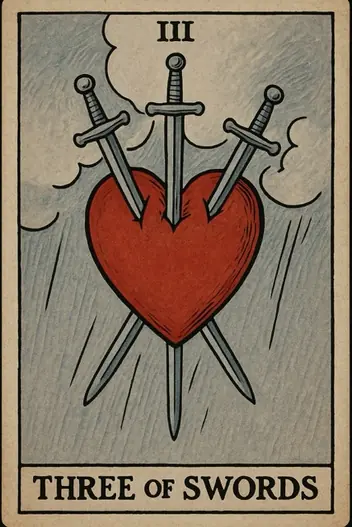
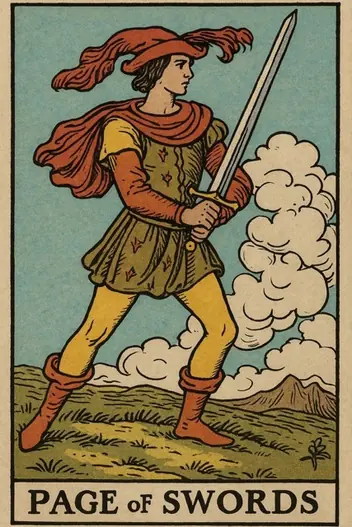
When the Three of Swords—the card of heartbreak, grief, and piercing truth—collides with the Page of Swords—the archetype of intellectual curiosity, sharp observation, and restless communication—the result is a unique psychological state. You are not simply hurt; you are analyzing your hurt. This combination represents a moment where emotional pain becomes a catalyst for mental clarity, but also a risk of intellectualizing feelings to avoid facing them directly.
This pairing forces you to confront a difficult truth: the mind can either heal the wound or keep it open. The Page of Swords brings a detached, investigative energy to the raw vulnerability of the Three of Swords. In practice, this means you may find yourself obsessively replaying conversations, searching for logical explanations for emotional betrayal, or crafting verbal defenses before anyone has attacked you. The key is to use this sharp mental energy to cut through illusions, not to cut yourself deeper.
Core Dynamics & Interpretation
The core dynamic here is the tension between feeling and thinking. The Three of Swords demands you acknowledge pain, while the Page of Swords urges you to understand it. This creates a psychological state of hyper-vigilance: you are scanning for threats, analyzing motives, and preparing for the next blow. While this can lead to genuine insight, it also risks emotional suppression disguised as problem-solving.
In real-world terms, this combination often appears when someone has been betrayed or disappointed, and they respond by becoming overly analytical about the relationship or situation. They may write long lists of grievances, research psychological profiles of their partner, or engage in defensive cynicism to protect themselves from future hurt. The danger is that intellectual understanding becomes a substitute for emotional processing. You can explain why you were hurt without ever truly healing.
The healthier path involves using the Page's mental agility to identify patterns and set boundaries, while allowing the Three of Swords its necessary grief. This is not a time for quick fixes or clever rationalizations. It is a time for structured emotional reflection: journaling, therapy, or honest conversations where you state facts without accusation. The mind is a tool here, not a fortress.
Your pair is already on the table. Ask your question and draw the clarifying card
or simply focus on it
What Do Three of Swords and Page of Swords Indicate for Your Career?
Strategic Opportunities:
Use this sharp mental energy to audit a failing project or relationship with a colleague. The Page of Swords excels at identifying flaws in systems. You can now see exactly what went wrong—use that insight to restructure.
Strategic Opportunities:
This is an excellent time for research, data analysis, or investigative work. Your ability to spot inconsistencies is heightened. Consider reviewing contracts, budgets, or performance metrics with a critical eye.
Calculated Risks:
Avoid sending emotionally charged emails or making impulsive career moves. The Page of Swords can be hasty with words. Draft your communication, then wait 24 hours before sending. Do not resign or confront a boss while feeling wounded.
In a professional context, this combination often signals a painful lesson learned through failure or criticism. Perhaps you received harsh feedback, lost a client, or discovered a flaw in your work. The Page of Swords energy pushes you to dissect what happened and create a new strategy. This can be highly productive, but only if you avoid the trap of self-blame or blame-shifting.
Financially, the Three of Swords suggests a loss or unexpected expense that stings. The Page of Swords urges you to review your budget and financial habits with cold objectivity. This is not a time for emotional spending or revenge purchases. Instead, create a clear, data-driven plan to recover. Bold financial warning: Be cautious of making investments or signing agreements based on "inside information" or a desire to prove someone wrong. Stick to facts, not ego.
Three of Swords and Page of Swords in Love Tarot
If you are single:
This pairing warns against intellectualizing a recent heartbreak to the point of numbness. You may feel ready to date again because you've "figured it out," but your heart hasn't caught up. Focus on emotional healing, not mental analysis.
If you are in a relationship:
You or your partner may be using sharp words and critical observations to mask deeper hurt. Honest communication is needed, but it must be tempered with compassion.
The relationship dynamics here are fraught with miscommunication and unspoken pain. One partner may be dissecting every argument like a detective, while the other feels attacked or misunderstood. The Three of Swords suggests a recent wound—perhaps infidelity, a broken promise, or a painful truth revealed. The Page of Swords adds a layer of defensiveness and intellectual sparring. Instead of holding space for each other's feelings, you debate them.
Key advice: separate the facts from the feelings. The Page of Swords is excellent at gathering data, but relationships require emotional attunement. Set a "no analysis" zone where you simply listen without rebuttal. If you are the one feeling hurt, resist the urge to explain your pain into submission. If you are the one who caused the hurt, avoid justifying your actions with logic. The goal is not to win an argument; it is to repair trust.
Deepen your understanding
Find out exactly what this reading means for your current life situation with our oracle.
What Are the Risks of Three of Swords and Page of Swords?
The shadow of this combination is intellectual arrogance masking emotional fragility. You may become a "know-it-all" about your own pain, dismissing others' perspectives because you've already "analyzed" the situation. This leads to cognitive bias confirmation: you only seek information that proves you were wronged, ignoring your own role in the conflict.
Another pitfall is compulsive communication. The Page of Swords loves to talk, but when paired with the Three of Swords, this can manifest as oversharing, gossip, or passive-aggressive comments. You might post cryptic quotes on social media, send long texts dissecting a breakup, or confront someone before you've processed your feelings. This energy burns bridges, not builds them.
Self-sabotage appears when you use your sharp mind to predict failure and then engineer it. You might convince yourself a new relationship is doomed because of past patterns, and then act coldly to confirm your theory. The shadow asks: Are you seeking truth, or are you seeking ammunition? If your analysis leaves you feeling more isolated and bitter, you have slipped into the shadow.
Reversed Three of Swords and Page of Swords Explained
When cards appear reversed, the dynamic becomes distorted, but does not disappear.
If the Three of Swords is reversed:
Pain is denied or repressed. You do not feel the blow, but it is there. This is a dangerous state of psychosomatics or chronic stress. The Page of Swords in this situation becomes a reckless chatterbox. They will talk, but not about what matters, creating noise to drown out inner pain. Advice: Stop running from your feelings. Find 15 minutes of silence and ask yourself: "What am I truly feeling right now?" The answer may be unpleasant, but necessary.
If the Page of Swords is reversed:
Intellect fails. This is an internal resistance to analysis. You know you need to think, but the brain "freezes" or falls into irrational panic. In this case, the Three of Swords is experienced with maximum intensity and chaos. Advice: Delegate the analysis. Talk to a friend, a psychologist, or simply write down all your thoughts on paper. Do not try to handle the analysis alone.
If BOTH are reversed:
Complete imbalance. This is a state of emotional paralysis and intellectual powerlessness. You can neither feel the pain to release it, nor think to find a way out. The most likely trap is toxic self-pity, mixed with passive aggression. Method for correction: Return to basics. Start with the physical body (sports, breathing) to "ground" the psyche. Only after restoring bodily contact with reality should you try to analyze the situation, one small point per day.
What Is the Overall Message of Three of Swords and Page of Swords?
Constructive use of this pair requires strict mental discipline. Your task is to allow the Three of Swords to be a source of energy and the Page of Swords to be the tool. Do not try to drown out the pain with intellect. Instead, tell yourself: "This pain is fuel. Now I will learn the truth, no matter how bitter it is."
Strategically, this is the best moment for reassessing personal boundaries. The Three of Swords has shown where they were violated. The Page of Swords will give you the words and arguments to rebuild them. Formulate for yourself 3-5 clear rules that you will never allow to be broken again. Write them down. This will become your new constitution.
Deep advice:
Use the energy of the Page of Swords to create a "pain map." Draw a diagram: what led to the crisis? What were the triggers? What were your own actions that worsened the situation? This is not for self-flagellation, but for strategic planning of the future. When you see the map, you cease to be a victim of circumstances and become the cartographer of your own life. The Three of Swords is the past that has ended. The Page of Swords is the future that can be designed, if the right lessons are learned.
Where to Go From Here
The core message of Three of Swords and Page of Swords is that pain, when examined without self-deception, becomes wisdom. But the path from heartbreak to insight is not purely intellectual—it requires you to feel the wound before you can understand it. Use your mind to map the terrain, but let your heart guide the healing. This combination asks for courageous honesty with yourself and disciplined communication with others.
While this analysis provides a deep archetypal understanding, your personal situation is unique. The meaning of this combination shifts depending on whether you are the one wounded or the one who inflicted the pain, whether the context is a romantic breakup, a career setback, or a family conflict. To get a truly personalized interpretation, use the Fortune Cards app. You can access it on the web or download it to receive a tailored reading for your exact question, right now. The cards speak differently to everyone—let them speak to you.
Interpretation by the Fortune Cards editorial team, based on the Rider–Waite tradition and Jungian archetypes. About our methodology · Updated: 2026-08-26
Other Combinations with Three of Swords
Other Combinations with Page of Swords
Explore Individual Card Meanings
Table of Contents
- Core Dynamics & Interpretation
- What Do Three of Swords and Page of Swords Indicate for Your Career?
- Three of Swords and Page of Swords in Love Tarot
- What Are the Risks of Three of Swords and Page of Swords?
- Reversed Three of Swords and Page of Swords Explained
- What Is the Overall Message of Three of Swords and Page of Swords?
- Where to Go From Here
Ready to find answers to your questions?
Start your first reading now and look at your situation with fresh clarity. The cards are ready to reveal deeper meaning.