The Tower and Ace of Pentacles Meaning in Tarot
- Arcana
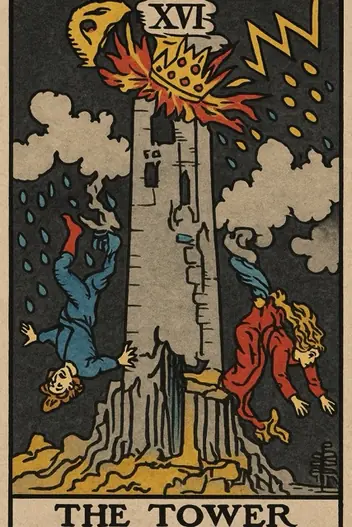
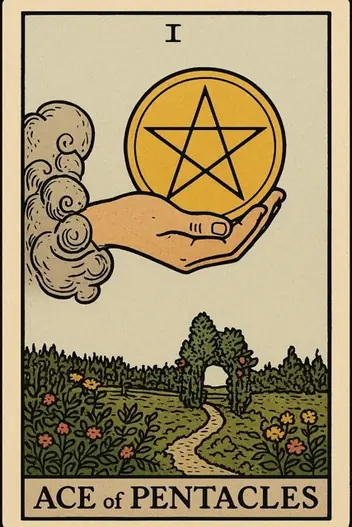
- The Tower — Major Arcana; Ace of Pentacles — Minor Arcana, Pentacles
- Elements
- The Tower — Fire; Ace of Pentacles — Earth
- Elemental interaction
- Neutral elements — energies coexist without conflict
- Numerology
- 16 + 1 = 17 → 8
The intersection of The Tower and the Ace of Pentacles represents a profound psychological and strategic paradox: destruction as a prerequisite for tangible new beginnings. The Tower embodies sudden upheaval, the collapse of false structures, and the shattering of illusions. The Ace of Pentacles, by contrast, is the seed of practical opportunity—a new job, a financial venture, or a stable foundation. When these two cards appear together, they signal that a necessary breakdown is clearing the ground for a concrete, measurable fresh start.
In real life, this combination often manifests as a layoff that leads to a better career path, a relationship ending that frees up capital for a business, or a health crisis that forces a disciplined lifestyle overhaul. The key psychological insight here is cognitive reappraisal: the ability to see a crisis not as a catastrophe, but as a forcing function for building something more durable. The Ace of Pentacles does not remove the trauma of The Tower; it provides the practical means to rebuild smarter, stronger, and with clearer priorities.
The Tower and Ace of Pentacles: How These Energies Interact
The core dynamic between The Tower and the Ace of Pentacles is a rapid transition from chaos to creation. Psychologically, this creates a state of productive anxiety—the discomfort of uncertainty is channeled into concrete action rather than paralysis. The seeker is forced to confront the illusion of security (The Tower) while simultaneously being handed a tangible opportunity (Ace of Pentacles) to ground themselves in reality. This is not a gentle transition; it demands rapid psychological flexibility and a willingness to let go of what no longer works.
The mindset required here is one of strategic detachment. You cannot cling to the old structure while trying to plant the new seed. The Ace of Pentacles asks for pragmatic optimism—not blind hope, but a calculated belief that the foundation you are about to build is more resilient because it is built on the rubble of what was tested and found wanting. The most important takeaway is that this combination rewards action over reflection. While introspection has its place, the Ace of Pentacles demands a physical step: applying for the job, signing the lease, or making the investment. The Tower has already done the demolition; your job is to now lay the first brick.
Your pair is already on the table. Ask your question and draw the clarifying card
or simply focus on it
The Tower and Ace of Pentacles as Feelings
If you are single:
This combination suggests a sudden end to a pattern or a relationship that was not serving you, clearing the way for a new, more grounded connection. Do not rush into a rebound; instead, focus on financial and emotional stability first—the right partner will appear when your foundation is solid.
If you are in a relationship:
Expect a crisis that forces a renegotiation of the partnership’s practical structure—finances, living arrangements, or long-term goals. This can be a make-or-break moment where the relationship either dissolves or rebuilds on a more honest, secure footing.
In existing relationships, the Tower-Ace of Pentacles combination often signals a disruption to shared resources—a job loss, a major expense, or a betrayal of trust regarding money. The key to navigating this is radical transparency. Partners must discuss hard truths about spending, debt, or career ambitions without blame. Emotional intelligence is critical here: the Tower’s sudden shock can trigger defensiveness or withdrawal, but the Ace of Pentacles offers a practical path forward. Focus on creating a shared budget or a concrete plan for the next 90 days to rebuild trust through measurable actions. For singles, the advice is to avoid romanticizing the destruction. The breakup or rejection is not a sign of fate—it is a data point. Use it to clarify what you need materially and emotionally, then take one small, tangible step toward stability (e.g., join a professional network, update your resume, or attend a social event aligned with your values).
The Tower and Ace of Pentacles for Career and Money
Strategic Opportunities:
Leverage the disruption to pivot into a more stable industry or role. The Tower often clears away dead-end jobs or toxic work environments. The Ace of Pentacles says the next move is a long-term investment in your skills or a new venture.
Strategic Opportunities:
Use the crisis to negotiate better terms. If you are laid off, push for a severance package that provides runway. If a project fails, request resources for a more disciplined restart. The Ace rewards assertive practicality.
Calculated Risks:
Avoid jumping into the first opportunity that appears out of fear. The Tower can create panic, leading to poor financial decisions. Objectively vet any new offer for sustainability—check cash flow, market demand, and alignment with your core competencies.
Professionally, this combination is a catalyst for career reinvention. The destruction of your previous role or business model is not a failure; it is a forced upgrade. The most strategic move is to immediately redirect your energy into building a tangible asset—a certification, a side project, or a savings buffer. Financially, this is a time for austerity and investment, not spending. Cut discretionary expenses to create a financial cushion, then allocate 10-20% of any windfall (e.g., severance, insurance payout) toward a high-value skill or a low-risk investment. Beware of the sunk cost fallacy—do not throw good money after a failed project or relationship. The Tower has already written off that loss; the Ace is asking you to start fresh with a clean ledger.
Your unique Tarot reading
See how these cards interact with your destiny. Start a free personal reading now.
Negative Meaning of The Tower and Ace of Pentacles
The shadow side of this combination manifests when the seeker refuses to let go of the old structure or acts impulsively out of desperation. The Tower’s energy can trigger cognitive biases like loss aversion—clinging to a dying job, relationship, or belief system because it is familiar. This results in missed opportunities because the Ace of Pentacles will not wait. Conversely, reckless optimism can lead to jumping into a new venture without due diligence, mistaking the Ace’s promise for a guaranteed win. Self-sabotage is a real risk: the seeker may unconsciously recreate the Tower’s chaos by making poor investments or starting conflicts, afraid of the stability the Ace offers. The psychological trap is either paralysis from shock or frantic activity without a plan. The antidote is disciplined patience: acknowledge the loss, but refuse to act until you have at least three concrete options to evaluate.
The Tower and Ace of Pentacles Reversed Meaning
When the energy of these cards becomes distorted, the dynamic grows more viscous and painful.
If The Tower is Reversed:
Destruction is occurring, but you have blocked or postponed it. This leads to chronic stress and internal tension. Instead of one single blow, you receive a series of minor "jolts"—illnesses, accidents, losses. Advice: Do not wait for the wall to collapse on its own. Initiate a "controlled demolition"—quit yourself, end toxic relationships, sell a problematic asset.
If the Ace of Pentacles is Reversed:
The potential exists, but you are sabotaging it out of fear of change. You see the opportunity but are afraid to seize it, preferring to cling to an illusion of stability. Warning: This state leads to apathy and missed opportunities. You need to focus on the "minimum viable resource"—start small, but start right now.
If BOTH are Reversed:
Complete imbalance. You are stuck between a past you cannot release and a future you are afraid to begin. This is the classic victim trap. The logical way to correct it: Acknowledge that the status quo is unviable. Break the task down into micro-steps. The first step is not to build something new, but simply to take out the trash from the old. Realize that your resistance to change is itself the primary threat.
Overall Meaning of The Tower and Ace of Pentacles
How can the energy of the Tower be used constructively to balance the Ace of Pentacles? The key lies in intention. The Tower should not be an act of revenge or destruction for its own sake. It must be a surgical instrument, removing whatever hinders your growth. Before acting, ask yourself: "What exactly do I want to build on this site? What do I want my foundation to look like in a year?" The answer to this question will transform chaos into strategy.
The profound strategic advice lies in paradoxical risk acceptance. Usually, we avoid instability. This combination says: seek instability where it is productive. For example, resign not when you are "cornered," but when you feel your potential has outgrown your current position. Invest not in "safe" assets, but in those with high growth potential after a correction. Your clarity comes not from predicting the future, but from a readiness to act under conditions of incomplete information.
Ultimately, "The Tower + Ace of Pentacles" is the formula for conscious renewal. You are not a victim of circumstance; you are the architect who demolishes an old shed to build a skyscraper. Use this period for radical simplification: discard everything that does not serve your primary goal. Concentrate resources, energy, and attention on one, most important project. This is the path from destruction to prosperity.
Where to Go From Here
The Tower and Ace of Pentacles together deliver a powerful message: your foundation has been shaken, but the ground is now fertile for something real. The core insight is that true stability is built on honesty and action, not illusions. The crisis is not your enemy—it is the architect of your next chapter. To apply this wisdom to your unique life, you need more than general archetypes. Use the Fortune Cards app on the web or download it now for a deep, personalized interpretation of this exact combination. The app will analyze your specific question—whether about love, career, or personal growth—and give you actionable, psychologically grounded advice tailored to your situation. Stop reading about the cards; start using them.
Interpretation by the Fortune Cards editorial team, based on the Rider–Waite tradition and Jungian archetypes. About our methodology · Updated: 2026-09-17
Other Combinations with The Tower
Other Combinations with Ace of Pentacles
Explore Individual Card Meanings
Table of Contents
- The Tower and Ace of Pentacles: How These Energies Interact
- The Tower and Ace of Pentacles as Feelings
- The Tower and Ace of Pentacles for Career and Money
- Negative Meaning of The Tower and Ace of Pentacles
- The Tower and Ace of Pentacles Reversed Meaning
- Overall Meaning of The Tower and Ace of Pentacles
- Where to Go From Here
Ready to find answers to your questions?
Start your first reading now and look at your situation with fresh clarity. The cards are ready to reveal deeper meaning.