Death and Knight of Cups Tarot as Feelings
- Arcana
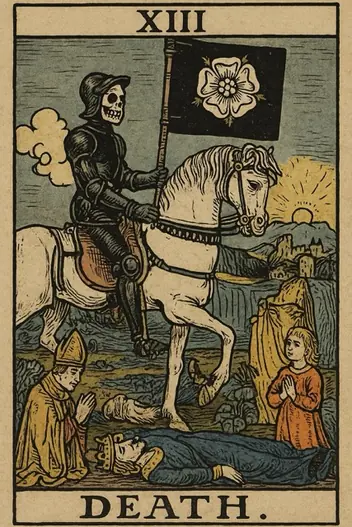
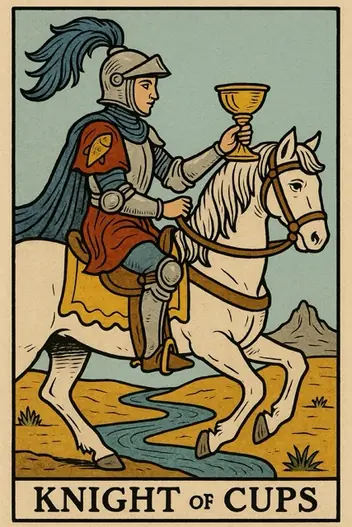
- Death — Major Arcana; Knight of Cups — Minor Arcana, Cups
- Elements
- Death — Water; Knight of Cups — Water
- Elemental interaction
- Same element — energies intensify each other
- Numerology
- 13 + 12 = 25 → 7
When the Death card—representing inevitable endings, radical change, and the dissolution of old structures—meets the Knight Of Cups—the archetype of the romantic idealist, emotional pursuit, and creative inspiration—the result is a powerful psychological paradox. This combination signals that a profound transformation is being driven by emotional conviction, not logic or force. The Knight’s cup may be full of passion, but Death demands that he first empty it to receive something new.
In practical terms, this pairing often appears when a person is about to undergo a major life shift—such as ending a relationship, leaving a career, or abandoning a long-held identity—but is doing so not out of desperation or burnout, but because of a deep, authentic emotional calling. The Knight Of Cups provides the emotional fuel; Death provides the catalyst. Together, they suggest that your heart knows what must die, and your courage is ready to carry the cup forward into the unknown.
Death and Knight of Cups Combination Meaning
The psychological state here is one of controlled emotional intensity. The Knight Of Cups represents a person who is deeply attuned to their feelings, often guided by intuition and a sense of purpose. When combined with Death, this emotional drive is not aimless or whimsical—it is being channeled into a necessary destruction. The key insight is that transformation is not resisted but embraced because the emotional payoff (the cup) is worth the loss (the death).
This combination often reflects a cognitive shift where the seeker realizes that holding onto the past is more painful than letting go. The Knight’s idealism is not naive; it is a strategic tool for navigating the chaos of change. The most important psychological takeaway is that you are not being forced to change against your will. Instead, you are being called to change because your emotional integrity demands it. The Death card strips away what no longer serves you, while the Knight Of Cups ensures that your heart remains open and directed toward a meaningful future.
In real-world terms, expect to see this in scenarios where someone ends a relationship to pursue a passion project, quits a stable job to follow a creative calling, or abandons a long-held belief system because it no longer aligns with their emotional truth. The risk is not in the change itself, but in acting impulsively without a clear plan. The Knight’s enthusiasm must be tempered by Death’s insistence on closure and release.
What Do Death and Knight of Cups Say About Love?
If you are single:
This combination suggests that a new romantic interest may appear who feels like a “fateful” encounter. However, do not rush into commitment—this person may be carrying unresolved emotional baggage from a recent breakup or life transition. Let the initial chemistry settle before making long-term plans.
If you are in a relationship:
Expect a pivotal conversation or event that forces both partners to confront what is no longer working. This is not necessarily a breakup, but a redefinition of the relationship’s foundation—perhaps moving from a casual dynamic to a serious commitment, or releasing old resentments to build something stronger.
The central relationship advice here is to prioritize emotional honesty over comfort. The Knight Of Cups brings a desire for deep connection, but Death demands that you first clear the debris of past disappointments. In a partnership, this means having the courage to say what you truly feel, even if it threatens the status quo. For singles, it means being willing to walk away from a connection that only offers surface-level attraction without psychological depth. The most strategic move is to use this period for introspection: ask yourself what emotional patterns you need to release before inviting a new partner in.
Your pair is already on the table. Ask your question and draw the clarifying card
or simply focus on it
Career Meaning of Death and Knight of Cups
Strategic Opportunities:
Pivot to a passion-driven project or career change that aligns with your core values. This is an excellent time to launch a creative venture or pursue a role that offers emotional fulfillment over financial security.
Strategic Opportunities:
Network with emotionally intelligent mentors or collaborators who can guide you through the transition. The Knight Of Cups favors partnerships built on trust and shared vision.
Calculated Risks:
Avoid making major financial commitments based on excitement alone. The Knight’s enthusiasm can lead to over-optimism, while Death’s finality means any mistake will be hard to reverse. Do not quit your job without a concrete plan or invest in a venture that lacks a clear exit strategy.
In your professional life, this combination signals a career metamorphosis driven by a desire for meaning over money. You may feel a strong urge to leave a field that feels deadening—even if it pays well—to pursue work that feels alive. The pragmatic advice is to treat this as a controlled experiment: test your new direction with a side project or part-time commitment before burning bridges. Financially, the biggest warning is to avoid using credit or savings to fund an impulsive “leap of faith.” Instead, create a transition budget that accounts for a 3–6 month runway. The strategic tip is to use your emotional clarity as a filter: if a career opportunity does not excite your heart (Knight), it will not survive the transformation (Death).
Your unique Tarot reading
See how these cards interact with your destiny. Start a free personal reading now.
Death and Knight of Cups: Warning Signs
The shadow of this combination emerges when the Knight Of Cups becomes emotionally reckless and Death becomes self-destructive. The seeker may romanticize the idea of “burning it all down” without a clear vision of what comes next. This can manifest as cognitive dissonance: believing that a dramatic change will solve all problems, while ignoring the practical steps required. The most common pitfall is mistaking emotional intensity for clarity—just because you feel strongly about a new path does not mean it is viable.
Another shadow pattern is avoidance through idealism. The Knight may use the Death card as an excuse to abandon responsibilities, telling themselves that “the universe wants this” when they are really running from discomfort. Psychologically, this is a defense mechanism that avoids the hard work of incremental change. Watch for signs of splitting: viewing the old situation as entirely bad and the new one as entirely good. This binary thinking prevents the integration of lessons from the past. The cognitive bias to guard against is the sunk cost fallacy reversed—you might be so eager to leave that you overlook valuable resources or relationships that could be salvaged.
What If Death or Knight of Cups Appears Reversed?
When cards appear reversed, the constructive dynamic breaks down, and the shadows of both archetypes come to the forefront.
If Death is reversed:
Transformation is blocked. The person clings to what is outdated, despite a clear signal for change. The Knight of Cups in this situation becomes a symbol of empty promises and emotional blackmail. Advice: Do not wait for a "miracle" or a "last chance." Artificially prolonging the agony will only worsen the losses. You must acknowledge that you are afraid of change.
If the Knight of Cups is reversed:
The emotional impulse is distorted. This can be addiction, immaturity, or passive aggression. The person offers feelings but is not ready to take responsibility for them. In combination with upright Death, this indicates that destruction is occurring due to emotional incompetence. Advice: Take a pause. Do not make decisions until you understand what you truly want, not what you are afraid of.
If BOTH are reversed:
Complete imbalance. This is stagnation reinforced by illusions. The person does not change (Death reversed) and cannot adequately express their feelings (Knight reversed). The logical way to correct this: a forced pause and seeking an external consultant (psychologist, mentor). Internal resources are insufficient to emerge from this crisis.
What Is the Overall Message of Death and Knight of Cups?
How to constructively use the energy of Death to balance the Knight of Cups? The answer is simple: transform emotional impulse into a plan of action. The Knight of Cups is energy, but without the discipline of Death, it remains merely a beautiful gesture. Death is discipline, but without a goal, it leads into emptiness. Combine them: use Death's resolve to cut away everything hindering your emotional project, and use the Knight's inspiration to fill this "blank slate" with meaning.
A deep strategic piece of advice: do not seek a compromise between the old and the new. The combination of Death + Knight of Cups tolerates no half-measures. If you feel a relationship has exhausted itself, and a person (or idea) appears on the horizon that evokes a sincere response in you—do not try to "improve" the old. Acknowledge it as complete. This will grant you the moral right and energy for a fresh start. Clarity here is more important than comfort. Make a decision once and for all, and move forward without looking back. Only then will this powerful energy bring you not pain, but renewal.
Your Next Step: Personal Context Matters
The Death and Knight Of Cups combination is a powerful call to let your heart lead you through a necessary ending, but the specific meaning depends entirely on your unique situation—your relationship status, career stage, and emotional history. The core message is that you have the emotional courage to change, but you must also have the strategic discipline to plan. This is not a time for blind leaps; it is a time for calculated emotional risk.
To get a truly personalized interpretation of this exact combination for your specific question, I recommend using the Fortune Cards app. While this article provides the general archetype, the real magic happens when Tarot is applied to your life’s unique context. The app offers deep, AI-driven readings that consider your exact wording, your current challenges, and your personal history. You can use it on the web or download it now to discover exactly how Death and Knight Of Cups are shaping your next step—right now.
Interpretation by the Fortune Cards editorial team, based on the Rider–Waite tradition and Jungian archetypes. About our methodology · Updated: 2026-08-26
Other Combinations with Death
Other Combinations with Knight of Cups
Explore Individual Card Meanings
Table of Contents
- Death and Knight of Cups Combination Meaning
- What Do Death and Knight of Cups Say About Love?
- Career Meaning of Death and Knight of Cups
- Death and Knight of Cups: Warning Signs
- What If Death or Knight of Cups Appears Reversed?
- What Is the Overall Message of Death and Knight of Cups?
- Your Next Step: Personal Context Matters
Ready to find answers to your questions?
Start your first reading now and look at your situation with fresh clarity. The cards are ready to reveal deeper meaning.