Death and Knight of Pentacles Together in Tarot
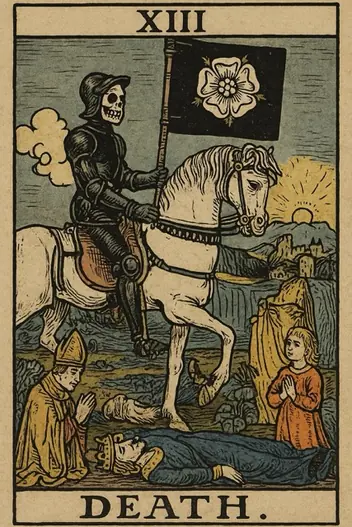
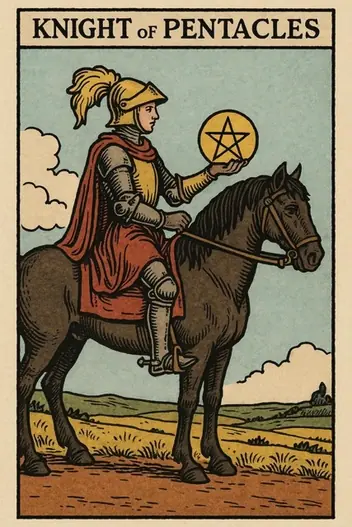
- Arcana
- Death — Major Arcana; Knight of Pentacles — Minor Arcana, Pentacles
- Elements
- Death — Water; Knight of Pentacles — Earth
- Elemental interaction
- Friendly elements — energies support each other
- Numerology
- 13 + 12 = 25 → 7
This card combination represents a profound psychological paradox: the collision of radical, irreversible transformation with methodical, cautious persistence. When the Death card—the archetype of endings, surrender, and psychological rebirth—meets the Knight of Pentacles—the archetype of diligence, routine, and slow progress—the result is not a dramatic upheaval but a deliberate, painstaking dismantling of old structures.
In practical terms, this pairing suggests that a major life transition is occurring, but it is moving at the pace of a glacier. You may feel the urgency of change pulling at your psyche, yet the external circumstances demand patience and disciplined action. The key insight here is that transformation does not always require chaos; sometimes it requires the quiet, methodical work of letting go one brick at a time. This is not a time for impulsive decisions but for calculated, grounded steps toward a new foundation.
What Do Death and Knight of Pentacles Mean Together?
The psychological state created by Death and Knight of Pentacles is one of controlled surrender. You are being asked to accept that something must end—a relationship, a career path, a belief system—but the process of ending is not a sudden collapse. Instead, it is a strategic withdrawal from the old, where every action is measured and every resource is conserved. This is the energy of a person who knows they must leave a burning building but insists on packing their bags carefully before exiting.
The Knight of Pentacles tempers the Death card’s potential for panic or nihilism. Where Death alone might trigger a crisis of meaning, the Knight brings a grounded, almost stoic determination. You are not being asked to destroy everything at once; you are being asked to systematically identify what is no longer viable and to let it go with precision. This combination is common in readings for someone who is leaving a long-term job, ending a marriage, or completing a major life phase—but doing so with a spreadsheet, a timeline, and a backup plan.
The real-world implication is that change is inevitable, but your response to it is a choice. The Knight of Pentacles reminds you that you can control the pace and the method of your transformation. Use this energy to create a detailed exit strategy rather than a dramatic escape. The most powerful insight here is that patience is not resistance to change; it is the most efficient vehicle for change.
Your pair is already on the table. Ask your question and draw the clarifying card
or simply focus on it
Death and Knight of Pentacles in Love Tarot
If you are single:
This combination suggests you are either ending a long-standing pattern of dating or meeting someone who represents a slow, grounded shift in your romantic life. Do not expect fireworks—expect a steady, reliable presence that challenges your old beliefs about love. Beware of mistaking caution for disinterest. The Knight of Pentacles moves slowly, but his commitment is real.
If you are in a relationship:
You are likely in a phase of redefining the relationship’s foundation. This could mean ending a toxic cycle, moving from casual to committed, or accepting that the relationship as it was must die for something healthier to emerge. The death here is not of the partnership, but of its outdated rules.
In relationship dynamics, this pairing demands emotional intelligence and clear boundaries. You may feel a sense of grief or loss even while making a rational decision to stay or leave. The Death card asks you to honor the ending without dramatizing it, while the Knight of Pentacles insists on practical steps toward emotional safety. If you are ending a relationship, do it with dignity and a plan for your own stability. If you are staying, acknowledge what must change and create a schedule for those changes. The key relationship advice is this: do not confuse slow progress with no progress. Every small act of letting go—a hurtful habit, a defensive wall, an old expectation—is a step toward a more authentic connection.
Career and Finances
Strategic Opportunities:
Restructuring your career path by letting go of a failing project or role while investing in a new skill set. This is the time to complete old obligations before starting new ones.
Strategic Opportunities:
Systematizing your finances through debt payoff or savings plans. The Death card’s energy can be channeled into cutting unnecessary expenses like a surgeon removing dead tissue.
Calculated Risks:
Avoid impulsive career changes or quitting without a safety net. The Knight of Pentacles warns against burning bridges prematurely. Also, be wary of hoarding resources out of fear—letting go of old financial security is part of the transformation.
In professional life, this combination is a blueprint for strategic reinvention. You are being asked to audit your career as a business analyst would audit a company. What projects, relationships, or roles are no longer serving your long-term goals? The Death card gives you permission to end them, but the Knight of Pentacles insists you do so with a detailed transition plan. This might mean finishing a degree before switching fields, saving six months of expenses before quitting, or negotiating a phased exit from a toxic workplace. The most important financial warning is this: do not confuse patience with stagnation. You are not stuck; you are preparing. Use this time to build the infrastructure for your next chapter—update your resume, network strategically, and automate your savings.
Uncover hidden insights
Let our advanced Tarot system interpret these archetypes specifically for your personal path.
What If Death or Knight of Pentacles Appears Reversed?
When cards appear reversed, the constructive dynamic breaks down, and resistances and distortions come to the forefront.
If "Death" is reversed:
You are clinging to what is outdated, afraid to begin the process of transformation. The Knight of Pentacles in this situation becomes a symbol of pointless busyness. You work hard, but your efforts are directed at preserving what must die. Warning: this is a direct path to neurosis and exhaustion. Advice: acknowledge that "repair" is impossible, and allow yourself to stop.
If the "Knight of Pentacles" is reversed:
This is an internal resistance to change. You know what needs to be done, but you sabotage the process: procrastinating, being lazy, getting distracted by mundane details. The energy of "Death" is blocked by apathy. Advice: you need an external controller or a deadline. Find someone who will hold you accountable for the result.
If BOTH are reversed:
Complete imbalance. You are in a state of paralysis: the old is destroyed, but the new is not being built. This is a classic midlife crisis or prolonged depression. Methods for correction: a forced change of environment (a minimal step) and a rigid daily structure are needed. Restore physical discipline (sports, routine) to "ground" the chaos of the reversed "Death."
Shadow Side & Pitfalls
When this energy is blocked or misapplied, the shadow manifestations are stubborn resistance to change masked as practicality. You may find yourself rationalizing why you cannot let go—"I need more data," "The timing isn't right," "I'm being responsible"—when in truth, you are frozen by fear of the unknown. The cognitive bias here is loss aversion: you overvalue what you have (even if it is toxic) and undervalue what you could gain. This can lead to prolonged suffering in a dead-end job or relationship, mistaking endurance for virtue.
Another pitfall is ritualistic behavior—going through the motions of change without actually transforming. You might create elaborate plans, make lists, and discuss possibilities, but never take the decisive action that the Death card demands. This is self-sabotage disguised as diligence. The Knight of Pentacles’ shadow is pedantry and perfectionism, which can delay necessary endings until they become crises. If you find yourself micromanaging the details of your transformation while avoiding the core emotional work, you are trapped in this shadow. The antidote is to ask yourself: "What is one small, irreversible action I can take today to honor this ending?"
Death and Knight of Pentacles Combined Message
How to use this energy? Your task is to integrate destruction and creation into a single cycle. Do not wait for "Death" to happen on its own. Become its agent. Identify one area of life (finances, health, relationships) where you know for certain that the "old" is dragging you down. This could be a harmful habit, a toxic connection, or an outdated skill.
Now, engage the "Knight of Pentacles." Draw up a concrete, step-by-step plan for 90 days. Do not set global goals ("become successful"). Set process-oriented ones: "Every day I will spend 30 minutes learning a new tool" or "Every week I will renounce one old ritual." Your strategic advice: move slowly, but inexorably. Allow yourself not to know what will happen in a year. Your task is simply to take the next step, relying on facts, not emotions.
This combination grants incredible resilience. You cease to be a victim of change and become its architect. Clarity comes through action. The more you do, the clearer it becomes what needs to be left behind and what needs to be built anew.
Your Next Step: Personal Context Matters
The core message of Death and Knight of Pentacles is that transformation is a process, not an event. You have the power to end what no longer serves you, but you must do so with patience, planning, and self-compassion. This is not a time for dramatic leaps of faith; it is a time for steady, deliberate steps toward a new life. The ending you face is not a failure—it is a necessary foundation for what comes next.
While this article provides a deep analysis of the archetypal energies, the true power of Tarot lies in how these cards speak to your unique situation. Your specific question, your personal history, and the other cards in your spread will shape the meaning dramatically. To get a deep, personalized interpretation of this exact combination for your relationship, career, or life question, use the Fortune Cards app. Available on the web or as a download, it applies advanced psychological and symbolic analysis to your specific context—giving you the practical clarity and strategic insight you need to act with confidence right now.
Interpretation by the Fortune Cards editorial team, based on the Rider–Waite tradition and Jungian archetypes. About our methodology · Updated: 2026-08-26
Other Combinations with Death
Other Combinations with Knight of Pentacles
Explore Individual Card Meanings
Table of Contents
Ready to find answers to your questions?
Start your first reading now and look at your situation with fresh clarity. The cards are ready to reveal deeper meaning.