Death and Page of Wands Together in Tarot
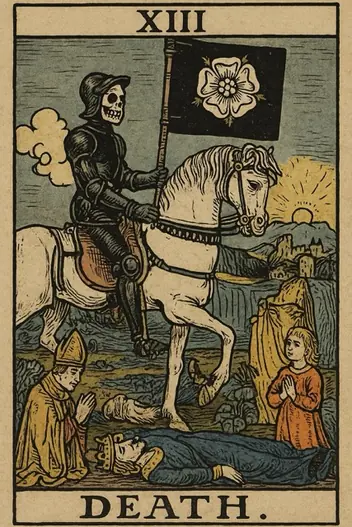

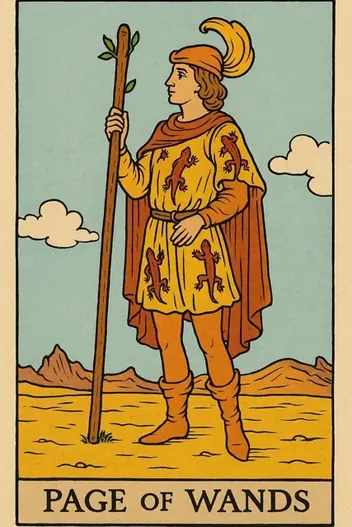
- Arcana
- Death — Major Arcana; Page of Wands — Minor Arcana, Wands
- Elements
- Death — Water; Page of Wands — Fire
- Elemental interaction
- Opposing elements — energies create tension
- Numerology
- 13 + 11 = 24 → 6
The Death card and Page of Wands form a potent psychological paradox: the dissolution of old structures meets the raw enthusiasm of a new beginning. In Jungian terms, this is the ego’s encounter with the Shadow of transformation—where what must die is not your identity, but the outdated patterns that hold you back. The Page of Wands then steps in as the archetype of the Puer Aeternus (eternal youth), offering a spark of curiosity that can either ignite genuine renewal or lead to impulsive self-sabotage.
This combination demands a pragmatic approach. You are being asked to consciously let go of a comfort zone while simultaneously protecting a fragile new idea or project from burnout. The Death card removes the scaffolding of your old life; the Page of Wands hands you a torch to explore the rubble. The key is to recognize that transformation is not a single event, but a disciplined series of small, curious actions taken after a decisive ending.
Death and Page of Wands Combination Meaning
When Death meets the Page of Wands, the core dynamic is controlled chaos meeting creative curiosity. The Death card represents an irreversible threshold—a job loss, a breakup, or a belief system that no longer serves you. Psychologically, this activates the liminal state where your old coping mechanisms fail, creating a vacuum of uncertainty. The Page of Wands then rushes in with unfiltered enthusiasm, offering a new direction that feels exciting yet untested. The challenge is to avoid mistaking activity for progress.
The mindset here is strategic naivety. You must allow yourself to be a beginner again, even while grieving what was lost. This is a high-risk, high-reward state. The Page’s energy can easily become manic avoidance—starting three new projects to distract from the pain of one ending. The most pragmatic interpretation is that you are being given permission to experiment without attachment to outcome. Treat the next 30 days as a prototype. Test one new idea, gather data, and be willing to discard it if it doesn’t fit the new framework Death has created.
The psychological breakthrough occurs when you accept that nothing is wasted. The Death card clears the ground; the Page of Wands plants a seed. But seeds require patience. If you act too fast, you risk repeating old patterns in a new disguise. If you wait too long, the spark dies. The optimal strategy is to take one small, bold action per week that aligns with your curiosity, while ruthlessly cutting anything that feels like a “should” from the past.
Your pair is already on the table. Ask your question and draw the clarifying card
or simply focus on it
Career Meaning of Death and Page of Wands
Strategic Opportunities:
Pivot to a new industry or role that leverages your curiosity, even if you lack experience. The Page of Wands rewards learning over credentials.
Strategic Opportunities:
Launch a side project or prototype that tests a risky idea with minimal resources. Treat it as a “beta” for your next career move.
Calculated Risks:
Avoid quitting your job prematurely. The Death card ensures the old structure will crumble, but the Page of Wands cannot pay bills on enthusiasm alone. Set a 90-day experiment with clear metrics before making a major financial commitment.
Professionally, this combination is a green light for innovation but a red flag for impulsivity. The Death card indicates that a current role, company culture, or career path is reaching its natural end. You may feel a sense of professional grief—losing a title, a team, or a sense of competence. The Page of Wands offers a counterbalance: become a beginner again. This is the ideal time to take a course, attend a conference, or pitch an unconventional idea to your boss. The most financially sound move is to redirect energy, not burn bridges.
Bold financial warning:
Do not pour savings into a “passion project” simply because the Page feels exciting. The Death card requires you to cut losses, not double down on fantasies. Instead, use the Page’s energy to diversify your income streams—freelance, consulting, or a small side hustle that costs less than $500 to start. The real value here is learning agility, not immediate profit. If you are in a leadership role, this combination signals that a team dynamic must end (e.g., a toxic project or underperformer) before you can introduce a fresh initiative. Your strategic advantage lies in being the one who names the ending and then personally champions the new direction.
Deepen your understanding
Find out exactly what this reading means for your current life situation with our oracle.
Death and Page of Wands in Love Tarot
If you are single:
This combination suggests you are emerging from a significant emotional ending (a breakup, a pattern of codependency, or a fantasy relationship). Do not rush into a new connection just to fill the void. Instead, treat dating as a low-stakes exploration. The Page of Wands indicates that someone with youthful energy or a creative spark may appear, but you must first clarify what you actually want—not what you think you should want.
If you are in a relationship:
A fundamental shift is occurring. An old dynamic (e.g., a power struggle, a communication block, or a shared illusion) is ending. The Page of Wands invites you to playfully experiment with new ways of connecting. This could mean starting a shared creative project or simply asking each other, “What if we tried something completely different?” Beware of using new excitement to avoid deeper issues.
In relationships, Death and Page of Wands signals a necessary reset of expectations. The old contract is void. You are not fixing the relationship; you are building a new one with the same person. This requires emotional intelligence to distinguish between genuine renewal and escapism. If you or your partner are suddenly full of ideas for travel, hobbies, or new routines, ask: “Is this a genuine desire, or are we avoiding the discomfort of the ending?” The healthiest path is to explicitly name what is dying (e.g., “the need to control each other’s schedules”) and then co-create one new ritual that embodies the Page’s curiosity—like a weekly “idea date” where no judgment is allowed.
Bold relationship advice:
Do not let the Page’s charm mask a lack of commitment. If the relationship survived the Death, the Page’s energy must be channeled into shared vision, not individual escape. If you are single, avoid projecting a savior narrative onto a new crush. The Page of Wands is a student, not a master.
Shadow Side & Pitfalls
The shadow of Death and Page of Wands is reckless optimism masking unresolved grief. The most common cognitive bias is the sunk cost fallacy—clinging to the old while pretending the new is enough. You might start a new relationship before processing the last one, or launch a business while ignoring the debt from the previous venture. The Page’s enthusiasm can become a manic defense against the emotional labor of transformation.
Another pitfall is analysis paralysis disguised as curiosity. You may research endless possibilities (new courses, new cities, new partners) without ever taking a concrete step. This is the Page of Wands’ shadow: the eternal beginner who never builds anything lasting. If you find yourself collecting ideas but executing none, ask: “Am I using this excitement to avoid the pain of a real ending?” Self-sabotage occurs when you mistake novelty for progress. The Death card demands closure; the Page demands action. If you skip the closure, the action will be hollow.
The most dangerous trap is impulsivity. A sudden urge to move cities, quit your job, or end a relationship “just because it feels right” may be the Page’s shadow, not a genuine calling. Always wait 48 hours before acting on a “Death and Page” impulse. Use that time to journal: “What am I running from? What am I running toward?” The answer will reveal whether this is transformation or escapism.
Reversed Death and Page of Wands Explained
When cards appear reversed, the dynamic becomes distorted, and constructive potential is blocked.
If Death is reversed:
This indicates blocked potential and internal resistance. The person clings to the past, refusing to let go of what is already dead. The Page of Wands in this situation becomes reckless and destructive — energy is spent not on creating something new, but on senseless rebellions and conflicts. Advice: Acknowledge that you are afraid of change. Find a psychologist or coach who can help you move through the stages of denial and anger.
If the Page of Wands is reversed:
Here we see a lack of motivation and creative impulse. Death has occurred (or is occurring), but the person has fallen into apathy and depression. They understand that something needs to change but cannot find the strength within themselves. Warning: This state is dangerously close to prolonged depression. You need to artificially create an impulse — sign up for courses, start exercising, find a like-minded person. Do not wait for inspiration; act on discipline.
If BOTH are reversed:
Complete imbalance. This combination points to a crisis that has reached a dead end. The person simultaneously resists change and is unable to start anything. A state of paralysis of the will arises. A logical way to correct this: It is necessary to radically simplify your life. Turn off all external stimuli (social media, news). Focus on basic needs: sleep, food, physical activity. Take one small step — throw away an old item, write one resume. Any action is better than complete inaction.
What Is the Overall Message of Death and Page of Wands?
Constructive use of this pair's energy requires a strategic balance between destruction and creation. Death is not the Page of Wands' enemy, but its ally. Your task is to use the clarity that Death provides (understanding what must be left behind) to channel the Page's impulse into the most effective direction. Do not waste energy on what has no future. Focus on one, most important goal.
In practical terms, this looks like: conduct an audit of your life. Write down on a sheet of paper everything that evokes feelings of fatigue, boredom, or meaninglessness (Death). Then, opposite each item, write what exactly you want to create in its place (Page of Wands). For example: "My office job is suffocating me" -> "I want to learn the profession of graphic design and take orders online." This list will become your roadmap.
The main strategic advice:
Do not try to do everything at once. Choose one key project that will symbolize your transformation. This could be a career change, a move, or the start of a serious relationship. Invest all your enthusiasm into it, but act methodically. Remember: Death does not tolerate fuss, and the Page does not tolerate boredom. Combine these qualities — be decisive in letting go of the old and passionate in creating the new. Only then can you emerge from the crisis not weakened, but renewed and full of strength.
Where to Go From Here
The Death and Page of Wands combination is a call to embrace endings as laboratories for new beginnings. The core message is clear: let go of what no longer serves you, then experiment with one small, bold idea. But the specific meaning depends entirely on your current life situation—your career stage, your relationship history, your financial reality. Generic advice can only take you so far.
That’s why the Fortune Cards app is your next step. This article provides the archetype, but the app delivers a deep, personalized interpretation of this exact combination for your unique question. Whether you’re navigating a breakup, a career pivot, or a creative block, the app analyzes your specific context and offers actionable, psychologically grounded guidance. Use it on the web or download it now to unlock the precise strategy that Death and Page of Wands hold for your life today. The cards have given you the spark—now let the app show you where to aim it.
Interpretation by the Fortune Cards editorial team, based on the Rider–Waite tradition and Jungian archetypes. About our methodology · Updated: 2026-08-26
Other Combinations with Death
Other Combinations with Page of Wands
Explore Individual Card Meanings
Ready to find answers to your questions?
Start your first reading now and look at your situation with fresh clarity. The cards are ready to reveal deeper meaning.