Death and Temperance Reversed in Tarot
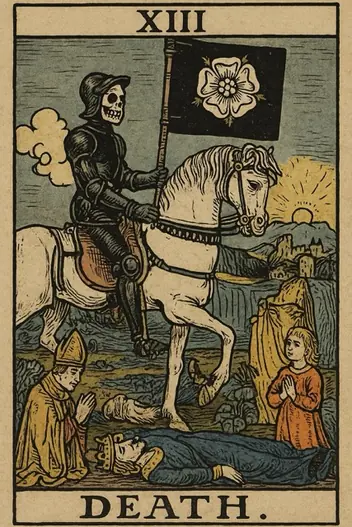
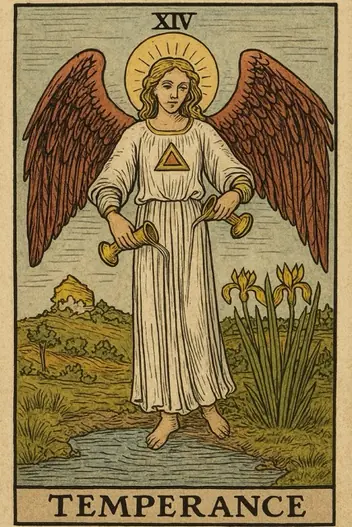
- Arcana
- Death — Major Arcana; Temperance — Major Arcana
- Elements
- Death — Water; Temperance — Fire
- Elemental interaction
- Opposing elements — energies create tension
- Numerology
- 13 + 14 = 27 → 9
When the stark finality of Death meets the measured patience of Temperance, we encounter a profound psychological paradox: how to surrender to necessary endings without losing your center. In Jungian terms, this is the collision of the Shadow (what must be released) and the Individuation process (how to integrate that release with wisdom). This combination rarely signals catastrophe; instead, it points to a deliberate, almost surgical process of change—one that requires both courage and restraint.
In practical terms, Death and Temperance together suggest you are in a phase where major transitions must be managed with precision. You cannot force the pace, nor can you cling to the past. The energy here is not about chaos, but about strategic dissolution: letting go of what no longer serves you while actively constructing a stable structure to navigate the aftermath. This is not a time for impulsive decisions, but for calculated, mindful evolution.
Death and Temperance: How These Energies Interact
The core dynamic of this pairing is the tension between irreversible change and the need for emotional equilibrium. Death demands a clean break—a job, a relationship, or a belief system must end. Temperance insists that this ending be handled with composure, not rashness. Psychologically, this represents the mature ego’s ability to grieve without collapsing. The key insight here is that transformation is not a single event, but a process of gradual integration. You are not simply “ending” something; you are metabolizing its lessons.
This mindset is particularly relevant in high-stakes situations. The seeker must adopt a dual focus: first, on what must be released (Death’s domain), and second, on how to maintain balance during the transition (Temperance’s domain). Avoid the temptation to numb yourself or rush into the next phase. Instead, treat this as a period of intentional pause—a psychological “alchemy” where raw emotions are refined into clarity. The most effective approach is to create a structured timeline for the change, allowing yourself small, daily acts of release while simultaneously practicing grounding rituals (e.g., journaling, meditation, or physical exercise). This prevents the transformation from becoming overwhelming.
Death and Temperance: Career and Money
Strategic Opportunities:
Restructure your role or team to eliminate redundant processes. This is a prime time to pivot your career focus by acquiring a new certification or skill that aligns with emerging trends.
Strategic Opportunities:
Negotiate a phased exit from a toxic project or partnership. Use Temperance to draft a transition plan that minimizes financial loss while honoring your commitments.
Calculated Risks:
Avoid major financial gambles (e.g., quitting without a backup plan, or investing in volatile assets). Do not burn bridges professionally—maintain diplomatic relationships even as you close chapters.
In your professional life, Death and Temperance signal a strategic pivot rather than a crisis. The most effective action is to conduct a rigorous audit of your current workload and long-term goals. Ask: Which projects are draining energy without yielding results? Which relationships are holding me back? Temperance here acts as a risk-management tool—it insists that you plan the ending with the same care as the beginning. Bold financial warning: Do not conflate “letting go” with “abandoning responsibility.” For example, if you are leaving a job, ensure you have a signed offer before resigning, or negotiate a severance package. If you are closing a business, liquidate assets gradually and consult a tax professional. The shadow of this combination is procrastination disguised as patience—do not use Temperance as an excuse to avoid difficult decisions. Set a firm deadline (e.g., 30 days) to complete the transition.
Your pair is already on the table. Ask your question and draw the clarifying card
or simply focus on it
Death and Temperance as Feelings
If you are single:
This combination suggests you are ready to release a past attachment or outdated pattern (e.g., the “rescuer” role) before a new connection can flourish. Focus on emotional closure, not immediate dating.
If you are in a relationship:
The dynamic here points to a necessary recalibration of boundaries or power balance. One partner may need to “die” to a habitual role (e.g., the caretaker or the critic) to create space for mutual growth.
In committed relationships, Death and Temperance often appear during a transition from a conflict-driven phase to a more harmonious one. The key is to avoid dramatic confrontations; instead, use tempered communication—acknowledge the need for change without blaming or shaming. Bold advice: Schedule a structured conversation where both partners agree to speak without interruption for 10 minutes each. This prevents the emotional flooding that Death can trigger. Financially, if you are considering a separation or major lifestyle shift, do not make sudden moves. Temperance advises a phased approach: save for 3-6 months of expenses, or agree on a trial separation before finalizing any decision. The goal is to transform the relationship’s structure, not to destroy it.
When Death and Temperance Signal Trouble
The shadow of Death and Temperance manifests as emotional suppression or passive aggression. The seeker may recognize that change is needed but resist it by over-intellectualizing the process (e.g., endlessly analyzing “why” without acting). This is a cognitive bias known as analysis paralysis—a defense mechanism against the discomfort of endings. Alternatively, the seeker might swing between extremes: one day feeling resigned to loss, the next day manic about new possibilities. This instability undermines the very balance Temperance promises.
Another pitfall is using Temperance to rationalize staying in a harmful situation. For example, telling yourself you need to “be patient” with a partner who is disrespectful, or with a job that is stagnant. True Temperance is not passive endurance; it is active regulation. If you find yourself feeling numb, detached, or overly controlled, you are likely blocking the natural grief that Death requires. To counter this, schedule a specific time each week to feel the loss—write a letter you won’t send, or talk to a therapist. Bold warning: Do not mistake emotional control for emotional health. The goal is integration, not suppression.
Get a personalized interpretation
Unlock the combined meaning of your cards in the context of your unique question — for free.
Death and Temperance Reversed: What Changes?
When cards appear in reversed positions, the dynamics become distorted and risks increase.
Death Reversed:
This indicates blocked potential or, conversely, reckless self-destruction. You are either clinging to what is obsolete, fearing change, or, on the contrary, committing irreversible acts without strategic calculation. Advice: Acknowledge your resistance to change. Find the "dead zone" in your life that you refuse to let go of, and start small — give up one habit or old thing to unblock the energy.
Temperance Reversed:
This is inner resistance and emotional dysregulation. You cannot find balance, swinging from one extreme to another. This can manifest as impulsive spending, overeating, workaholism, or, conversely, complete apathy. Advice: Restore basic rituals. Return to simple, repetitive actions (morning routine, a walk, meditation). Temperance reversed requires a literal return to the "golden mean" through the physical body and routine.
BOTH Reversed:
This is complete imbalance of dynamics — a chaotic situation where there is neither the strength for radical change nor the capacity for integration. You are stuck in a toxic cycle where destruction does not lead to renewal but only drains resources. Advice: The only logical way to correct this is a forced stop. Take a "time-out" for 3-7 days, completely disconnecting from decision-making. Delegate crisis management to a third party (psychologist, coach, consultant) to break out of the vicious circle.
Overall Meaning of Death and Temperance
How can the energy of Death be used constructively to balance or activate Temperance? The answer lies in creating a decision-making algorithm for conditions of uncertainty. Imagine Death as a surgeon who must remove a diseased organ, and Temperance as the anesthesiologist monitoring vital signs. Your task is not to hinder the surgeon, but also not to let them exceed the dose of anesthesia.
The first step is diagnosis. Determine what exactly is dying: a specific project, a belief, a habit, or an entire life sphere. Do not confuse the symptom with the disease. The second step is speed calibration. Set a time frame for the transformation process. For example: "Within 3 months, I will complete Project X, but each week I will set aside 2 hours for planning the next phase." The third step is integration of losses. Death always takes something valuable, even if that something has already outlived its purpose. Acknowledge this loss. Temperance does not demand "positive thinking"; it demands ecological disposal of the past. Perform a symbolic closing ritual (write a letter, sort through old files, return belongings).
Deep strategic advice:
Use the "1% per day" principle. Death frightens with its totality, but Temperance teaches that transformation is the sum of small, sequential steps. Each day, take one action that brings you closer to the new state, and one that completes the old. This could be letting go of one toxic thought, deleting one contact, making one edit to your resume. Do not try to change everything at once — change the system gradually, but inexorably. Remember that true strength lies not in avoiding destruction, but in emerging from it with an intact psyche and a clear plan.
Where to Go From Here
Death and Temperance together teach that the most profound transformations are those we navigate with deliberate calm. You are not being asked to rush into the unknown, nor to cling to the familiar. Instead, you are called to surrender to the process of change while actively shaping its outcome. The core message is one of structured release: let go of what must die, but do so with a plan, a timeline, and a commitment to your own equilibrium.
While this article provides a general archetype, the true power of Tarot lies in its application to your unique situation. Your specific question, your current emotional state, and the surrounding cards in your spread will shift the meaning dramatically. That is why I recommend using the Fortune Cards app for a deep, personalized interpretation of this exact combination. Whether you are navigating a breakup, a career pivot, or a personal reinvention, the app will analyze your context and provide actionable, psychological insights tailored to you. You can use it on the web or download it now—get the clarity you need to move forward with both courage and composure.
Interpretation by the Fortune Cards editorial team, based on the Rider–Waite tradition and Jungian archetypes. About our methodology · Updated: 2026-08-26
Other Combinations with Death
Other Combinations with Temperance
Explore Individual Card Meanings
Ready to find answers to your questions?
Start your first reading now and look at your situation with fresh clarity. The cards are ready to reveal deeper meaning.