Death and Three of Cups Meaning in Tarot
- Arcana
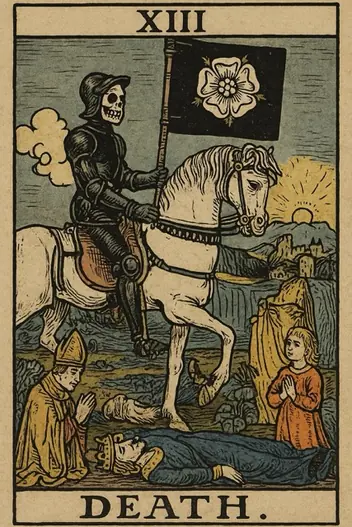
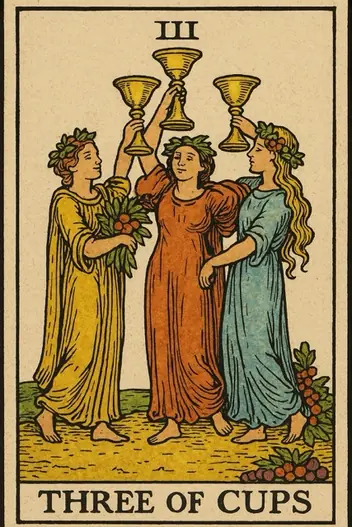
- Death — Major Arcana; Three of Cups — Minor Arcana, Cups
- Elements
- Death — Water; Three of Cups — Water
- Elemental interaction
- Same element — energies intensify each other
- Numerology
- 13 + 3 = 16 → 7
When the Death card—the archetype of radical transformation and necessary endings—collides with the Three of Cups—the symbol of shared celebration, friendship, and emotional abundance—you are not looking at a tragedy. You are looking at a strategic pivot point. This combination suggests that a period of social harmony, creative collaboration, or emotional fulfillment is ending because it must evolve into something more substantial. The psychological task here is to grieve what was, without clinging to its form, while actively preparing for a new phase of connection that is more aligned with your evolving identity.
From a Jungian perspective, this pairing represents the dissolution of a persona-based social mask. The Three of Cups often reflects a collective identity—a group, a partnership, or a social role that brought you joy. Death demands you strip that away to reveal the individuated self beneath. The result is not isolation, but a deeper, more authentic form of community built on shared truth rather than shared performance.
Death and Three of Cups Card Meaning Explained
The core dynamic here is transition through celebration. The Death card forces a closure, but the Three of Cups ensures that this closure is supported by social bonds and emotional resources. You are not walking this path alone, and you are not being asked to suffer in silence. Instead, you are being asked to use your friendships, your creative partnerships, or your emotional support system as the vehicle for transformation. This is a pragmatic alchemy: what must die is the superficial joy, so that a sustainable joy can emerge.
Psychologically, this combination activates a cognitive dissonance between wanting to hold onto familiar happiness (Three of Cups) and knowing that it no longer serves your growth (Death). The key insight is that resistance to this ending will only prolong emotional stagnation. The Three of Cups energy can act as a buffer—providing comfort and camaraderie—but it can also become a trap of inertia if you use it to avoid the necessary change. Bold action requires you to honor the loss while leveraging the support around you.
In practice, this means saying goodbye to a group, a project, or a relationship that once felt like home—but doing so with gratitude and clear communication. The Death card’s finality is softened by the Three of Cups’ emphasis on ritual and closure. A farewell party, a final collaboration, or a heartfelt conversation can transform a painful ending into a meaningful rite of passage. The mindset to adopt: “This chapter is over, but the love and learning remain.”
Your pair is already on the table. Ask your question and draw the clarifying card
or simply focus on it
Death and Three of Cups: Career and Money
Strategic Opportunities:
Leverage your network for a career pivot. The Death card signals a role, project, or industry shift. The Three of Cups suggests your best resource is your social capital—colleagues, mentors, or collaborators who can facilitate the transition. Bold action: schedule farewell meetings and ask for referrals.
Strategic Opportunities:
Launch a collaborative project that honors an ending. For example, a final product launch, a retrospective event, or a team celebration of a completed phase. This ritualizes the change and builds goodwill for future ventures.
Calculated Risks:
Avoid romanticizing past successes. The Three of Cups can lure you into nostalgia for a profitable but obsolete business model or team culture. Bold warning: do not let loyalty to a failing group dynamic delay necessary restructuring.
In financial terms, this combination often appears when a period of shared prosperity is ending—perhaps a partnership, a joint venture, or a bonus structure tied to team performance. The Death card demands a clear-eyed audit of what is no longer profitable or sustainable. The Three of Cups energy can help you negotiate a graceful exit or repurpose relationships for a new venture. Key strategic insight: use the social harmony of the Three of Cups to negotiate severance, equity buyouts, or transition terms without burning bridges.
For entrepreneurs, this pairing is a call to kill a beloved but underperforming product or service. The Three of Cups indicates that your team’s morale is high—do not let that fool you into ignoring market realities. Bold financial advice: celebrate the effort, but cut the loss. Redirect team energy toward a new, data-backed initiative. The risk is groupthink: everyone likes each other too much to admit the project is failing. Introduce an external consultant or anonymous feedback system to break the bias.
Death and Three of Cups Love Outcome
If you are single:
This combination suggests you may be ending a pattern of superficial connections (e.g., casual dating, friend groups that stifle romance) to make room for a relationship built on emotional depth and shared values. Expect a period of social recalibration—some friendships may fade as you prioritize authenticity.
If you are in a relationship:
The pairing warns that your partnership may be undergoing a necessary transformation. The joyful, carefree phase is ending, and you must choose to rebuild on a foundation of vulnerability and mutual growth, or risk stagnation. Bold communication about boundaries and future goals is critical.
In relationships, this combination forces a reckoning with collective dynamics. If you are in a couple, the Three of Cups energy might represent friends or social circles that influence your partnership. The Death card suggests that some of those external influences must be pruned—perhaps a friend who encourages conflict, or a group activity that distracts from intimacy. The psychological work is to differentiate your relationship from the social script you have been following. Boldly ask: “Is this joy authentic, or am I performing happiness to avoid conflict?”
For singles, the Death card indicates that a part of your social identity must die before you can attract a partner. This could mean leaving a friend group that normalizes singlehood, or letting go of an ex’s lingering presence in your social circles. The Three of Cups assures that new, healthier connections will emerge—but only after you stop using socializing as a distraction from your own growth. Practical advice: attend events alone, or invest in one-on-one time with potential partners rather than group settings.
Get a personalized interpretation
Unlock the combined meaning of your cards in the context of your unique question — for free.
Negative Meaning of Death and Three of Cups
The shadow of this combination manifests as toxic positivity or avoidance disguised as celebration. The Three of Cups energy can be used to anesthetize the pain of change—throwing parties, maintaining a busy social calendar, or clinging to group rituals that prevent you from facing the Death card’s truth. This leads to emotional bankruptcy: you appear joyful on the outside, but internally you are hollow. Cognitive bias alert: the “sunk cost fallacy” of friendships. You may stay in a draining social circle because of shared history, ignoring that the group’s purpose has died.
Another pitfall is over-identification with the collective. The Death card can trigger a fear of losing your social identity, so you sacrifice your individual needs to maintain group harmony. This results in codependency or resentment. The Three of Cups, in its shadow form, becomes a pact of mediocrity: everyone agrees to avoid change to preserve the status quo. Bold warning: if your friends or partners resist your growth, they are not your support system—they are your cage.
Finally, this combination can manifest as premature celebration. You may rush to “move on” or “party through the pain” without fully processing the grief of what was lost. This creates unresolved emotional debt that will surface later. Practical safeguard: schedule intentional alone time after any group celebration to integrate the change.
Death and Three of Cups Reversed: How to Read It
If Death is reversed:
You are stuck in the denial phase. You keep going to meetings and smiling, even though everything inside is already destroyed. Risk — prolonged depression. Advice: acknowledge that something has died. Do not try to resuscitate the corpse of an old friendship or job. Allow yourself to grieve and let go.
If the Three of Cups is reversed:
You have already isolated yourself, but you did it aggressively and incorrectly. Instead of an eco-friendly closure, you caused a scandal and burned bridges. Trap — pride. You may end up alone, but not because of growth, but because of resentment. You don't need to sever ties, but to transform their format.
If BOTH are reversed:
Total chaos. You are simultaneously clinging to the past (Death reversed) and pushing away a healthy future (Three of Cups reversed). This is a state of "chronic crisis." The only way out is a hard pause. A complete withdrawal from social life for 2-3 weeks and work with a psychologist or journal. You need to reboot the system, not try to fix it.
Death and Three of Cups: The Combined Message
Constructive use of this pair requires a cool head and a warm heart. Your task is not to destroy everything around you, but to perform "surgery on connections." Use the energy of Death as a scalpel: separate what hinders your development, but do not touch what nourishes you. The Three of Cups in its healthy manifestation is the ability to find joy in solitude, without needing an audience.
Strategic advice: Implement the "90-day rule." If you feel that a certain social group or habit is holding you back, do not break away abruptly. Set a 90-day period during which you will gradually reduce the time spent on it, replacing it with a new activity. Death is a process, not an instantaneous explosion. Give yourself time to adapt.
The deepest conclusion of this combination is that true intimacy is only possible after passing through the "death" of illusions. Do not fear losing friends who do not understand your changes. Fear staying with those who prevent you from becoming yourself. This pair of cards grants you permission for solitude in the name of growth. Use it wisely.
Your Next Step: Personal Context Matters
The Death and Three of Cups combination is a powerful call to transform your social and emotional life with courage and grace. It asks you to honor the endings that make room for deeper connection, and to use your community as a springboard for growth rather than a safety net against change. The core message: you can grieve, celebrate, and evolve all at once—but only if you stop clinging to the past’s version of joy.
To truly understand how this archetypal collision applies to your specific question, you need a personalized reading. The Fortune Cards app uses advanced AI to interpret this exact combination in the context of your unique situation—whether it’s a relationship decision, a career crossroads, or a personal transformation. Try it now on the web or download the app to get a deep, actionable interpretation tailored to your life. The general insight is valuable; the personal application is transformative.
Interpretation by the Fortune Cards editorial team, based on the Rider–Waite tradition and Jungian archetypes. About our methodology · Updated: 2026-08-26
Other Combinations with Death
Other Combinations with Three of Cups
Explore Individual Card Meanings
Table of Contents
- Death and Three of Cups Card Meaning Explained
- Death and Three of Cups: Career and Money
- Death and Three of Cups Love Outcome
- Negative Meaning of Death and Three of Cups
- Death and Three of Cups Reversed: How to Read It
- Death and Three of Cups: The Combined Message
- Your Next Step: Personal Context Matters
Ready to find answers to your questions?
Start your first reading now and look at your situation with fresh clarity. The cards are ready to reveal deeper meaning.