The Devil and Ten of Cups Together in Tarot
- Arcana
- The Devil — Major Arcana; Ten of Cups — Minor Arcana, Cups
- Elements
- The Devil — Earth; Ten of Cups — Water
- Elemental interaction
- Friendly elements — energies support each other
- Numerology
- 15 + 10 = 25 → 7
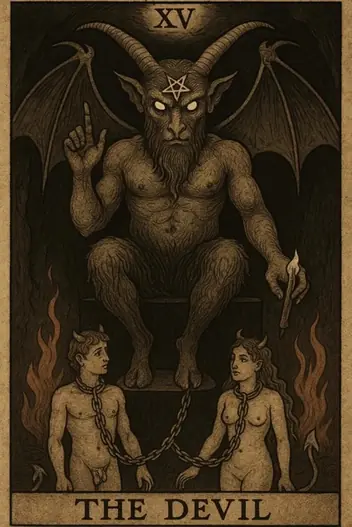
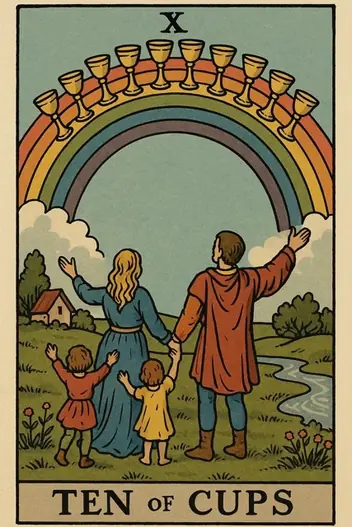
The intersection of The Devil and The Ten of Cups presents a profound psychological paradox: the pursuit of perfect emotional fulfillment through potentially limiting or compulsive means. The Devil represents attachment, addiction, and the shadow aspects of the psyche—the patterns we cling to out of fear or habit. The Ten of Cups symbolizes emotional completion, family harmony, and the idealized happy ending. When these cards combine, they reveal a tension between authentic joy and the chains we mistake for security.
This dynamic often surfaces in real life when someone sacrifices personal freedom for a "perfect" relationship, or when a career success story masks a deeper dissatisfaction. The key psychological insight here is the illusion of control: we may believe we are building a paradise, but the Devil reminds us to question what we are actually trading away to get there.
What Do The Devil and Ten of Cups Mean Together?
The core dynamic of this pairing is a battle between authentic fulfillment and conditioned attachment. The Ten of Cups promises a state of emotional wholeness, yet The Devil suggests this vision may be tainted by unconscious compulsions, materialism, or codependency. The psychological state created is one of ambivalence: the seeker may feel they have everything they ever wanted, yet sense a hollow core beneath the surface. This is not a sign of failure, but a call to examine the price of your happiness.
In practical terms, this combination often points to a relationship or life situation that looks perfect from the outside but feels restrictive from the inside. The Devil’s chains may be invisible—social expectations, financial obligations, or fear of being alone—yet they keep the seeker tethered to a version of happiness that is not genuinely theirs. The primary insight is to distinguish between what you truly desire and what you have been conditioned to accept.
The strategic action here is to audit your attachments. Ask yourself: Which parts of my life bring genuine joy, and which parts do I maintain out of fear of losing the "perfect picture"? The Ten of Cups is not a lie, but it must be earned through conscious choice, not automatic compliance.
Career Meaning of The Devil and Ten of Cups
Strategic Opportunities:
Leverage your current stability to fund a passion project or pivot—the Ten of Cups suggests emotional payoff is possible, but only if you break free from risk-averse thinking.
Strategic Opportunities:
Use your existing network or reputation to negotiate better terms—the Devil’s materialism can be channeled into securing fair compensation.
Calculated Risks:
Avoid golden handcuffs—a high salary or prestigious title that keeps you in a role you dislike. The Devil warns that financial security can become a cage.
In your professional life, this combination often manifests as a tension between financial success and emotional fulfillment. You may be in a position that provides stability and status (The Devil’s material rewards), yet you feel disconnected from the purpose or joy that the Ten of Cups represents. The strategic approach is to reframe success not as a destination but as a process. Ask yourself: Am I building a career that sustains my soul, or just my bank account?
A critical financial warning:
Beware of over-investing in appearances—buying a house, car, or lifestyle to match the "perfect" image, when your actual needs are simpler. The Ten of Cups is about emotional richness, not material excess. Use your resources to buy freedom, not chains.
Your pair is already on the table. Ask your question and draw the clarifying card
or simply focus on it
Love and Relationships
If you are single:
This combination warns against idealizing a partner who seems perfect on paper. Beware of projecting a fantasy onto someone who may not be emotionally available or aligned with your deeper values. Focus on compatibility, not chemistry alone.
If you are in a relationship:
Evaluate whether your partnership is built on mutual growth or mutual dependency. The Devil can indicate a dynamic where one partner feels trapped by "happiness" that actually limits their individuality.
In relationships, The Devil and Ten of Cups together often reveal a power imbalance disguised as harmony. One partner may sacrifice their autonomy to maintain the illusion of a "perfect" union—perhaps by avoiding conflict, suppressing needs, or staying in a comfortable but stagnant dynamic. The key relationship advice is to prioritize honesty over appearances. If you feel a subtle pressure to perform happiness, it’s time for an honest conversation about boundaries and authentic desires.
Emotional intelligence is your strongest tool here. Recognize that true intimacy requires vulnerability, not perfection. The Ten of Cups can be achieved, but only when both partners are free to be themselves—not when they are chained to an idealized version of what a relationship "should" be.
Uncover hidden insights
Let our advanced Tarot system interpret these archetypes specifically for your personal path.
Shadow Side & Pitfalls
When this energy is blocked or distorted, the seeker may fall into cognitive dissonance: they know something is wrong, but they suppress that knowledge to preserve the "happy" narrative. This can lead to self-sabotage through passive aggression, resentment, or sudden rebellion—like blowing up a stable relationship or quitting a job without a plan. The shadow of The Devil here is addiction to comfort, while the shadow of the Ten of Cups is perfectionism. Together, they create a trap where the seeker is afraid to disrupt a "good enough" situation, even though it leaves them unfulfilled.
Poor judgment manifests when the seeker confuses intensity with intimacy. They may stay in a toxic relationship because the highs feel like "true love," or cling to a career that drains them because the rewards feel like "success." The cognitive bias at play is the sunk cost fallacy: the belief that because you’ve invested so much, you must continue. The antidote is radical self-honesty—acknowledging that a perfect picture can still be a prison.
Reversed The Devil and Ten of Cups Explained
If The Devil is reversed — this signals blocked potential. You are afraid of your own power, authority, or sexuality. You may be rejecting advantageous offers or toxic relationships, but you do so out of fear, not wisdom. Advice: do not fear your "dark side"; learn to use ambition without guilt.
If the Ten of Cups is reversed — this is inner resistance to happiness. You are sabotaging stable relationships or a successful project yourself because subconsciously you do not believe you deserve the "ideal." Warning: check whether you are destroying something good because it feels "boring" to you.
If BOTH are reversed — complete imbalance. This is a state where you simultaneously fear freedom (The Devil reversed) and cannot accept the world's imperfection (Ten of Cups reversed). A logical way to correct it: start small. Do not try to achieve "absolute happiness." Focus on one specific action that brings you pleasure, and give up one addiction (even coffee or social media) to regain a sense of control.
Synthesis: Strategic Conclusion
How to constructively use this energy? The Devil is not about evil—it's about focus, will, and realism. The Ten of Cups is not about rose-tinted glasses—it's about wholeness and fulfillment. Your task is to merge the Devil's pragmatism with the Ten of Cups' vision.
Deep strategic advice:
Stop searching for the "perfect partner" or the "perfect job." Instead, create space for growth. Identify which 20% of your actions bring 80% of your satisfaction (Ten of Cups), and which 20% of your fears prevent you from attaining it (Devil). Use the Devil's energy to protect your happiness: set clear boundaries, learn to say "no" to manipulation, and invest resources only in what affirms your worth rather than erodes it.
Remember: authentic harmony requires no sacrifice. If you feel you must "pay" for happiness with your freedom, conscience, or self-respect—that deal is not in your favor. Your task is to transform dependency (Devil) into devotion (Ten of Cups). Devotion to your values, not to a person or a position.
Where to Go From Here
The core message of The Devil and Ten of Cups is that true happiness cannot be forced or faked. It requires the courage to examine your attachments and the wisdom to choose freedom over illusion. This combination asks you to distinguish between what you genuinely desire and what you have been conditioned to accept as "enough."
While this article provides a general archetype, the true power of Tarot lies in its application to your unique situation. Your specific question, emotional state, and life context will shape the meaning of these cards in ways that no generic analysis can capture. To get a deep, personalized interpretation of this exact combination for your current challenge, use the Fortune Cards app. Available on the web or for download, it offers tailored insights that turn archetypes into actionable guidance for your life right now.
Interpretation by the Fortune Cards editorial team, based on the Rider–Waite tradition and Jungian archetypes. About our methodology · Updated: 2026-08-26
Other Combinations with The Devil
Other Combinations with Ten of Cups
Explore Individual Card Meanings
Ready to find answers to your questions?
Start your first reading now and look at your situation with fresh clarity. The cards are ready to reveal deeper meaning.