Love Tarot: Five of Cups and Knight of Cups
- Arcana
- Five of Cups — Minor Arcana, Cups; Knight of Cups — Minor Arcana, Cups
- Elements
- Five of Cups — Water; Knight of Cups — Water
- Elemental interaction
- Same element — energies intensify each other
- Numerology
- 5 + 12 = 17 → 8
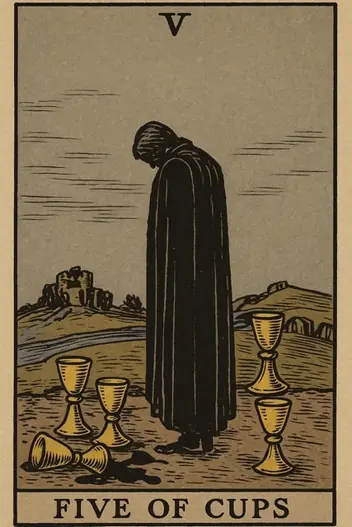
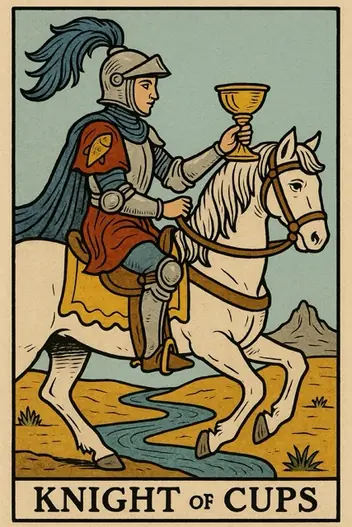
When the Five of Cups—the card of loss, regret, and emotional withdrawal—meets the Knight of Cups—the archetype of romantic pursuit, creative inspiration, and idealistic emotion—we witness a psychological collision. The Knight charges forward with a cup held high, seeking the perfect emotional connection, while the Five of Cups stands still, staring at three spilled cups, mourning what is lost. This combination reveals a person caught between grieving the past and chasing an idealized future. The core tension is between holding onto disappointment and over-investing in a new emotional venture to escape that pain.
In practical terms, this pair often appears when a client has recently experienced a significant emotional setback—a breakup, a failed project, or a betrayal—and is now tempted to rush into a new relationship, creative endeavor, or career shift as a form of emotional avoidance. The Knight’s passion can feel like a rescue, but without processing the Five’s grief, the Knight’s quest may be built on shaky ground. The strategic challenge is to acknowledge the loss without letting it define your next move.
What Do Five of Cups and Knight of Cups Mean Together?
The psychological state created by the Five of Cups and Knight of Cups is one of emotional ambivalence. On one hand, the Knight brings a surge of optimism, charm, and romantic idealism—the desire to create something beautiful or to be swept away by a compelling vision. On the other hand, the Five of Cups introduces a deep undercurrent of melancholy and self-blame. The seeker may feel they don’t deserve the Knight’s offering, or they may unconsciously sabotage the new opportunity because they haven’t fully processed the old wound.
This combination often signals a disconnect between action and feeling. The Knight wants to move forward, but the Five of Cups wants to pause and mourn. The result can be impulsive decisions driven by a need to escape emotional pain rather than genuine alignment. For example, someone might dive into a new romantic relationship immediately after a painful breakup, only to find themselves repeating old patterns. Alternatively, a creative professional might launch a grandiose new project to distract from a recent failure, without a solid plan.
The key insight here is that the Knight of Cups’ idealism is not inherently destructive—it becomes dangerous only when it bypasses the necessary grieving process. The healthiest integration of these energies involves using the Knight’s emotional intelligence to gently explore the Five’s grief, rather than racing away from it. This means allowing yourself to feel the sadness without letting it paralyze you, and channeling the Knight’s passion into healing rituals or creative expression that honor the loss.
What Do Five of Cups and Knight of Cups Say About Love?
If you are single:
This combination warns against rushing into a new romance as a bandage for a recent heartbreak. The person you meet may seem like a “perfect” Knight in shining armor, but you risk projecting your unmet needs onto them. Take at least 30 days to reflect before committing emotionally.
If you are in a relationship:
The dynamic suggests one partner is emotionally withdrawn (Five of Cups) while the other is overly romantic or idealistic (Knight of Cups) . This can create a push-pull dynamic where one person feels neglected and the other feels pressured to “fix” the sadness.
In relationships, the Five of Cups and Knight of Cups combination often reveals a power imbalance in emotional expression. The Knight may be over-functioning—offering grand gestures, relentless positivity, or attempts to “rescue” their partner from their grief. Meanwhile, the Five of Cups partner may feel guilty for not being able to match that energy, leading to further withdrawal. This is a recipe for resentment on both sides.
The critical relationship advice here is to establish clear emotional boundaries. The Knight must learn that they cannot fix their partner’s past losses—their job is to witness, not to rescue. The Five of Cups partner must resist the temptation to self-pity or use their grief as a tool for control. Instead, both should focus on shared, low-stakes activities that build new, positive memories without the pressure of “making up for” the past. Couples counseling or structured communication exercises (like “check-in” conversations) can be highly effective here.
Your pair is already on the table. Ask your question and draw the clarifying card
or simply focus on it
Career and Finances
Strategic Opportunities:
Channel the Knight’s creative vision into a project that directly honors or learns from a past failure. This could be a “lessons learned” report, a redesigned portfolio, or a new business idea that addresses the gaps exposed by a previous loss.
Strategic Opportunities:
Leverage the Knight’s networking charm to rebuild your professional reputation after a setback. Attend industry events, reconnect with old colleagues, and pitch your new ideas with genuine enthusiasm—but keep your emotional stories private in initial conversations.
Calculated Risks:
Avoid making major financial commitments based on emotional highs or “gut feelings” alone. The Knight of Cups can be impulsive with money (e.g., investing in a friend’s startup, buying expensive equipment for a new hobby). The Five of Cups warns that unprocessed grief can cloud your judgment, leading to decisions you’ll later regret.
Professionally, this combination often appears when a creative or helping professional (artist, therapist, coach, designer) is trying to rebound from a significant career disappointment—a rejected proposal, a failed launch, or a toxic work environment. The Knight of Cups energy can be a powerful engine for innovation and authentic connection with clients, but only if it’s grounded in realistic planning.
A key financial warning:
Do not use a new venture as a way to “prove your worth” to those who rejected you before. The Knight’s idealism can lead to overspending on marketing, branding, or tools to create a facade of success. Instead, treat this as a “soft launch” phase—test your ideas on a small scale, gather feedback, and protect your cash reserves. The Five of Cups reminds you that loss is a teacher, not a punishment.
Ask your specific question
Don't rely on generic meanings. Get a customized reading tailored specifically to your energies.
Five of Cups and Knight of Cups: Warning Signs
When the energy of these cards is blocked or expressed irrationally, the shadow side emerges. The primary pitfall is emotional avoidance disguised as optimism. The seeker may refuse to acknowledge their grief, instead plunging into a whirlwind romance or a grandiose creative project to numb the pain. This often leads to repeating the same patterns—the new relationship or project will eventually trigger the same unresolved feelings, leading to another “spilled cup” moment.
Another shadow manifestation is victimhood combined with passive-aggression. The Five of Cups partner may use their sadness to manipulate the Knight into constant caretaking, while the Knight may become resentful of being cast as the “savior” without their own needs being met. This dynamic can create a codependent loop where neither party takes full responsibility for their emotional state.
Cognitive biases to watch for:
The sunk cost fallacy (holding onto grief because you’ve “already suffered so much”) and the halo effect (believing a new person or project is perfect because it feels like a rescue). The most dangerous trap is confusing intensity with intimacy—the Knight’s dramatic gestures can feel like deep connection, but they may actually be a way to avoid quiet, vulnerable conversations about the past.
Reversed Five of Cups and Knight of Cups Explained
If the Five of Cups is Reversed:
The loss has already been accepted, but the Knight of Cups in an upright position indicates reckless forward movement without looking back. The person is no longer suffering, but they are also not learning from their mistakes. They are simply rushing into a new adventure, risking stepping on the same rake. Advice: Use the freed-up energy not for a race, but for strategic planning.
If the Knight of Cups is Reversed:
This signifies internal resistance and emotional weakness. The impulse for action is blocked. The person is stuck in the Five, but cannot even attempt to get out. They reject any offers of help, wallowing in their grief. Warning: This is a state of deep depression. Professional support is necessary, not attempts at "self-healing."
If BOTH are Reversed:
A complete imbalance of dynamics. The past is not released, and the future is frightening. The person is in a state of emotional paralysis. They can neither suffer "correctly" to let go, nor act to change the situation. Logical method for correction: Artificially create a small victory. Start with micro-actions (cleaning, sports, routine) to regain a sense of control, and only then begin deep psychological work on the trauma.
Five of Cups and Knight of Cups Combined Message
Constructive use of this combination requires a conscious separation of emotions and actions. The Five of Cups is your compass, pointing to what was lost and why it was valuable. The Knight of Cups is your energy for movement. The mistake is to allow one to consume the other.
Your strategy is a "delayed start". Do not attempt to immediately replace the loss. First, use the Knight's energy for exploration, not attack. Instead of rushing headlong into a new relationship or business, use this impulse to study the market, take courses, or build connections. Allow the Knight to be a scout, not a soldier.
The deep strategic advice: Transform "loss" into "investment." The Five of Cups is a resource you have already spent and cannot recover. The Knight is a new resource. Connect them: take the lessons from the past experience (the Five) and apply them as a filter for the new project (the Knight). Ask yourself: "What did this pain teach me? How can I avoid repeating this mistake by using my new energy?" This turns a destructive dynamic into a mechanism for personal growth and wise decision-making.
Applying This to Your Situation
The Five of Cups and Knight of Cups combination is a powerful call to integrate your grief with your passion. It asks you to honor what you’ve lost without letting it dictate your future, and to pursue new emotional ventures with both honest self-awareness and strategic patience. The core message is: You can feel the sadness and still say yes to a new beginning—but only if you are clear about what you’re running from.
While this article provides a deep psychological framework, the true meaning of these cards depends entirely on your specific situation, question, and emotional history. The same combination can mean something very different for a recent widow versus someone recovering from a professional setback.
To get a personalized, AI-powered reading that applies these insights directly to your life, use the Fortune Cards app. Simply open the web app or download it, input your exact question (e.g., “Should I pursue this new relationship after my breakup?” or “How can I recover from my career loss?”), and receive a tailored interpretation of this exact card combination for your unique context. Don’t rely on generic meanings—get the clarity you need today.
Interpretation by the Fortune Cards editorial team, based on the Rider–Waite tradition and Jungian archetypes. About our methodology · Updated: 2026-08-26
Other Combinations with Five of Cups
Other Combinations with Knight of Cups
Explore Individual Card Meanings
Table of Contents
- What Do Five of Cups and Knight of Cups Mean Together?
- What Do Five of Cups and Knight of Cups Say About Love?
- Career and Finances
- Five of Cups and Knight of Cups: Warning Signs
- Reversed Five of Cups and Knight of Cups Explained
- Five of Cups and Knight of Cups Combined Message
- Applying This to Your Situation
Ready to find answers to your questions?
Start your first reading now and look at your situation with fresh clarity. The cards are ready to reveal deeper meaning.