The Fool and The Hanged Man Meaning in Tarot
- Arcana
- The Fool — Major Arcana; The Hanged Man — Major Arcana
- Elements
- The Fool — Air; The Hanged Man — Water
- Elemental interaction
- Neutral elements — energies coexist without conflict
- Numerology
- 0 + 12 = 12 → 3
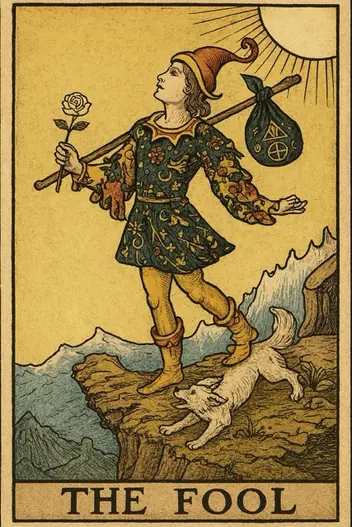
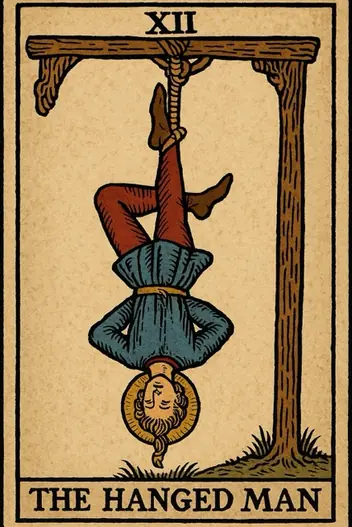
When The Fool—the archetype of innocent beginnings, raw potential, and blind faith—collides with The Hanged Man—the symbol of suspension, sacrifice, and reversed perspective—you get a powerful psychological cocktail. This isn’t about reckless action or passive waiting. It’s about knowing when to pause before you leap, and leaping only after you’ve seen the situation from a completely new angle. This combination demands that you stop romanticizing spontaneity and start treating your next move as a deliberate experiment in trust.
The core tension here is between momentum and stillness. The Fool wants to walk off the cliff; the Hanged Man wants to hang upside down to study the cliff’s geology. In practice, this means you are being asked to delay gratification to gain clarity, but not to delay indefinitely. This is a strategic pause, not a permanent stall. The psychological payoff is a decision that feels both fresh and deeply considered.
The Fool and The Hanged Man Card Meaning Explained
The merging of The Fool and The Hanged Man creates a paradox of active surrender. You are not giving up control—you are choosing to release the need for immediate control in order to gain a higher understanding. This is the mindset of a scientist conducting an experiment: you set a hypothesis, then you suspend judgment to observe the results. The key insight is that true freedom comes from voluntarily accepting constraints, not from ignoring them.
In real-world terms, this combination often appears when you are at a crossroads where neither action nor inaction feels safe. The psychological state is one of creative tension: you know a leap is required, but you also sense that the timing isn’t right yet. The Hanged Man’s influence prevents The Fool from acting impulsively, while The Fool’s energy ensures you don’t get stuck in analysis paralysis. The optimal path is to commit to a pause with a clear deadline, then act with full trust once that deadline arrives.
This dynamic is particularly potent for breaking old patterns. The Hanged Man’s reversed perspective helps you see the hidden assumptions behind your usual behavior, while The Fool’s innocence gives you the courage to ignore those assumptions. The result is a strategic act of rebellion against your own history.
The Fool and The Hanged Man: Career and Money
Strategic Opportunities:
Use this period to research new industries or roles without committing. Treat it as a scouting mission.
Strategic Opportunities:
Volunteer for a project that requires a different skill set. The Hanged Man thrives on learning through discomfort.
Calculated Risks:
Avoid signing any contracts or making large investments until you have seen the situation from multiple angles. Do not confuse patience with procrastination.
Professionally, The Fool and The Hanged Man recommend a phase of exploration without obligation. This is the perfect time to take a course, attend a conference, or shadow a colleague in a different department. The financial warning here is clear: do not let the excitement of a new venture blind you to its hidden costs. The Hanged Man’s energy demands that you calculate the opportunity cost of every move.
If you are considering a career change, this combination suggests testing the waters before diving in. Start a side project, freelance for a few months, or take a sabbatical. The strategic action is to sacrifice immediate income for long-term clarity. This is not a gamble—it’s a calculated investment in your future alignment. Bold financial risk tip: set a hard budget for your exploration phase to prevent The Fool’s optimism from draining your savings.
Your pair is already on the table. Ask your question and draw the clarifying card
or simply focus on it
The Fool and The Hanged Man in Love and Relationships
If you are single:
This pair suggests you should pause before pursuing a new connection to examine what you truly seek. A week of reflection can save you months of confusion.
If you are in a relationship:
You and your partner may be stuck in a power dynamic of waiting. One person wants to leap forward while the other needs more time. The solution is to agree on a specific timeline for a shared decision.
In relationships, The Fool and The Hanged Man often signal a period of necessary suspension. This is not a sign of disconnection but of growing pains. You may feel like you are sacrificing your own desires for the sake of the partnership, but this sacrifice is temporary and strategic. The most important relationship advice here is to communicate your internal pause clearly. Don’t let your partner interpret your stillness as rejection or indifference. Bold honesty about your need for perspective is a sign of emotional intelligence, not weakness.
For singles, this combination warns against the fantasy of the “perfect stranger.” The Fool’s charm can make you overlook red flags, while The Hanged Man asks you to invert your usual criteria. What if the person you’re dismissing is actually what you need? The pragmatic takeaway: write down your non-negotiables, then use the Hanged Man’s perspective to question each one.
The Fool and The Hanged Man Reversed Meaning
When cards appear in reversed positions, the dynamic becomes more tense. The Reversed Fool indicates blocked potential and recklessness. This is not spontaneity, but childish immaturity. The person fears taking a step, yet behaves destructively, blaming others for their problems. Advice: stop looking for someone to blame and take responsibility for your "freeze."
The Reversed Hanged Man represents inner resistance and weakness. Instead of voluntarily accepting a pause, the person experiences apathy or rage. They are not ready to change, but neither can they stay put. Advice: you need not to "let go" of the situation, but to admit that you are not ready for change. Honesty with yourself is the only way out.
If BOTH cards are reversed, this indicates a complete imbalance in the dynamic. It is a state of "neither here nor there": the person simultaneously fears the new (The Fool) and resists the past (The Hanged Man). A logical way to fix this is to artificially create structure. Keep a journal, implement strict time management, or seek a mentor. You need an external framework because your inner compass is broken.
Deepen your understanding
Find out exactly what this reading means for your current life situation with our oracle.
When The Fool and The Hanged Man Signal Trouble
The shadow of The Fool and The Hanged Man is passive-aggressive indecision. You may convince yourself you are “waiting for signs” when you are actually avoiding a difficult choice. This is a cognitive bias known as the illusion of control: you feel safer in suspension because it postpones potential failure. The pitfall is that you can drift into a fog of inaction where neither progress nor clarity emerges.
Another shadow manifestation is romanticizing suffering. The Hanged Man’s sacrifice can feel noble, but when combined with The Fool’s naivety, you may tolerate unhealthy situations—bad relationships, dead-end jobs—because you believe the universe will reward your patience. This is not wisdom; it’s self-sabotage. The pragmatic check is to ask: “Is this pause teaching me something new, or am I just avoiding a hard conversation?”
Finally, watch for reckless bursts of action after a long pause. The Fool’s energy can explode after too much stillness, leading to a poorly timed leap. The antidote is to schedule your action—set a date for your decision and stick to it, regardless of fear.
The Fool and The Hanged Man: The Combined Message
How to constructively use the Fool's energy to balance the Hanged Man? The answer is paradoxical: you need to stop fighting the state of suspension. In this pair, the Fool is not a call to action, but a call to experiment within stagnation. Instead of trying to "escape the dead end," try changing your perspective. Engage in something you have never done before, but without the goal of achieving a result. For example, if you feel "stuck" in your career, sign up for courses in a radically different field, purely out of interest. This will satisfy the Fool's energy and give the Hanged Man a new context for analysis.
A deep strategic piece of advice: use the "72-hour rule." If an idea (the Fool) comes to mind, do not implement it immediately. Allow it to "hang" for 72 hours. During this time, the Hanged Man will test its strength: if after three days the idea still seems brilliant, it is most likely correct. If not, it was merely an impulse. Clarity comes not from forcing the situation, but from accepting its current form. Your task now is not to jump, but to see exactly where you want to jump, even if you are hanging upside down.
Applying This to Your Situation
The Fool and The Hanged Man together deliver a single, powerful message: the most meaningful leaps are those taken after a deliberate pause. You are not stuck—you are being invited to see your situation from a perspective you’ve never considered. The clarity you seek will not come from waiting indefinitely, but from actively choosing to see things differently before you move.
While this article provides a deep archetypal analysis, the true power of Tarot lies in its application to your unique life. Your specific question—about a person, a job, or a decision—deserves a personalized interpretation. That’s what the Fortune Cards app is built for. You can use it right now on the web or download it to get a detailed, custom reading of this exact card combination, tailored to your situation. Don’t guess your next step. Let the cards speak directly to your question.
Interpretation by the Fortune Cards editorial team, based on the Rider–Waite tradition and Jungian archetypes. About our methodology · Updated: 2026-08-26
Other Combinations with The Fool
Other Combinations with The Hanged Man
Explore Individual Card Meanings
Table of Contents
- The Fool and The Hanged Man Card Meaning Explained
- The Fool and The Hanged Man: Career and Money
- The Fool and The Hanged Man in Love and Relationships
- The Fool and The Hanged Man Reversed Meaning
- When The Fool and The Hanged Man Signal Trouble
- The Fool and The Hanged Man: The Combined Message
- Applying This to Your Situation
Ready to find answers to your questions?
Start your first reading now and look at your situation with fresh clarity. The cards are ready to reveal deeper meaning.