The Fool and Page of Wands Tarot as Feelings
- Arcana
- The Fool — Major Arcana; Page of Wands — Minor Arcana, Wands
- Elements
- The Fool — Air; Page of Wands — Fire
- Elemental interaction
- Friendly elements — energies support each other
- Numerology
- 0 + 11 = 11 → 2
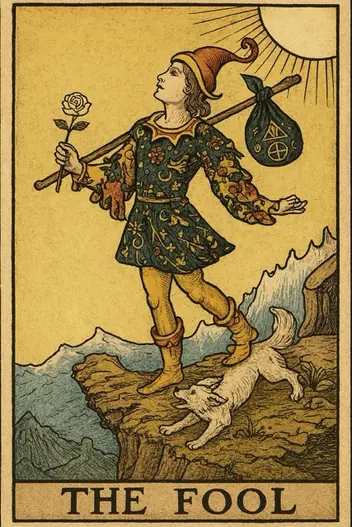
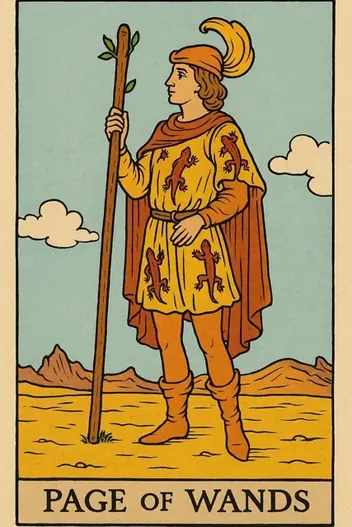
The intersection of The Fool and the Page of Wands creates a potent psychological cocktail: unfiltered curiosity meets raw enthusiasm. The Fool represents the archetype of the divine beginner—someone unburdened by past failures, societal expectations, or rational constraints. The Page of Wands, in contrast, embodies the first spark of creative ambition—a focused, fiery impulse to explore a specific interest or project. When these two collide, the result is a mindset that blends reckless optimism with targeted excitement, often leading to impulsive but potentially transformative actions.
In real-world terms, this pairing suggests a person or situation where intellectual caution is suspended in favor of pure experiential learning. The Fool provides the permission to start without a map, while the Page of Wands supplies the energy to take that first concrete step. Together, they create a psychological state where fear of failure is temporarily absent, replaced by a childlike belief that the adventure itself is the reward. However, this combination demands careful management: without boundaries, the enthusiasm can devolve into chaotic experimentation without direction.
What Do The Fool and Page of Wands Mean Together?
The core dynamic here is a tension between infinite possibility and focused intention. The Fool’s energy is diffuse, open-ended, and non-judgmental—it says “anything is possible.” The Page of Wands, however, is specific: it points to a particular interest, skill, or creative outlet that demands attention. When merged, the seeker experiences a paradox of simultaneous freedom and direction. This is not a time for grand five-year plans or risk-averse calculations; instead, it calls for action-oriented exploration where the goal is to learn by doing, not by analyzing.
Psychologically, this combination activates the Jungian archetype of the Puer Aeternus (eternal youth) in its most constructive form. The seeker feels an urgent need to chase a new passion, start a project from scratch, or dive into a hobby without overthinking the consequences. The key insight is that this energy works best when channeled into low-stakes experiments—trying a new art class, launching a prototype, or taking a spontaneous trip. However, the shadow risk is cognitive dissonance: the seeker may convince themselves they’re being “spontaneous” when they’re actually avoiding responsibility or long-term commitments. The pragmatic approach is to set a short time horizon (e.g., “I will explore this for 30 days”) and then reassess with clear criteria.
Your pair is already on the table. Ask your question and draw the clarifying card
or simply focus on it
Career Meaning of The Fool and Page of Wands
Strategic Opportunities:
Pilot a new side project or skill with minimal financial risk. Use The Fool’s permission to fail as a license to experiment—think of it as a “beta test” for a business idea.
Strategic Opportunities:
Network with creative or startup-minded individuals who can amplify your enthusiasm. The Page of Wands thrives on collaboration; seek mentors or peers who share your curiosity.
Calculated Risks:
Avoid signing long-term contracts or making large investments now. The Fool’s optimism can blind you to hidden costs or market realities. Set a strict budget for any new venture and commit to reviewing it monthly.
In professional terms, this combination is a green light for innovation but a red light for major financial exposure. The best use of this energy is to allocate 10-20% of your time or budget to speculative projects—a new marketing channel, a creative collaboration, or a skill-building course. The Fool’s energy here is prototype-friendly: it encourages you to build a minimum viable product (MVP) rather than waiting for perfection. However, the Page of Wands’ impatience can lead to rushed decision-making. For example, you might quit a stable job to chase a passion project without a safety net. The pragmatic strategy is to keep your day job while dedicating evenings or weekends to the new venture—this preserves financial stability while honoring the creative impulse. Financially, avoid gambling or speculative investments; the combination’s enthusiasm does not align with disciplined risk assessment. Instead, invest in learning—online courses, books, or coaching that build skills for long-term growth.
Love and Relationships
If you are single:
This pairing suggests you are attracting or drawn to someone who embodies unfiltered enthusiasm and a lack of emotional baggage. However, beware of mistaking excitement for compatibility—their charm may mask a reluctance to commit to anything deeper than a fleeting adventure.
If you are in a relationship:
The dynamic here can be energizing but destabilizing. One partner may feel the urge to “shake things up” with a new hobby, trip, or lifestyle change, while the other may struggle to keep up. The risk is that this novelty-seeking behavior undermines emotional stability.
In relationships, The Fool and Page of Wands together signal a phase of rediscovery and playful experimentation. Partners may feel like they’re dating again, exploring new shared interests or rekindling a sense of wonder. The psychological advantage is that this energy breaks rigid patterns—couples stuck in routine can use it to inject spontaneity. However, the shadow side is impulsivity without empathy. One partner might drag the other into an ill-considered plan (e.g., quitting a job to travel) without fully discussing the consequences. Boundary-setting is critical here: agree on a “safe word” or check-in process before acting on big ideas. For singles, this combination warns against idealizing a new connection based solely on its novelty. The Page of Wands’ enthusiasm can feel intoxicating, but The Fool’s lack of foresight means you may overlook red flags. Practical advice: date with curiosity, not commitment, and let three months pass before making any major decisions.
Your unique Tarot reading
See how these cards interact with your destiny. Start a free personal reading now.
What If The Fool or Page of Wands Appears Reversed?
When cards appear in a reversed position, the energy is blocked or distorted.
If The Fool is reversed:
Instead of freedom, paralysis of choice arrives. The person fears taking the first step, as past experience (or lack thereof) weighs heavily. The impulse of the Page of Wands dies out before it can be born. Advice: Overcome fear through micro-actions, not through contemplation.
If the Page of Wands is reversed:
Enthusiasm is replaced by apathy or passive aggression. The person dreams but does not act, or acts out of a sense of duty rather than interest. This points to burnout or an internal resistance to change. Warning: Do not try to artificially "ignite" yourself — this will lead to a breakdown.
If BOTH are reversed:
Complete imbalance. Chaos turns into destruction. The person may commit reckless acts without deriving any pleasure from them, only exacerbating the problems. The only logical way to correct this is a complete halt of any activity for 2-3 days to reset the nervous system.
What Are the Risks of The Fool and Page of Wands?
When this energy goes sideways, the seeker falls into the trap of perpetual initiation without completion. The Fool’s aversion to commitment combines with the Page of Wands’ restlessness to create a cycle of starting projects, getting bored, and abandoning them. This manifests as chronic procrastination masked as “exploration.” Psychologically, this is driven by a fear of failure that masquerades as a love of novelty—the seeker avoids the discomfort of mastery by constantly seeking new beginnings. Another shadow manifestation is impulsive risk-taking, where the seeker ignores practical constraints (e.g., finances, time, or relationships) in the name of “following their passion.” This can lead to burnout, debt, or damaged trust with partners or colleagues. The cognitive bias at play is optimism bias—overestimating positive outcomes while underestimating obstacles. The key to mitigating this is external accountability: share your plans with a trusted friend or advisor who can offer a reality check.
What Is the Overall Message of The Fool and Page of Wands?
The constructive use of The Fool paired with Page of Wands lies in treating life as a series of low-stakes experiments. This is not the time for grand, irreversible moves; rather, it’s an invitation to cultivate a mindset of playful discovery within a structured framework. Think of it as a “sandbox”—a safe space where you can test ideas, fail fast, and iterate without catastrophic consequences. For example, if you’re considering a career change, use this energy to take a weekend workshop or shadow a professional before quitting your job. If you’re exploring a new relationship, set a three-month “no commitment” trial period to see if the excitement matures into compatibility. The psychological benefit is that this approach reduces fear of failure by reframing it as data collection—each misstep is a learning opportunity, not a verdict on your worth.
The high-level strategic takeaway is to harness the Page of Wands’ enthusiasm as fuel for The Fool’s journey, but install guardrails. Create a personal “adventure budget”—a set amount of time, money, and emotional energy you’re willing to invest in new pursuits. When you hit those limits, pause and evaluate with a simple question: “Is this still serving my growth, or am I just avoiding the discomfort of commitment?” This combination ultimately empowers you to take bold first steps without sacrificing long-term stability. By balancing the Fool’s innocence with the Page’s focus, you can transform raw potential into sustainable creative action—turning life into a series of intentional, exhilarating experiments that build rather than deplete your resources.
Interpretation by the Fortune Cards editorial team, based on the Rider–Waite tradition and Jungian archetypes. About our methodology · Updated: 2026-08-26
Other Combinations with The Fool
Other Combinations with Page of Wands
Explore Individual Card Meanings
Table of Contents
Ready to find answers to your questions?
Start your first reading now and look at your situation with fresh clarity. The cards are ready to reveal deeper meaning.