Four of Cups and Knight of Cups Together in Tarot

- Arcana
- Four of Cups — Minor Arcana, Cups; Knight of Cups — Minor Arcana, Cups
- Elements
- Four of Cups — Water; Knight of Cups — Water
- Elemental interaction
- Same element — energies intensify each other
- Numerology
- 4 + 12 = 16 → 7
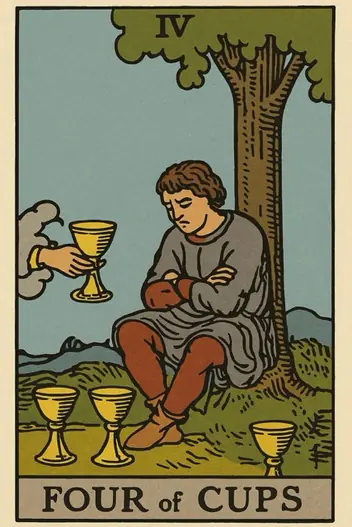
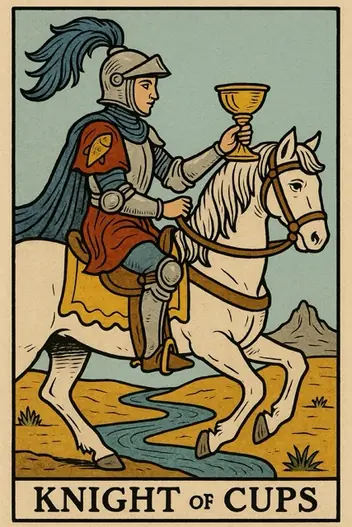
When the Four of Cups—a card of apathy, missed opportunities, and emotional withdrawal—meets the Knight of Cups—an archetype of romantic pursuit, creative inspiration, and emotional idealism—a fascinating psychological tension emerges. You are simultaneously disengaged from what is present yet drawn toward a fantasy of what could be. This is not a passive state; it is a dynamic conflict between rejection and desire, where the mind says "no" to the real while the heart says "yes" to the imagined.
This combination often signals a critical decision point: will you remain in a state of emotional inertia, or will you channel the Knight’s restless energy toward a meaningful goal? The practical challenge here is to distinguish genuine intuition from escapist fantasy. The Knight of Cups can be a messenger of deep feeling, but when paired with the Four of Cups, that message may be clouded by dissatisfaction and selective perception.
What Do Four of Cups and Knight of Cups Mean Together?
The core psychological dynamic of the Four of Cups and Knight of Cups is the tension between emotional withdrawal and emotional pursuit. The Four of Cups represents a state of emotional satiation or disappointment—you’ve seen enough, felt enough, and are now looking away, perhaps even feeling entitled to something better. The Knight of Cups, by contrast, is active, idealistic, and driven by a vision of love, beauty, or purpose. When these collide, you are likely waiting for a specific kind of emotional rescue while ignoring what is already available.
This pairing often manifests as selective blindness. You may have a clear, passionate vision for a relationship, project, or creative endeavor, but you are refusing to engage with the practical steps required to achieve it. Alternatively, you might be projecting idealistic qualities onto a person or opportunity that does not actually possess them. The key insight here is that the Knight’s energy can break the Four’s stagnation only if you consciously direct it toward reality, not fantasy. Without this awareness, you risk cycling between boredom and disappointment, chasing a mirage while dismissing genuine possibilities.
In practical terms, this combination asks you to inventory your emotional investments. What are you holding out for? What are you refusing to see? The Knight of Cups offers movement and passion, but the Four of Cups warns that this passion must be grounded in objective assessment, not wishful thinking. The healthiest expression of this pairing is a deliberate choice to pursue what genuinely fulfills you, rather than passively waiting for a perfect offer that may never arrive.
Love and Relationships
If you are single:
This combination suggests you may be idealizing a potential partner while ignoring red flags or dismissing available connections. Ask yourself: are you waiting for a fantasy, or are you genuinely open to someone who is present and interested?
If you are in a relationship:
You or your partner may be emotionally withdrawn while simultaneously expecting the other to fulfill an idealized role. This creates a cycle of disappointment and unmet expectations.
In relationships, the Four of Cups and Knight of Cups often point to a dynamic where one person feels unseen or underappreciated (Four of Cups) while the other pursues a romanticized version of the partnership (Knight of Cups). This can lead to resentment and emotional distance, as the Knight’s grand gestures may feel hollow if the Four’s underlying needs are not addressed. The most critical relationship advice here is to communicate concrete needs rather than expecting your partner to intuit them. The Knight of Cups energy can be wonderfully supportive, but only if it is directed toward real, specific actions rather than vague romantic ideals.
If you are in a relationship, avoid the trap of comparing your partner to an internal fantasy. The Four of Cups can make you feel like something is missing, while the Knight of Cups can tempt you to seek that missing piece elsewhere. Instead, use the Knight’s emotional honesty to express what you truly want, and use the Four’s reflective energy to appreciate what you already have. Growth happens when you choose to invest in the relationship you are in, not the one you imagine.
Your pair is already on the table. Ask your question and draw the clarifying card
or simply focus on it
What Do Four of Cups and Knight of Cups Indicate for Your Career?
Strategic Opportunities:
Channel the Knight’s creative energy into a specific project you have been avoiding. The Four of Cups’ inertia can be broken by setting a small, actionable goal.
Strategic Opportunities:
Reassess your career vision with fresh eyes. The combination suggests you may be overlooking a genuine opportunity because it does not match your ideal image of success.
Calculated Risks:
Beware of chasing a “dream job” or business idea without a solid plan. The Knight of Cups can lead to impulsive decisions if not grounded by the Four’s caution.
In a career context, the Four of Cups and Knight of Cups often indicate a period of professional dissatisfaction where you feel your current role is beneath you, yet you are drawn to an ambitious vision that lacks concrete details. This is a dangerous combination for financial stability because you may reject steady income opportunities in favor of a risky passion project. The practical advice here is to use the Knight’s enthusiasm to fuel research and skill-building, not to quit your job prematurely. Treat your ideal career path as a hypothesis to be tested, not a destiny to be blindly followed.
Financially, this pair warns against spending on emotional impulses—such as a lavish gift to impress someone or an expensive course based on a fleeting inspiration. The Knight of Cups can be generous to a fault, while the Four of Cups can be miserly with attention and effort. The balanced approach is to allocate resources toward what genuinely aligns with your long-term values, not toward what temporarily fills an emotional void. A strategic financial move now is to create a “fantasy fund” for creative projects, separate from your core savings, so you can pursue inspiration without risking your stability.
Uncover hidden insights
Let our advanced Tarot system interpret these archetypes specifically for your personal path.
Reversed Positions: What Changes?
Four of Cups Reversed:
This indicates a breakthrough from apathy. You are no longer sitting idly by, but are beginning to actively seek new opportunities. However, there is a risk of transitioning into a state of recklessness — grabbing at every offer without filtering their quality. Advice: Take action, but check each step for alignment with your long-term goals.
Knight of Cups Reversed:
This is a sign of emotional immaturity or passive aggression. Instead of openly offering feelings, the person manipulates or withdraws into themselves. In relationships, this can mean a partner who makes promises but doesn't follow through. Warning: Don't expect the "knight" to save you — he may simply disappear.
BOTH Reversed:
Complete imbalance. You simultaneously feel deep apathy (Four of Cups) and an inability to act (Knight of Cups). This is a state of "emotional paralysis," where neither the past brings joy nor the future holds allure. Corrective measure: micro-steps. Start small — write down one specific goal for the day and accomplish it, without waiting for inspiration.
What Are the Risks of Four of Cups and Knight of Cups?
The shadow side of the Four of Cups and Knight of Cups is emotional entitlement combined with escapist idealism. You may feel that you deserve something better, yet you are unwilling to do the work to achieve it. This creates a victim mindset where you blame external circumstances for your dissatisfaction, while secretly waiting for a “knight in shining armor” to rescue you—whether that is a person, a job offer, or a lucky break. The cognitive bias here is the “sunk cost fallacy” applied to emotions: you invest in a fantasy because you have already invested so much in wanting it, even though it is not serving you.
Another major pitfall is passive-aggressive communication. The Four of Cups withdraws, while the Knight of Cups pursues—but when these energies are shadowy, the withdrawal becomes a form of manipulation, and the pursuit becomes controlling. You may withhold affection or appreciation to punish your partner, while simultaneously expecting them to read your mind and meet your unspoken needs. This dynamic is toxic and leads to emotional exhaustion for both parties. The antidote is radical self-honesty: acknowledge what you truly want, and then take direct, respectful action to get it—or let it go.
In extreme cases, this combination can indicate an affair or emotional infidelity, where you are emotionally “checked out” of your current situation (Four of Cups) while being drawn to an idealized other (Knight of Cups). The ethical challenge here is to recognize that the Knight’s passion may be a projection of your own unmet needs, not a genuine connection. The shadow path leads to guilt, confusion, and broken trust. The healthier path is to address the dissatisfaction directly, either by re-engaging with your current situation or by making a clean, honest exit.
Four of Cups and Knight of Cups Combined Message
How can this dynamic be used constructively? Imagine the Four of Cups as your inner critic, saying, "This isn't it, I deserve more." And the Knight of Cups as your inner adventurer, ready to chase a dream. Instead of choosing between them, integrate them.
The strategic algorithm for action looks like this. Step One: acknowledge the Four of Cups' right to exist. Yes, you have the right to dissatisfaction and boredom. This is not weakness, but a signal that the current situation has exhausted its potential. Step Two: use the Knight of Cups' energy not for escape, but for exploration. Instead of quitting your job or partner, begin "experimenting" within the framework of your current reality. Sign up for courses, start a hobby that has long interested you, or propose a new format for your relationship to your partner.
Key Insight: The Knight of Cups should not be a destroyer of the old; he should be a catalyst for the new within the old. Your task is to find a fresh perspective on what you already have. The Four of Cups, with its capacity for deep reflection, can help you understand exactly what you need, and the Knight of Cups can provide the energy to realize that understanding. Strategic advice: do not seek the perfect partner or the perfect job—seek the perfect way to interact with what you have right now.
Your Next Step: Personal Context Matters
The core message of the Four of Cups and Knight of Cups is this: you are torn between what you have and what you dream of, but neither will fulfill you until you consciously choose to act with intention. Stop waiting for the perfect offer or the perfect partner. Instead, use the Knight’s emotional drive to pursue what is genuinely meaningful, and use the Four’s reflective pause to appreciate what is already in your hands. The tension between these two cards is not a dead end—it is a call to bridge fantasy and reality through deliberate, grounded action.
To unlock the full power of this combination for your specific situation, you need more than general insights. Your personal context—your question, your current life stage, and your unique emotional landscape—changes everything. That is why the Fortune Cards app is the next logical step. Whether you use it on the web or download it, the app provides a deep, personalized interpretation of this exact card combination, tailored to your specific question. Stop guessing and start acting with clarity. Click here to get your custom reading now.
Interpretation by the Fortune Cards editorial team, based on the Rider–Waite tradition and Jungian archetypes. About our methodology · Updated: 2026-08-26
Other Combinations with Four of Cups
Other Combinations with Knight of Cups
Explore Individual Card Meanings
Table of Contents
- What Do Four of Cups and Knight of Cups Mean Together?
- Love and Relationships
- What Do Four of Cups and Knight of Cups Indicate for Your Career?
- Reversed Positions: What Changes?
- What Are the Risks of Four of Cups and Knight of Cups?
- Four of Cups and Knight of Cups Combined Message
- Your Next Step: Personal Context Matters
Ready to find answers to your questions?
Start your first reading now and look at your situation with fresh clarity. The cards are ready to reveal deeper meaning.