The Hermit and Seven of Cups Meaning in Tarot
- Arcana
- The Hermit — Major Arcana; Seven of Cups — Minor Arcana, Cups
- Elements
- The Hermit — Earth; Seven of Cups — Water
- Elemental interaction
- Friendly elements — energies support each other
- Numerology
- 9 + 7 = 16 → 7
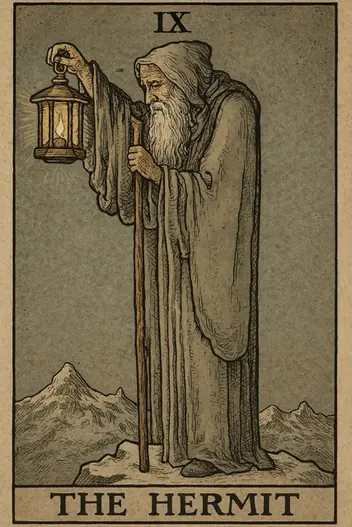
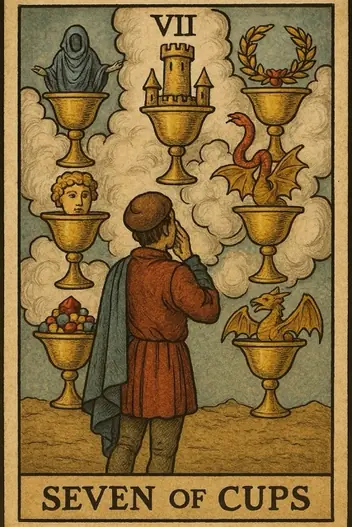
The Hermit represents a disciplined withdrawal into solitude, seeking clarity through introspection and self-reliance. The Seven of Cups, in contrast, presents a dazzling array of fantasies, options, and temptations—each promising fulfillment but often leading to confusion or disappointment. When these two cards intersect, the core tension is between external allure and internal truth. You are being called to step back from the noise of desire and evaluate which possibilities are real and which are mere projections.
Psychologically, this combination activates the Jungian conflict between the ego’s wish-fulfillment fantasies and the Self’s need for authentic individuation. The Hermit’s lantern illuminates the shadows of the Seven of Cups, exposing hidden motives, unrealistic expectations, and the seductive pull of shortcuts. In practice, this means you must resist the urge to chase every shiny object and instead commit to a period of focused discernment. The strategic question is: Which of these visions aligns with my long-term values, and which is a distraction?
The Hermit and Seven of Cups Together: Meaning
The core dynamic here is a controlled confrontation with illusion. The Hermit’s solitude provides the psychological space to untangle the Seven of Cups’ web of possibilities. This is not a time for impulsive decisions or grand gestures; it is a time for rigorous self-questioning. The seeker may feel overwhelmed by options—romantic, career, or lifestyle—but the Hermit insists that only by withdrawing from external input can the truth emerge. The key insight is that most of these “options” are not real opportunities but projections of unmet needs.
From a Jungian perspective, the Seven of Cups represents the anima/animus projections and the shadow of wishful thinking. The Hermit archetype forces you to own these projections, to ask: What am I really seeking beneath this fantasy? This can be uncomfortable because it requires admitting that some desires are based on fear, insecurity, or social pressure rather than genuine fulfillment. The practical implication is clear: you must create a structured process for evaluating each option against your core values. Write down the pros and cons, but more importantly, sit with each vision in silence and feel whether it brings peace or anxiety. The Hermit’s light reveals that clarity comes not from more information, but from deeper self-knowledge.
Another layer is the risk of analysis paralysis. The combination of Hermit (isolation) and Seven of Cups (abundance of choices) can lead to overthinking, where you become stuck in a loop of comparing fantasies without taking action. The antidote is to set a time limit for introspection and then choose one path to test empirically. The Hermit’s wisdom is not eternal waiting; it is purposeful withdrawal to gain perspective, then re-engagement with a clear plan. The most pragmatic takeaway: treat this period as a research phase, not a permanent state. You are gathering data on your own psyche.
The Hermit and Seven of Cups Love Outcome
If you are single:
This pair suggests you are projecting idealized qualities onto potential partners. Step back and examine what you truly need versus what you merely want to impress others or fill a void. A slow, honest evaluation is more valuable than chasing a fantasy.
If you are in a relationship:
The dynamic may involve one partner retreating emotionally while the other fantasizes about a different reality. This signals a need for open, non-judgmental communication about unmet expectations—not accusations.
In relationships, this combination often indicates a gap between perception and reality. The Hermit’s isolation can manifest as emotional withdrawal, while the Seven of Cups fuels resentments or daydreams about an ideal partner. The psychological work is to own your projections: what you think your partner “should” be may actually be a reflection of your own unintegrated desires. For example, if you feel they lack ambition, ask yourself if you are avoiding your own drive. The strategic advice is to schedule intentional, quiet conversations where both parties share their inner worlds without blame. Use the Hermit’s energy to listen deeply, not to prepare a rebuttal.
Bold key relationship advice:
Do not make major decisions (breakups, commitments) during this phase. The Seven of Cups’ illusions can cloud judgment, and the Hermit’s solitude can amplify loneliness. Instead, use a 30-day rule: write down your feelings, then revisit them after a month of minimal external influence. This prevents impulsive choices based on transient fantasies. The most loving action is to give yourself and your partner the space to clarify what is real.
Your pair is already on the table. Ask your question and draw the clarifying card
or simply focus on it
The Hermit and Seven of Cups for Career and Money
Strategic Opportunities:
Invest in a period of professional development or skill assessment rather than chasing multiple job offers. The Hermit favors mastery over one craft.
Strategic Opportunities:
Use this time to research industries or ventures that align with your long-term values, not just immediate financial gain. Create a “decision matrix” with weighted criteria.
Calculated Risks:
Avoid signing contracts or making large financial commitments based on “too good to be true” proposals. The Seven of Cups warns of scams, hidden fees, or overoptimistic projections.
The career implications are about disciplined opportunity cost analysis. You may be facing multiple paths—a promotion, a side hustle, a career change—but the Hermit demands you evaluate each through the lens of sustainable growth. The psychological trap is “shiny object syndrome”: the belief that the next opportunity will solve all problems. Instead, ask: Which option builds on my existing strengths? Which requires the least emotional debt? **Bold financial warning: Treat any investment or job offer that promises quick rewards as highly suspect. The Seven of Cups often masks volatility.
A practical framework: List your top three options, and for each, write down the worst-case scenario and the most likely scenario (not the best-case). The Hermit’s realism cuts through fantasy. Then, commit to a 90-day trial for one option, with clear metrics for success. This balances introspection with action. The key is to avoid the “waiting for the perfect moment” trap—the Hermit does not advocate paralysis, but purposeful timing. Financially, this is a time to build an emergency fund and reduce debt, not to speculate.
Deepen your understanding
Find out exactly what this reading means for your current life situation with our oracle.
Negative Meaning of The Hermit and Seven of Cups
The shadow of this combination is self-deception disguised as wisdom. The Hermit can become a rationalization for avoidance: “I need more time to think” can be a cover for fear of commitment or failure. The Seven of Cups’ shadow is grandiose fantasies that never materialize, leading to chronic disappointment. When these shadows merge, the seeker may construct elaborate mental narratives about why they cannot act—blaming external circumstances while secretly indulging in daydreams of a perfect future.
Cognitive biases to watch for: Confirmation bias (only seeing data that supports your preferred fantasy), sunk cost fallacy (staying in a bad situation because you’ve invested time in it), and optimism bias (underestimating risks). The Jungian shadow here is the “puer aeternus” or “eternal child”—the refusal to grow up and make difficult choices. The Hermit’s lantern must illuminate these patterns, not just external options. The most dangerous pitfall is mistaking emotional intensity for clarity. Just because a fantasy feels powerful does not mean it is true.
Action step to avoid the shadow: Write a “reality check” letter to yourself, detailing the specific steps required for each option, including the costs (time, money, emotional energy). Then, ask a trusted friend or mentor to read it. This externalizes the Hermit’s insight and counters the Seven of Cups’ isolation. If you find yourself repeatedly returning to the same fantasy without acting, it is likely a shadow projection, not a calling.
The Hermit and Seven of Cups Reversed: What Changes?
When the cards are reversed, the dynamic becomes more acute and less controlled.
The Reversed Hermit:
Blocked potential. You are avoiding solitude, afraid to be left alone with your illusions. Instead of introspection, you flee into noisy company or new projects to drown out the inner voice. The result is reckless spending and chaotic decisions made under the influence of the moment. Advice: force yourself to be alone for 30 minutes without your phone. This will cause discomfort, but the answer lies precisely within it.
The Reversed Seven of Cups:
Internal resistance. You deny your desires or consider them "silly." Fantasies are suppressed, leading to apathy and a lack of motivation. This is a state of emotional weakness where you don't allow yourself to dream, yet you are unable to act. The way out is to allow yourself "dangerous" thoughts in a safe environment (for example, in a journal).
BOTH reversed:
Complete imbalance. You are simultaneously afraid of being alone (Reversed Hermit) and suppressing your ambitions (Reversed Seven of Cups). This is a dead end of self-deception. You say "everything is fine," but feel deep frustration. A logical way to correct this is to start small. Find one physical activity (sports, a walk) to "ground" the illusions, and one quiet activity (reading, meditation) to calm the anxiety.
The Hermit and Seven of Cups: Tarot Advice
How can you constructively use the Hermit's energy to balance the chaos of the Seven of Cups? The answer lies in creating a "Reality-Check Protocol." The Hermit provides you with discipline, while the Seven of Cups offers creativity. Your task is not to suppress one in favor of the other, but to make them work in tandem. The strategy is as follows: first, activate the Hermit mode and ask yourself one tough question: "What specific problem requires my solution?" Write it down. Then, switch to the Seven of Cups mode and list all possible, even absurd, solutions. After that, return to the Hermit and filter the options using a single criterion: "Is this realistic given my current resources?"
This cycle is the only way to avoid paralysis. You must not endlessly analyze or endlessly dream. Your goal is to obtain one clear, albeit imperfect, action plan. A deep strategic tip: use the Hermit's energy to audit your desires. Ask yourself: "Is this desire truly mine, or is it imposed by society/advertising/envy?" If the answer is "foreign," cross it out without regret. Keep only those "cups" that ignite an inner light within you, rather than merely promising external glitter. Clarity will come not from the quantity of options, but from their quality.
Applying This to Your Situation
The Hermit and Seven of Cups together deliver a clear message: withdraw to discern, but do not withdraw to avoid. Your task is to separate the genuine from the illusory, the essential from the distracting. This requires courage to sit with uncertainty and honesty to admit when you are chasing a mirage. The core insight is that not all that glitters is gold, and not all solitude is wisdom. Use this period to clarify your values, then act with precision.
While this article provides a deep archetypal analysis, the real power of Tarot lies in how these cards speak to your specific life situation. The Fortune Cards app offers a personalized, AI-driven interpretation of this exact combination, tailored to your question. Whether you are navigating a career crossroads, a relationship decision, or a personal crisis, the app applies Jungian psychology and practical strategy to your unique context. Click here to download Fortune Cards on the web or your device, and get your customized reading now.
Interpretation by the Fortune Cards editorial team, based on the Rider–Waite tradition and Jungian archetypes. About our methodology · Updated: 2026-08-26
Other Combinations with The Hermit
Other Combinations with Seven of Cups
Explore Individual Card Meanings
Table of Contents
- The Hermit and Seven of Cups Together: Meaning
- The Hermit and Seven of Cups Love Outcome
- The Hermit and Seven of Cups for Career and Money
- Negative Meaning of The Hermit and Seven of Cups
- The Hermit and Seven of Cups Reversed: What Changes?
- The Hermit and Seven of Cups: Tarot Advice
- Applying This to Your Situation
Ready to find answers to your questions?
Start your first reading now and look at your situation with fresh clarity. The cards are ready to reveal deeper meaning.