Strength and Ten of Wands Tarot Combination
- Arcana
- Strength — Major Arcana; Ten of Wands — Minor Arcana, Wands
- Elements
- Strength — Fire; Ten of Wands — Fire
- Elemental interaction
- Same element — energies intensify each other
- Numerology
- 8 + 10 = 18 → 9
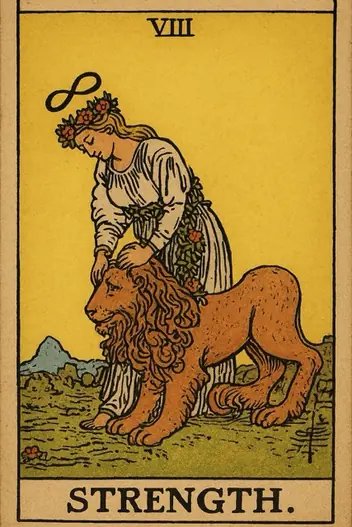
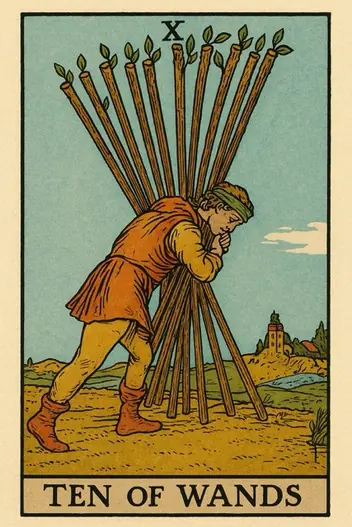
When the Strength card—representing inner fortitude, patience, and emotional mastery—meets the Ten of Wands—a symbol of burden, overcommitment, and fatigue—we encounter a psychological paradox. You are being asked to carry a heavy load, but you possess the resilience to do so without breaking. This combination is not about escape; it is about strategic endurance and conscious prioritization. The core challenge here is distinguishing between necessary perseverance and self-imposed martyrdom.
In practical terms, this pairing signals a period where your willpower is being tested by external demands. The Ten of Wands often appears when you have taken on too much, while Strength reminds you that your greatest power lies in your ability to manage your own emotional response. The key question becomes: Are you carrying this weight because you must, or because you fear letting go? The answer determines whether this is a path to mastery or burnout.
Strength and Ten of Wands Card Meaning Explained
The fusion of Strength and Ten of Wands creates a psychological state of controlled burden. Strength represents the ego’s capacity to regulate impulse—the ability to stay calm, compassionate, and focused under duress. The Ten of Wands, by contrast, represents the objective weight of responsibilities—deadlines, obligations, and unfinished tasks. Together, they depict a person who is overloaded yet unflappable. This is not a passive resignation; it is an active choice to endure with emotional intelligence rather than brute force.
From a Jungian perspective, Strength embodies the integration of the shadow—taming the inner beast of anxiety or anger—while the Ten of Wands reflects the external manifestation of collective expectations. The pragmatic insight here is that overwhelm is not a sign of weakness but a signal for reevaluation. You are being called to assess which burdens are truly yours to carry and which can be delegated, delayed, or discarded. The psychological reward is increased resilience and a deeper trust in your own capacity to handle stress.
This combination also warns against cognitive distortions like the “martyr complex” (believing suffering is noble) or the “hero fallacy” (thinking you must solve everything alone). True strength is not about enduring endlessly; it is about knowing when to set boundaries. The Ten of Wands may feel crushing, but Strength offers the internal resources to reorganize your priorities without losing your composure. The path forward involves breaking the load into manageable steps and using your patience as a strategic tool.
Strength and Ten of Wands in Career Readings
Strategic Opportunities:
Leverage your reputation for reliability to negotiate for more resources or support. This is a time to demonstrate your endurance to superiors, but only if you have a clear exit strategy.
Strategic Opportunities:
Use your patience to master complex projects that require sustained effort. Strength gives you the mental stamina to push through plateaus where others might quit.
Calculated Risks:
Avoid taking on additional responsibilities without clear compensation or recognition. The Ten of Wands warns of overcommitment leading to diminishing returns—either in productivity or morale.
In the professional realm, this pairing signals a high-stakes period of execution. You may be managing multiple deadlines, leading a team through a crisis, or shouldering the weight of a failing system. Strength’s role here is to prevent burnout through emotional regulation—not by ignoring stress, but by reframing challenges as growth opportunities. Financially, the Ten of Wands cautions against overleveraging yourself (e.g., taking on debt or excessive risk). Strategic tip: Create a “burden audit”—list every task, then rate its importance and urgency. Delegate or eliminate anything that does not align with your core goals. Remember: Sustainable success requires pacing, not just endurance.
Your pair is already on the table. Ask your question and draw the clarifying card
or simply focus on it
Strength and Ten of Wands in Love and Relationships
If you are single:
This combination suggests you may be attracted to partners who are emotionally available but also demanding. It is crucial to ask: Does this connection feel like a shared journey or a one-sided burden? Evaluate whether you are drawn to “fixing” or rescuing others—a pattern that can exhaust your emotional reserves.
If you are in a relationship:
The dynamic here often involves one partner feeling overburdened by household, career, or emotional labor. Open communication about dividing responsibilities is essential. Strength advises you to approach conflict with calm assertiveness rather than resentment.
In relationships, Strength and Ten of Wands highlight a power dynamic where one person may be carrying more than their fair share. This is not inherently negative if the burden is temporary and consensual, but it becomes toxic if it stems from fear of confrontation or guilt. Key relationship advice: Use your emotional intelligence to articulate your limits without blame. Strength’s mastery over the self means you can say “I need help” without feeling weak. The Ten of Wands warns that ignored exhaustion will eventually erode intimacy. Practical steps include scheduling check-ins, delegating tasks, and recognizing that love is not measured by how much you sacrifice.
Your unique Tarot reading
See how these cards interact with your destiny. Start a free personal reading now.
Negative Meaning of Strength and Ten of Wands
The shadow side of Strength and Ten of Wands manifests as passive suffering or toxic resilience. When Strength is blocked, you may mistake endurance for virtue, refusing to ask for help even when overwhelmed. This can lead to resentment, physical exhaustion, or a collapse under pressure. The Ten of Wands, in its shadow form, encourages hoarding responsibilities out of a fear of losing control or appearing incompetent. Psychologically, this mirrors cognitive biases like the “sunk cost fallacy”—continuing to carry a burden simply because you have already invested so much.
Another pitfall is emotional suppression. Strength’s mastery can become rigid self-control that masks vulnerability, leading to isolation. You might project an image of calm while internally crumbling. This combination also warns against perfectionism—the belief that you must handle everything flawlessly. The key to avoiding these pitfalls is conscious awareness: Recognize when your “strength” is actually avoidance of discomfort. A healthy approach involves acknowledging the weight, seeking support, and allowing yourself moments of rest without guilt.
Strength and Ten of Wands Reversed: How to Read It
When cards appear in reversed positions, the dynamic becomes distorted but more diagnostic.
If Strength is Reversed:
The inner core is broken. This is a state of psychological exhaustion and apathy. You are not just carrying the burden (Ten of Wands); you have already dropped it and are lying next to it. Here, Strength transforms into recklessness or passive aggression. Instead of managing the situation, you lash out at loved ones or sabotage projects. Advice: Acknowledge your powerlessness. This is not defeat, but the first step toward a reset. You need rest, not a new plan.
If the Ten of Wands is Reversed:
This signals an attempt to shed the burden, but in a clumsy way. The person has recognized the overload, but instead of delegating, they simply drop tasks midway. This is internal resistance and procrastination. The Trap: You might quit your job with nothing lined up or end a relationship without trying to revive it. Advice: Do not destroy everything to the ground. Use your Strength to structure the "shedding"—hand over tasks, sell assets, rather than abandoning them.
If BOTH are Reversed:
Complete imbalance. This is a scenario of "learned helplessness." You feel like a victim of circumstances, with neither the strength (Strength reversed) nor the desire to take responsibility (Ten of Wands reversed). The logical way to correct this: Artificially create a minimal structure. Start small—clear one thing off your desk or fulfill one simple promise. This will restore a sense of control and bring back the feeling of Strength.
Strength and Ten of Wands: The Combined Message
Strength and the Ten of Wands are not a sentence to eternal drudgery, but a manual for reassembling your resource management system. Constructive use of this energy demands rigid pragmatism. The first step is to separate your own tasks from those of others. Conduct an "inventory of responsibility." Write down everything you are carrying, and answer honestly: "Is this my burden, or did I take it on voluntarily out of guilt or a desire to control?"
Your Strength must be directed not at holding the load, but at building supports. Instead of carrying ten wands in your hands, use your inner power to build a cart (a system, delegation, automation). This requires patience (Strength) and a surrender of immediate control. Strategically, it is more advantageous to spend a week training an assistant than to drag everything yourself for a year.
The deepest synthesis of these cards sounds like this: "Be strong enough to acknowledge your limitations." True power (Strength) is manifested not in enduring an unbearable burden (Ten of Wands), but in wisely distributing the load. Your next step is not to grit your teeth, but to open your hands and ask for help. Only then will you transform from a "workhorse" into a "leader."
Where to Go From Here
Strength and Ten of Wands together deliver a powerful message: You have the inner resources to handle your current burdens, but only if you manage them wisely. The path forward is not about brute force but about strategic surrender—letting go of what doesn’t serve you while harnessing your patience and courage for what does. This combination is a call to balance endurance with self-care and to trust that your resilience is not infinite—it must be replenished.
Ready to see how this combination applies to your unique situation? The Fortune Cards app offers a deep, personalized interpretation of this exact pairing for your specific question—whether it’s about love, career, or personal growth. Stop guessing and get clarity on the exact actions you need to take. Use the app on the web or download it now to unlock a reading tailored to your life’s context. Your next step starts with a single click.
Interpretation by the Fortune Cards editorial team, based on the Rider–Waite tradition and Jungian archetypes. About our methodology · Updated: 2026-08-26
Other Combinations with Strength
Other Combinations with Ten of Wands
Explore Individual Card Meanings
Table of Contents
- Strength and Ten of Wands Card Meaning Explained
- Strength and Ten of Wands in Career Readings
- Strength and Ten of Wands in Love and Relationships
- Negative Meaning of Strength and Ten of Wands
- Strength and Ten of Wands Reversed: How to Read It
- Strength and Ten of Wands: The Combined Message
- Where to Go From Here
Ready to find answers to your questions?
Start your first reading now and look at your situation with fresh clarity. The cards are ready to reveal deeper meaning.