Three of Wands and Six of Swords Together in Tarot
- Arcana
- Three of Wands — Minor Arcana, Wands; Six of Swords — Minor Arcana, Swords
- Elements
- Three of Wands — Fire; Six of Swords — Air
- Elemental interaction
- Friendly elements — energies support each other
- Numerology
- 3 + 6 = 9
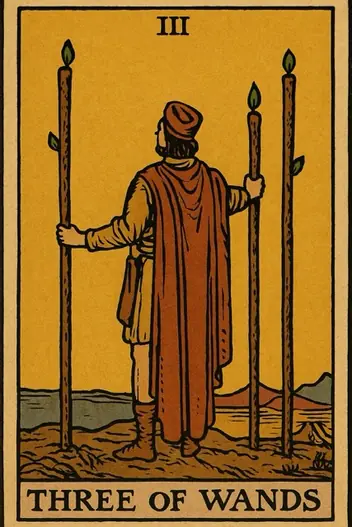
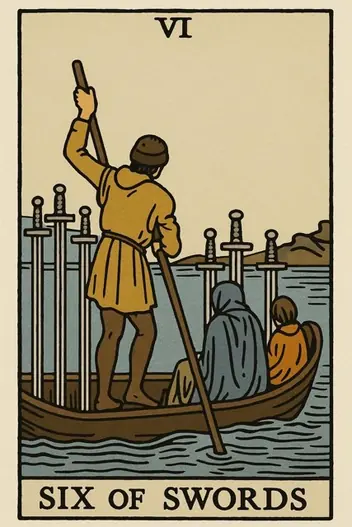
The intersection of the Three of Wands and the Six of Swords represents a pivotal psychological moment: the conscious decision to leave behind a familiar shore in pursuit of a distant horizon. The Three of Wands embodies expansion, foresight, and the initiation of a long-term plan, while the Six of Swords signifies transition, mental release, and the movement toward calmer waters. Together, they form a narrative of deliberate departure—not from failure, but from a situation that has outlived its strategic usefulness.
In practical terms, this pairing demands that you acknowledge the emotional cost of progress while maintaining a clear-eyed focus on the destination. The Wands card asks you to look outward and envision what comes next; the Swords card insists you pack your psychological baggage and move. This is not a passive drift but a calculated migration of mind, resources, and identity toward a better-functioning reality.
What Do Three of Wands and Six of Swords Mean Together?
The core dynamic here is the tension between ambition and release. The Three of Wands is an active, outward-facing energy—it wants to expand, to explore, to build trade routes and alliances. The Six of Swords, in contrast, is a transitional, inward-facing energy—it requires you to cut ties, grieve what is lost, and navigate a period of liminality. When these two archetypes collide, the result is a psychological state where you are simultaneously planning for the future and processing the past.
This combination often appears when a person is on the verge of a major life pivot—a career change, a relocation, or the end of a significant relationship. The key insight is that the transition is not forced; it is chosen. You are not fleeing a disaster; you are executing a strategic retreat to a position of greater leverage. The emotional intelligence required here is high: you must resist the urge to romanticize the past or over-optimize the future. Instead, focus on the practical logistics of the move.
The most important takeaway is that this pairing signals a healthy, albeit challenging, period of growth. The Three of Wands provides the vision; the Six of Swords provides the vehicle. Your job is to ensure the vehicle is seaworthy and the destination is worth the voyage. Avoid the cognitive bias of anchoring—do not let the comfort of the known port prevent you from sailing toward a more expansive life.
Your pair is already on the table. Ask your question and draw the clarifying card
or simply focus on it
Three of Wands and Six of Swords in Love Tarot
If you are single:
This pairing suggests you are ready to leave behind a romantic pattern or past connection that no longer serves your growth. A new person may enter your life, but only after you have emotionally disembarked from the old harbor.
If you are in a relationship:
You and your partner are likely navigating a significant transition together—moving in, relocating, or redefining the relationship’s structure. The dynamic requires clear communication about shared goals and a mutual willingness to leave old conflicts behind.
In relationships, the Three of Wands and Six of Swords combination signals a mature, forward-looking partnership or the end of one that cannot evolve. If you are together, this is a time to jointly map out the next chapter while acknowledging the emotional work required to get there. The danger is emotional avoidance—using the excitement of future plans to bypass unresolved issues in the present. Bold key relationship advice: Do not pack unaddressed resentments into your luggage; they will sink the boat. Instead, use this transition as an opportunity to renegotiate boundaries and expectations with honesty and compassion.
For singles, the message is clear: you cannot sail to a new love while still anchored to an old story. The Six of Swords asks you to complete the grieving process for past relationships, while the Three of Wands encourages you to define what you truly want in a future partner. Your next step is to stop looking for love in familiar ports and instead set sail toward a version of yourself that attracts healthier connections.
What Do Three of Wands and Six of Swords Indicate for Your Career?
Strategic Opportunities:
This is an ideal time to pivot into a new industry, role, or geographic market that aligns with your long-term vision. The Three of Wands favors international expansion, partnerships, and strategic planning.
Strategic Opportunities:
Use this energy to negotiate a severance, transition package, or relocation support that cushions your financial risk. The Six of Swords rewards careful resource management during a change.
Calculated Risks:
Avoid over-committing to a new venture before you have fully exited the old one. The risk is splitting your focus and draining your energy across two worlds.
In the professional realm, this combination is a powerful signal for strategic career management. You are not being pushed out; you are choosing to move toward a better opportunity. The Three of Wands provides the vision and initiative—you see the market gap, the emerging trend, or the potential partnership. The Six of Swords provides the discipline to execute the transition cleanly. Bold important financial warning: Do not burn bridges with excessive emotion or haste. A graceful exit preserves your reputation and opens doors for future collaboration.
Your strategic advantage lies in treating this transition as a deliberate portfolio rebalancing. Assess your current role’s return on investment—time, energy, and emotional cost—against the potential of the new path. The key financial insight is that short-term cash flow may tighten during the move, but the long-term trajectory is upward if you navigate wisely. Avoid the sunk cost fallacy—do not stay in a draining position simply because you have invested years there.
Uncover hidden insights
Let our advanced Tarot system interpret these archetypes specifically for your personal path.
Three of Wands and Six of Swords: Warning Signs
The shadow manifestation of this combination emerges when the seeker confuses movement with progress. The Three of Wands can become restless ambition—a compulsion to always be planning the next move without ever executing the departure. The Six of Swords can become chronic avoidance—using the idea of “transition” as an excuse to never fully commit to the present. Together, they can create a psychological trap where you are always “about to leave” but never actually leave.
Another common pitfall is over-idealizing the destination while minimizing the cost of the journey. The Three of Wands can inflate your expectations of the future, while the Six of Swords can downplay the emotional toll of leaving people, places, and identities behind. The cognitive bias to watch for is the optimism bias—believing the transition will be smoother and faster than it actually will be. This can lead to poor risk assessment and inadequate preparation.
When this energy is blocked, you may find yourself stuck in a state of analysis paralysis—endlessly researching options, seeking advice, and planning logistics but never booking the ticket. Alternatively, you might rush the transition without proper due diligence, leading to regret and the need for a second, more painful departure. The shadow side demands that you balance vision with practicality, and hope with honest assessment of the risks.
Reversed Three of Wands and Six of Swords Explained
If the Three of Wands is Reversed:
Your plan is raw, and the horizon is an illusion. You are trying to set out on a journey without a map. This leads to reckless waste of resources. Advice: stop and double-check the data. Your "vision" may be a projection of fear, not a real opportunity.
If the Six of Swords is Reversed:
Inner resistance paralyzes movement. You are stuck between the shores. You know you need to leave, but fear, guilt, or false hope keep you in place. This is a state of dangerous stagnation. You need to acknowledge that "staying" is just as much a choice as "sailing away," but with far worse consequences.
If BOTH are Reversed:
Complete imbalance: chaos instead of strategy. You simultaneously cannot see the goal (Three reversed) and cannot move from the spot (Six reversed). This is a trap of cognitive dissonance. Solution: return to basics. Forget global plans. Focus on one step: either refine the vision, or start moving, even in the wrong direction, to break out of the stupor.
What Is the Overall Message of Three of Wands and Six of Swords?
Constructive use of this pair requires from you iron discipline and a focus on the process, not the outcome. The Three of Wands gives you a map of the starry sky, indicating where to sail. The Six of Swords gives you a boat and oars, reminding you that the main thing is not the destination, but your ability to row. Your task is to transform a grand vision into a step-by-step action plan.
Strategically, you need to adopt the "philosophy of the container". Imagine your life is a boat. You cannot take everything into it. Selecting what you bring with you (knowledge, relationships, assets) is your key competence right now. Do not be afraid to discard the superfluous, even if it seems valuable. If an object or person does not help you move toward a new shore, it is ballast.
The deepest advice:
Use the energy of the Three of Wands for auditing your environment, and the energy of the Six of Swords for radical simplification. Ask yourself: "What of what I am doing now brings me closer to my goal? And what merely creates noise?" The answer to this question will give you the clarity needed to make the only right decision — to begin moving, leaving the past behind the stern.
Your Next Step: Personal Context Matters
The core message of the Three of Wands and Six of Swords is that your next chapter is ready to be written, but only if you are willing to close the current one. This is a call for strategic courage: the ability to leave what is known for what is possible, while managing the emotional and practical costs of the journey. Your growth depends on your willingness to navigate the liminal space between departure and arrival.
While this article provides a general archetype of this card combination, the true power of Tarot lies in its application to your specific situation. Your unique question, your personal history, and your current context will shape how these cards speak to you. To get a deep, personalized interpretation of the Three of Wands and Six of Wands for your exact question, use the Fortune Cards app. You can access it on the web or download it now to receive a tailored reading that considers your unique circumstances and guides you toward your next best step.
Interpretation by the Fortune Cards editorial team, based on the Rider–Waite tradition and Jungian archetypes. About our methodology · Updated: 2026-08-26
Other Combinations with Three of Wands
Other Combinations with Six of Swords
Explore Individual Card Meanings
Table of Contents
- What Do Three of Wands and Six of Swords Mean Together?
- Three of Wands and Six of Swords in Love Tarot
- What Do Three of Wands and Six of Swords Indicate for Your Career?
- Three of Wands and Six of Swords: Warning Signs
- Reversed Three of Wands and Six of Swords Explained
- What Is the Overall Message of Three of Wands and Six of Swords?
- Your Next Step: Personal Context Matters
Ready to find answers to your questions?
Start your first reading now and look at your situation with fresh clarity. The cards are ready to reveal deeper meaning.