Love Tarot: Two of Wands and Three of Swords
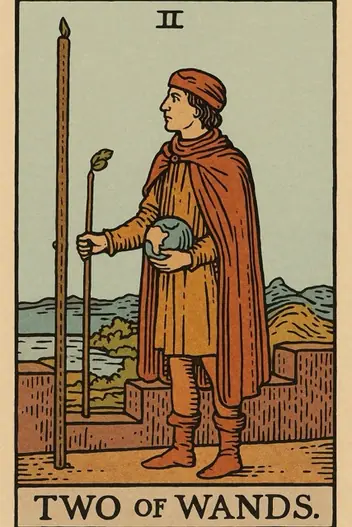
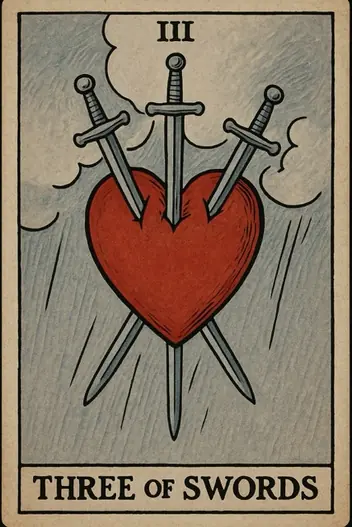
- Arcana
- Two of Wands — Minor Arcana, Wands; Three of Swords — Minor Arcana, Swords
- Elements
- Two of Wands — Fire; Three of Swords — Air
- Elemental interaction
- Friendly elements — energies support each other
- Numerology
- 2 + 3 = 5
When the expansive ambition of the Two of Wands collides with the piercing heartbreak of the Three of Swords, you are standing at a crossroads where vision meets vulnerability. The Two of Wands represents strategic planning, outward exploration, and the courage to step beyond your comfort zone. The Three of Swords, in stark contrast, signifies emotional truth, cognitive dissonance, and the sharp pain of seeing reality as it is—not as you wish it to be. Together, they form a powerful psychological tension: you are being forced to make a significant life decision while still processing a wound that hasn’t fully healed.
This combination is not about passive suffering. It is an active call to integrate pain into your strategic vision. You may be holding onto a plan, a relationship, or a career path that your rational mind knows is flawed, yet your emotional attachment keeps you frozen. The cards demand you cut through the fantasy, acknowledge the betrayal of expectations, and use that clarity to recalibrate your next move. The question is not if you will move forward, but how you will move forward with your eyes wide open.
What Do Two of Wands and Three of Swords Mean Together?
The core dynamic here is a conflict between the desire for control and the necessity of surrender. The Two of Wands energy wants to dominate the future, to map out every step, and to project power outward. The Three of Wands energy, however, introduces a painful disruption: a truth that shatters your illusion of control. Psychologically, this mimics the cognitive dissonance experienced when a long-held belief (e.g., "this relationship will work" or "this career is my destiny") is contradicted by evidence of betrayal, failure, or loss.
You are likely experiencing a split between your head and your heart. The Three of Swords forces you to feel the grief, while the Two of Wands urges you to act. The healthy integration requires you to process the emotional data before making a strategic decision. Rushing to act without acknowledging the pain leads to reckless choices (e.g., starting a new venture while still grieving a breakup). Conversely, wallowing in the pain without planning leads to stagnation. The key insight is that clarity comes through pain, not despite it. The Three of Swords is a surgical tool: it cuts away what no longer serves you, making space for a more authentic vision in the Two of Wands.
Your pair is already on the table. Ask your question and draw the clarifying card
or simply focus on it
Career Meaning of Two of Wands and Three of Swords
Strategic Opportunities:
Leverage a recent failure or setback as a data point. The pain of a rejected proposal or a lost client can reveal a critical flaw in your business model. Use this insight to pivot your strategy toward a niche you previously ignored.
Strategic Opportunities:
Cut ties with a toxic colleague, client, or project. The Three of Swords gives you the permission to end something that is causing you professional pain. This frees up mental energy and resources for the Two of Wands' new direction.
Calculated Risks:
Do not launch a new venture while still in the middle of a financial or legal dispute. The emotional drain will cloud your judgment. Objectively avoid making a major investment to "prove something" to a critic or competitor; this is ego-driven, not strategic.
In a professional context, this combination signals a necessary restructuring. You may be holding onto a failing strategy because of sunk-cost fallacy—the psychological trap of continuing a course of action because you've already invested time, money, or reputation. The Three of Wands cuts through this by forcing you to acknowledge the loss and reallocate resources. The financial warning is clear: do not double down on a losing bet. Instead, conduct a ruthless audit of your current projects. Rank them by return on investment (time, money, energy) and be prepared to kill the bottom 20% . The Two of Wands then asks you to research two or three new opportunities that align with your core skills, not your bruised ego. Boldly prioritize your mental health; burnout from a toxic work environment will cost you more than any short-term gain.
Get a personalized interpretation
Unlock the combined meaning of your cards in the context of your unique question — for free.
What Do Two of Wands and Three of Swords Say About Love?
If you are single:
This pair suggests you are evaluating a potential partner through the lens of a past hurt. Your fear of being hurt again is distorting your perception. You may be projecting old wounds onto a new connection, making you overly critical or emotionally guarded. The practical advice: separate the past from the present by journaling what specific fears this new situation triggers, and then consciously choosing to test reality rather than assume the worst.
If you are in a relationship:
You are dealing with a fundamental power struggle or a betrayal of trust. One partner may be pushing for expansion (travel, commitment, a bigger life) while the other is nursing a wound (infidelity, broken promises, emotional neglect). The relationship is at a pivot point where honest, painful conversation is unavoidable.
The relationship dynamic here is one of unresolved conflict blocking forward momentum. The Three of Swords indicates that someone (or both partners) is carrying unexpressed grief, resentment, or disappointment. The Two of Wands shows that a major decision—moving in together, getting married, or separating—is on the horizon. The critical relationship advice is to not make a major decision from a place of unprocessed pain. Instead, schedule a structured conversation where each partner has equal time to speak their truth without interruption. The goal is not to "win" the argument, but to turn the emotional data into a shared strategic plan. If trust is broken, agree on specific behavioral changes and a timeline for rebuilding it; do not rely on vague promises. Boldly acknowledge that the relationship may need to evolve or end if the core wound cannot be healed.
What Are the Risks of Two of Wands and Three of Swords?
The shadow side of this pairing is a dangerous cycle of self-sabotage and victimhood. When the energy is blocked, you may cling to a painful narrative ("I'm always betrayed," "My plans never work out") as a way to avoid taking responsibility for the future. This is a cognitive bias known as learned helplessness: you believe you have no control, so you stop trying. Alternatively, you might overcompensate with grandiosity, making impulsive, aggressive moves (e.g., quitting a job in a rage, starting a business with no plan) to mask the underlying pain. This is the shadow of the Two of Wands—a false sense of power that denies reality. The pitfall is that you use the pain as an excuse for poor judgment, rather than as a catalyst for genuine growth. If you find yourself blaming others for your stagnation or romanticizing your suffering, you are in the shadow. The antidote is radical accountability: ask yourself, "What specific action can I take today that honors my pain but moves me toward my goal?"
Reversed Positions: What Changes?
Reversed cards in this pair soften the sharpness of the conflict but introduce new risks associated with passivity.
If the Two of Wands is Reversed:
Ambitions are blocked by fear or indecision. The pain (Three of Swords) becomes a justification for inaction. Advice: You cannot wait forever for the "perfect moment." Your pain is not a reason to stand still, but a signal that your current point of support is unstable. Start with a small step.
If the Three of Swords is Reversed:
This indicates a refusal to experience the pain. You suppress your emotions, pretending that "everything is fine." This leads to you making the same mistake again. Warning: The inability to acknowledge disappointment leads to a repetition of the cycle.
If BOTH are Reversed:
Complete imbalance. You are stuck between unrealized ambitions and unprocessed resentment. This is a state of apathy and self-sabotage. Way to Correct It: Start small—acknowledge the fact of your pain. Then set one specific, microscopic goal for tomorrow. Only action will pull you out of this stupor.
Two of Wands and Three of Swords Combined Message
How can the energy of this pair be used constructively? The key to synthesis lies in transforming disappointment into fuel for a strategic reassessment. The Two of Wands provides you with vision and ambition, while the Three of Swords offers honesty and clarity. Together, they create ideal conditions for a "surgical" intervention in your life.
You need to cut away everything superfluous that isn't working. This is a time for brutal honesty with yourself. Ask: "Which part of my plan was based on illusion rather than facts?" The answer to this question is precisely the "wound" that the Three of Swords brings. But once you see it, you can "stitch it up," creating a more resilient structure.
Your strategic task is to use pain as a compass. If something causes discomfort, it doesn't mean you should run. It means you should explore that place. Perhaps that is where the truth you have been avoiding is hidden—the truth that will open the path to genuine, not illusory, success. Accept temporary pain for the sake of long-term clarity. This is a zone of growth, not a zone of defeat.
Your Next Step: Personal Context Matters
The Two of Wands and Three of Swords is a potent call to turn your wounds into wisdom and your vision into a viable plan. Your core task is to acknowledge the pain without letting it define your future. This combination asks you to be both a strategist and a healer: use the clarity of the Three of Swords to see what must be released, and the ambition of the Two of Wands to chart a more authentic path forward. The answer is not to avoid the pain, but to use it as a compass.
While this article provides a deep archetypal understanding, the true power of Tarot lies in its application to your unique situation. Your specific question, your personal history, and the other cards in your spread will shift the meaning dramatically. To get a personalized, actionable interpretation of this exact combination for your love life, career, or personal challenge right now, use the Fortune Cards app. You can access it on the web or download it to receive a deep, custom reading that cuts through the generalities and speaks directly to your life. Click here to start your personalized reading.
Interpretation by the Fortune Cards editorial team, based on the Rider–Waite tradition and Jungian archetypes. About our methodology · Updated: 2026-08-26
Other Combinations with Two of Wands
Other Combinations with Three of Swords
Explore Individual Card Meanings
Table of Contents
- What Do Two of Wands and Three of Swords Mean Together?
- Career Meaning of Two of Wands and Three of Swords
- What Do Two of Wands and Three of Swords Say About Love?
- What Are the Risks of Two of Wands and Three of Swords?
- Reversed Positions: What Changes?
- Two of Wands and Three of Swords Combined Message
- Your Next Step: Personal Context Matters
Ready to find answers to your questions?
Start your first reading now and look at your situation with fresh clarity. The cards are ready to reveal deeper meaning.