Love Tarot: The Chariot and Ten of Wands
- Arcana
- The Chariot — Major Arcana; Ten of Wands — Minor Arcana, Wands
- Elements
- The Chariot — Water; Ten of Wands — Fire
- Elemental interaction
- Opposing elements — energies create tension
- Numerology
- 7 + 10 = 17 → 8
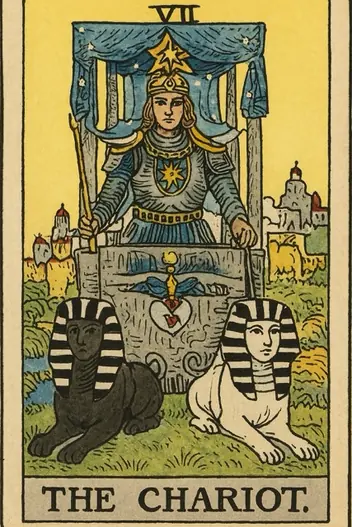
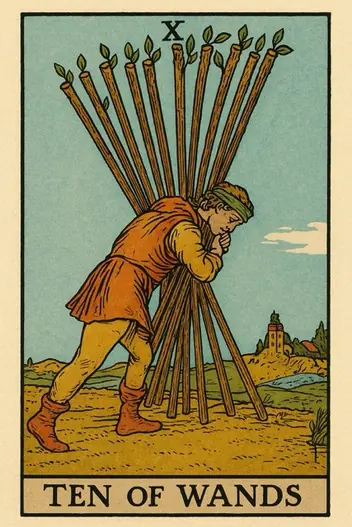
When the determined drive of The Chariot collides with the crushing burden of The Ten of Wands, we encounter a potent psychological paradox. The Chariot represents raw willpower, focused ambition, and the ability to steer through chaos with sheer force of intention. The Ten of Wands, conversely, signals the physical and mental exhaustion that comes from carrying too many obligations, often alone. Together, they depict a person who is pushing forward relentlessly under an unsustainable load.
In practical terms, this combination asks a crucial strategic question: Is your victory being won at the cost of your own endurance? The Chariot’s archetype is that of the hero who conquers obstacles, but the Ten of Wands warns that the path ahead is cluttered with uncompleted tasks, deferred responsibilities, and mounting pressure. The key insight here is not to abandon the journey, but to reassess your carrying capacity before burnout becomes inevitable.
Core Dynamics & Interpretation
The psychological state created by The Chariot and Ten of Wands is one of controlled crisis. You are likely in a phase where you feel you must keep moving—stopping is not an option—yet every step forward adds weight. This is the mind of a person who equates success with endurance, often ignoring the diminishing returns of overwork. The Chariot’s energy provides the motivation to win, but the Ten of Wands reveals the hidden costs: stress, fatigue, and a growing resentment toward the very goals you once pursued.
A critical dynamic here is the tension between autonomy and delegation. The Chariot is a solo driver, steering his own chariot with no passengers. The Ten of Wands suggests you are carrying burdens that could be shared, but your ego or fear of losing control prevents you from asking for help. The result is a self-imposed bottleneck where your willpower becomes your own worst enemy. To break this pattern, you must distinguish between noble effort and stubborn martyrdom.
The real-world implication is clear: you are on the verge of a breakthrough, but only if you strategically lighten your load. The Chariot’s victory is not about brute force alone; it requires tactical resource management. This combination demands that you prioritize ruthlessly, cutting away tasks that do not serve your core mission. The psychological payoff is immense: by shedding what is unnecessary, you reclaim the momentum that the Ten of Wands has been draining.
Career Meaning of The Chariot and Ten of Wands
Strategic Opportunities:
This combination signals a high-stakes period of achievement. You have the willpower to complete major projects, but you must automate or outsource routine tasks to free up mental bandwidth. The reward for this discipline is career advancement.
Strategic Opportunities:
Use this energy to negotiate for resources. The Chariot gives you the confidence to ask for a raise, a promotion, or additional team support. The Ten of Wands justifies your request—you are clearly overburdened.
Calculated Risks:
The greatest risk is overcommitment. Do not take on new clients, projects, or loans without first shedding existing obligations. The Ten of Wands warns that your current load is at capacity; adding more invites failure.
In your professional life, this card pair is a double-edged sword of productivity and burnout. The Chariot gives you the discipline to push through deadlines and achieve results, but the Ten of Wands asks you to audit your responsibilities with cold objectivity. Ask yourself: Which of these tasks are truly essential to your long-term career goals, and which are just busywork you have inherited? Bold strategic tip: Create a "stop doing" list alongside your "to do" list.
Financially, the combination warns against leveraging yourself too thin. The Chariot’s victory mindset can tempt you into risky investments or overextending on credit to fund a project. The Ten of Wands advises conservative cash flow management. Pay down existing debts before taking on new liabilities. Your willpower is your greatest asset right now, but only if it is directed toward reducing burden, not accumulating more.
Your pair is already on the table. Ask your question and draw the clarifying card
or simply focus on it
What Do The Chariot and Ten of Wands Say About Love?
If you are single:
This pairing suggests you may be approaching new connections with a "project management" mindset, trying to control outcomes and carry the emotional weight of the relationship before it has begun. Guard against burnout by letting potential partners meet you halfway.
If you are in a relationship:
You or your partner may be over-functioning, taking on more than your fair share of emotional labor or practical responsibilities. The power dynamic is unbalanced, with one person driving and the other feeling carried—or left behind.
In relationships, The Chariot and Ten of Wands often point to a dynamic of unequal effort. One partner is pushing hard to achieve shared goals—perhaps career advancement, home management, or family planning—while the other may feel sidelined or overwhelmed. The key psychological insight is that control does not equal intimacy. The Chariot’s drive can become domineering if not tempered by the Ten of Wands’ implicit plea for collaboration.
The most important relationship advice here is to initiate a conversation about workload distribution. Ask yourself: Are you carrying the relationship’s burdens because you believe no one else can, or because you fear vulnerability? The Ten of Wands warns that resentment builds silently. To avoid a crash, practice delegating emotionally—allow your partner to take the reins on some issues, even if it feels uncomfortable. This is not weakness; it is strategic relationship management that prevents the chariot from tipping over.
The Chariot and Ten of Wands: Warning Signs
The shadow manifestation of The Chariot and Ten of Wands is toxic overwork disguised as heroism. When this energy is blocked, you may fall into a cognitive bias known as "the sunk cost fallacy"—continuing a failing course of action because you have already invested so much. You might believe that if you just push harder, the weight will become bearable. This is self-sabotage. The shadow also includes martyrdom, where you wear exhaustion as a badge of honor, refusing help because it would invalidate your struggle.
Another pitfall is poor judgment under pressure. The Chariot’s speed combined with the Ten of Wands’ fatigue creates a state of reactive decision-making. You may snap at colleagues, make impulsive financial choices, or isolate from loved ones because you feel you cannot handle one more demand. The psychological root is fear of failure—you are so terrified of losing control that you refuse to acknowledge the system is breaking. The antidote is radical self-honesty: admit when you need a pause, and recognize that strategic retreat is not defeat, but a recalibration.
Get a personalized interpretation
Unlock the combined meaning of your cards in the context of your unique question — for free.
Reversed Positions: What Changes?
If The Chariot is Reversed:
Movement is blocked. You are already overloaded, but the will to win has faded. This is a state of apathy and paralysis of will. You know what needs to be done, but you lack the strength to even move an inch. Advice: Stop immediately and acknowledge your powerlessness. Rest is not a luxury now, but a strategic necessity to avoid losing everything.
If the Ten of Wands is Reversed:
You have shed the burden, but did so chaotically and without strategy. This can mean a sudden abandonment of responsibilities, quitting a job "into the void," or a deal falling through. Instead of unloading the cart, you have overturned it. Warning: This is not liberation, but escape. You need not to get rid of everything, but to learn how to distribute the weight properly.
If BOTH are Reversed:
Complete imbalance. You simultaneously want to control the situation (the unfulfilled desire of The Chariot) and feel like a victim of circumstances (the inability to shed the burden of the Ten). This is a toxic cocktail of aggression and victimhood. The only way out is a complete halt and a reassessment of your value system. You cannot manage what you yourself have created.
Synthesis: Strategic Conclusion
How to constructively use the energy of The Chariot (will, control, victory) to balance the Ten of Wands (burden, overload)? The answer lies in prioritization and outsourcing. Your strength is not in carrying everything yourself, but in choosing the right burden and organizing the process so that it does not destroy you.
Imagine The Chariot as your mind and strategy, and the Ten of Wands as your muscles and endurance. If you use only your muscles, ignoring strategy, you will overexert yourself. Your task is to "reprogram" The Chariot. Instead of thinking, "How do I find the strength to drag this along?", ask: "How can I offload 70% of this burden onto others, or what can I abandon without losing the quality of the result?"
A deep strategic piece of advice: stop being a lone hero. Your ultimate goal is not just to cross the finish line, but to do so with resources left for the next stage. Conscious vulnerability (admitting that you are struggling) and asking for help are not weaknesses, but the highest form of management mastery. Use the discipline of The Chariot to ruthlessly cut away the excess, not to endure an unbearable load. Only then will you transform an exhausting marathon into a manageable race.
Applying This to Your Situation
The core message of The Chariot and Ten of Wands is that true victory requires sustainable effort. You have the willpower to achieve remarkable things, but only if you first lighten your load. This is not a time to quit; it is a time to reorganize, delegate, and prioritize. The path forward demands both courage and humility—the courage to keep driving, and the humility to ask for help when the weight becomes too great.
While this article provides a general archetype, the real power of Tarot lies in how these cards interact with your unique situation. To get a deep, personalized interpretation of The Chariot and Ten of Wands for your specific question—whether about love, career, or personal growth—use the Fortune Cards app. Available on the web and for download, it delivers tailored insights that account for your exact context, helping you turn this powerful energy into a clear, actionable plan.
Interpretation by the Fortune Cards editorial team, based on the Rider–Waite tradition and Jungian archetypes. About our methodology · Updated: 2026-08-26
Other Combinations with The Chariot
Other Combinations with Ten of Wands
Explore Individual Card Meanings
Table of Contents
Ready to find answers to your questions?
Start your first reading now and look at your situation with fresh clarity. The cards are ready to reveal deeper meaning.