The Chariot and Ten of Swords Tarot Combination
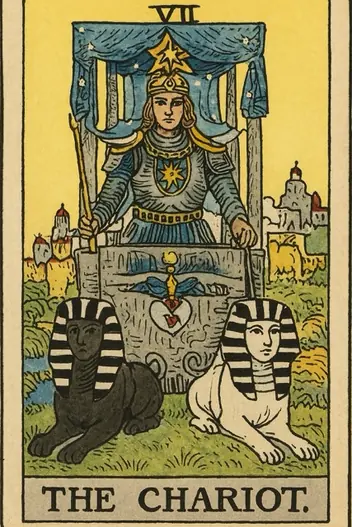
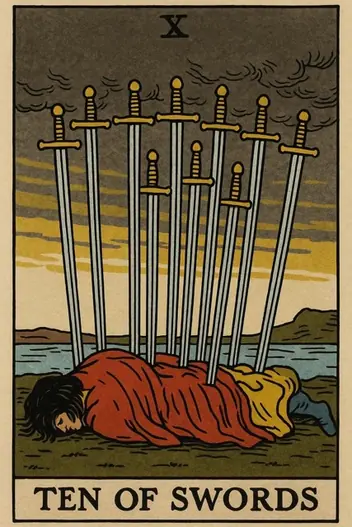
- Arcana
- The Chariot — Major Arcana; Ten of Swords — Minor Arcana, Swords
- Elements
- The Chariot — Water; Ten of Swords — Air
- Elemental interaction
- Neutral elements — energies coexist without conflict
- Numerology
- 7 + 10 = 17 → 8
These two cards represent a stark psychological collision: raw, unstoppable willpower meeting a complete mental collapse. The Chariot is the archetype of controlled aggression, focused drive, and the warrior’s discipline. The Ten of Swords is the archetype of defeat, betrayal, and the painful end of a mental cycle. When they appear together, the reading is not about avoiding the fall, but about how you get back up after everything you believed in has been shattered. This is a strategic crossroads where your ego must be sacrificed for a more resilient self.
The practical intersection here is brutal clarity. The Chariot demands you push forward, but the Ten of Swords insists that the old path is dead. The energy is not a gentle transition; it is a forced rebirth through trauma. You are being asked to stop fighting the inevitable loss and to redirect your will toward the recovery process. This is not a time for blind optimism; it is a time for calculated, painful reconstruction.
The Chariot and Ten of Swords: How These Energies Interact
The psychological state created by this pairing is one of post-traumatic determination. The Chariot’s willpower has been broken by the Ten of Swords’ overwhelming defeat. The key insight is that your previous strategy—the one that relied on sheer force or rigid control—has failed catastrophically. You cannot will your way out of a total collapse. Instead, the Chariot energy must be repurposed. It is no longer about conquering the external world but about conquering your own despair and shame.
This combination often signifies a betrayal or a sudden, devastating loss of faith in a person, a project, or a part of yourself. The real-world implication is that you are at rock bottom, but you are also at the starting line of a new race. The Chariot’s wheels are stuck in the mud of the Ten of Swords’ aftermath. Your only move is to change the terrain. This means accepting the loss as final, processing the grief with brutal honesty, and then using that same disciplined will to rebuild from scratch. The victory here is not in winning the old battle, but in surviving the war and learning a new way to fight.
Your pair is already on the table. Ask your question and draw the clarifying card
or simply focus on it
The Chariot and Ten of Swords: Career and Money
Strategic Opportunities:
This is a perfect time to completely pivot your career path after a major failure or layoff. The old role is dead; the new one must be different.
Strategic Opportunities:
Use the Chariot’s discipline to methodically clear out toxic projects or partnerships that are draining your resources.
Calculated Risks:
Do not make a major financial investment to "win back" losses from a previous failure. This is a high-risk time for impulsive, ego-driven spending.
In a professional context, this combination is a harsh reality check. A project you have been driving forward (The Chariot) may have just suffered a terminal blow (Ten of Swords). The pragmatic advice is to cut your losses immediately. Bold important financial warning: Throwing good money or time after a failed venture is the fastest way to ruin. Instead, focus on resource conservation and reputation management. The Ten of Swords suggests public failure, but the Chariot gives you the strength to face that embarrassment and re-frame the narrative. Your career strategy now is to learn the lesson, apologize if necessary, and pivot to a completely different sector or role where your past failure is irrelevant.
Uncover hidden insights
Let our advanced Tarot system interpret these archetypes specifically for your personal path.
The Chariot and Ten of Swords Love Outcome
If you are single:
This pairing warns against rushing into a new connection to avoid processing a painful breakup or betrayal. Your willpower is currently fragile; use it to heal, not to chase validation.
If you are in a relationship:
This signals a potential power struggle that has ended in a devastating argument or a fundamental betrayal of trust. The relationship must be completely redefined or it will end.
In relationships, The Chariot and Ten of Swords together point to a dynamic of control and victimhood. One partner may have been pushing too hard (The Chariot), while the other feels completely defeated and stabbed in the back (Ten of Swords). The psychological work here is to stop blaming the other person for your pain. Bold key relationship advice: The only way forward is to surrender the need to be right. You must acknowledge the "death" of the old relationship pattern without trying to resurrect it. This is about setting a new, non-negotiable boundary based on mutual respect, not force. If you are the one feeling betrayed, your next step is not revenge, but strategic withdrawal to rebuild your self-worth.
The Chariot and Ten of Swords Reversed Meaning
When cards appear in a reversed position, the dynamic becomes distorted, but does not disappear.
The Chariot Reversed:
This indicates a blocked will or reckless aggression. The person either cannot move forward (paralysis) or acts chaotically, without control. In a pair with the upright Ten of Swords, this means defeat is inevitable, but you are accelerating it through your own incompetence. Advice: temporarily refrain from any active actions. You need not to drive the chariot, but to repair it.
Ten of Swords Reversed:
This is an internal resistance to accepting the inevitable. The person lies "pinned down" but refuses to acknowledge it. In a pair with the upright Chariot, this creates a dangerous illusion: you think you are in control of the situation, when in reality you have already lost. Warning: this is a state of self-deception. You are wasting energy on maintaining appearances, instead of seeking a way out.
BOTH Reversed:
Complete imbalance. This is chaos and loss of orientation. The will is aimless, and defeat is denied. The person may oscillate between hysterical activity and deep apathy. Method for correction: a complete stop. You need an external observer (coach, psychologist, mentor) who can help you see reality without distortions. Only after this can you begin to "reassemble the chariot" anew.
When The Chariot and Ten of Swords Signal Trouble
The shadow manifestation of this pairing is dangerous stubbornness. The seeker may refuse to accept the "death" of a situation, using the Chariot’s willpower to fight a losing battle until they are destroyed. This is a cognitive bias known as "sunk cost fallacy" —continuing a doomed endeavor because of the time and energy already invested. The psychological pitfall is self-destructive pride. You may feel you must "win" to prove your worth, but the Ten of Swords is telling you that the fight itself is what is killing you. Another shadow risk is playing the victim to manipulate others, using the Ten of Swords’ imagery of betrayal to justify a passive-aggressive refusal to move on. Bold warning: Do not use your pain as an excuse for inaction.
The Chariot and Ten of Swords: Tarot Advice
Constructive use of this combination requires a paradigm shift: from "victory at any cost" to "survival through adaptation". The energy of the Chariot is not about brute force, but about directed movement. When you encounter the Ten of Swords, your task is not to smash your head against the wall, but to use the remaining energy to retreat to a safe position and regroup.
The practical algorithm of action is as follows: 1) Acknowledge defeat in the current battle. Tell yourself: "Yes, I lost this round." This will relieve emotional tension. 2) Conduct an audit of resources. What remains? What connections, knowledge, money? Do not waste a single drop of energy on regret. 3) Change the vector. The Chariot cannot go backward, but it can turn around. Your new goal is not to take revenge or restore the status quo, but to extract lessons and build a new strategy on the ruins of the old one.
Deep strategic advice: use the archetype of the "Wise Warrior." This is one who knows when to fight and when to retreat. Instead of fighting reality, accept it as a given. The Ten of Swords is not death, but purification. It removes everything obsolete so that the Chariot can begin its journey anew, but now with new knowledge and without unnecessary baggage. Your victory lies in the ability to survive defeat and emerge stronger.
Where to Go From Here
The core message of The Chariot and Ten of Swords is that true strength is knowing when to stop fighting. Your willpower is not broken; it is being re-calibrated for a new, healthier battle. Accept the ending. Learn the lesson. Then, use your disciplined mind to take the next single, correct step. Do not look back at the battlefield.
However, the meaning of any card combination changes dramatically based on your specific question, your current life phase, and the other cards in the spread. A general interpretation cannot replace a personalized reading that addresses your unique psychology and circumstances. To get a deep, nuanced analysis of how this powerful, painful combination applies to your exact situation right now, use the Fortune Cards app. You can access it on the web or download it to receive a tailored interpretation that turns this archetypal insight into actionable, personal guidance.
Interpretation by the Fortune Cards editorial team, based on the Rider–Waite tradition and Jungian archetypes. About our methodology · Updated: 2026-08-26
Other Combinations with The Chariot
Other Combinations with Ten of Swords
Explore Individual Card Meanings
Table of Contents
- The Chariot and Ten of Swords: How These Energies Interact
- The Chariot and Ten of Swords: Career and Money
- The Chariot and Ten of Swords Love Outcome
- The Chariot and Ten of Swords Reversed Meaning
- When The Chariot and Ten of Swords Signal Trouble
- The Chariot and Ten of Swords: Tarot Advice
- Where to Go From Here
Ready to find answers to your questions?
Start your first reading now and look at your situation with fresh clarity. The cards are ready to reveal deeper meaning.