Page of Wands and Ten of Swords Together in Tarot
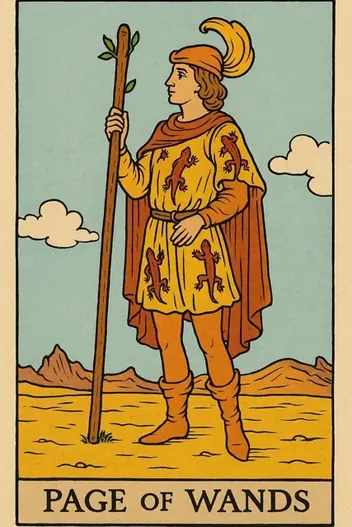
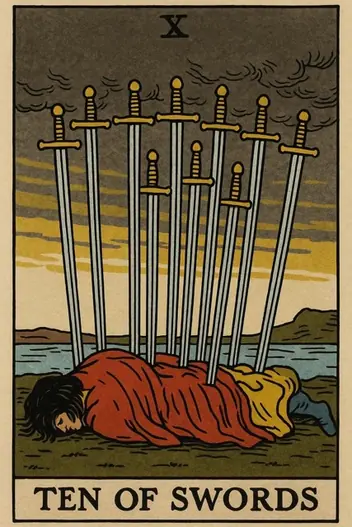
- Arcana
- Page of Wands — Minor Arcana, Wands; Ten of Swords — Minor Arcana, Swords
- Elements
- Page of Wands — Fire; Ten of Swords — Air
- Elemental interaction
- Friendly elements — energies support each other
- Numerology
- 11 + 10 = 21 → 3
When the Page of Wands—a symbol of raw enthusiasm, curiosity, and untested initiative—collides with the Ten of Swords—the archetype of finality, mental exhaustion, and rock-bottom defeat—we witness a profound psychological turning point. This is not a static picture of victory or loss; it is a dynamic process of ego death and rebirth. The Page’s youthful fire meets the Ten’s stark ending, creating a tension where the only way out is through radical acceptance and a new beginning.
In practical terms, this combination often appears when a person has just endured a major failure, betrayal, or mental breakdown, yet feels an inexplicable urge to start something new. The cognitive dissonance is powerful: your mind says “it’s over,” but your spirit whispers “try again.” The key insight here is that the Page of Wands does not deny the Ten of Swords’ pain; instead, it uses that pain as fuel for a more grounded, wiser form of passion. The psychological task is to mourn what was lost, then immediately channel that energy into a small, manageable experiment—not a grand plan, but a single step forward.
Page of Wands and Ten of Swords Combination Meaning
The core dynamic of this pairing is the collapse of a rigid mental framework followed by a surge of creative impulse. The Ten of Swords represents the final, often dramatic, end of a cycle of overthinking, self-criticism, or external criticism. It is the moment when the seeker hits a wall—perhaps a project fails, a relationship ends, or a belief system shatters. The Page of Wands, however, is the archetype of the beginner’s mind: curious, impulsive, and unburdened by past failures. Psychologically, this is akin to Jung’s concept of “individuation”—the ego must be wounded (Ten of Swords) before a new, authentic self can emerge (Page of Wands).
The most important psychological insight is that this combination actively resists the temptation to dwell in victimhood. While the Ten of Swords can easily lead to chronic depression or blame, the Page of Wands injects a dose of forward momentum. The seeker is being asked to separate the objective event from the subjective story they tell about it. For example, losing a job (Ten of Swords) can be reframed as the necessary death of a career path that was never aligned with the seeker’s true passion (Page of Wands). The strategy here is not to “fix” the past, but to prototype a new future. Take one small, risk-free action—like researching a new hobby, sending one email, or sharing an idea—to test the waters of rebirth.
A critical warning is embedded in this dynamic: the Page’s enthusiasm can be premature or naive. Without acknowledging the full weight of the Ten of Swords’ lesson, the seeker might repeat the same mistakes. The psychological balance requires grieving the loss fully while keeping the spark of possibility alive. If the Page’s energy dominates too early, the result is manic denial; if the Ten’s energy dominates too long, the result is learned helplessness. The healthy path is a dialectical synthesis: “I accept that this ended painfully, and I am willing to try something different, even if I’m scared.”
Your pair is already on the table. Ask your question and draw the clarifying card
or simply focus on it
Love and Relationships
If you are single:
This combination suggests you are emerging from a painful romantic disappointment or disillusionment. Do not rush into a new relationship to numb the pain. Instead, use this time to redefine what you truly want—the Page of Wands encourages you to explore new types of people or ways of dating with low stakes.
If you are in a relationship:
You and your partner may have just survived a major conflict or betrayal that felt like a “death blow.” The relationship is not over, but the old dynamic must die. The Page of Wands calls for playful, experimental communication—try a new activity together or have a “no judgment” conversation about unmet needs.
In relationships, this card pair often signals a crisis that forces a reset. The Ten of Swords can represent a final argument, a lie exposed, or a pattern of mental cruelty that has reached its limit. The Page of Wands then asks: “What can we build from the ashes?” For couples, this is a make-or-break moment that requires extraordinary emotional intelligence. The key is to avoid blame and instead focus on mutual curiosity. The Page’s energy is not about grand romantic gestures but about small, sincere acts of reconnection—like a shared joke, a new hobby, or an honest apology. Bold advice: If you are the one who was hurt, allow yourself to be vulnerable again, but only if your partner shows genuine accountability. If you are the one who caused the pain, your task is to demonstrate change through consistent, humble action, not just words.
Get a personalized interpretation
Unlock the combined meaning of your cards in the context of your unique question — for free.
What Do Page of Wands and Ten of Swords Indicate for Your Career?
Strategic Opportunities:
Pivot to a new niche or industry. The Ten of Swords marks the end of an old career path, while the Page of Wands points to a fresh, unproven direction that excites you. Start with a side project or a free course to test the waters.
Strategic Opportunities:
Turn a failure into a learning portfolio. Use the “post-mortem” of a failed project to create a case study that demonstrates resilience and insight. This can be a powerful tool for networking or job interviews.
Calculated Risks:
Avoid immediate, large-scale investments. The Page of Wands can be impulsive, and the Ten of Swords warns of financial ruin if you ignore hard data. Do not quit your job without a concrete plan. Instead, allocate a small budget—say 5% of savings—for experimental ventures.
In a professional context, this combination is a clear signal to stop forcing a broken strategy. The Ten of Swords often appears when a business idea, a client relationship, or a career track has reached a dead end due to poor planning, burnout, or external market shifts. The Page of Wands advises you to adopt a “startup” mindset within your current role or industry. Bold financial warning: The worst move is to double down on the same approach out of desperation. Instead, conduct a SWOT analysis of your situation: identify what died (the old product, the toxic boss, the outdated skill) and what new skill or idea you’ve been curious about. The most pragmatic action is to network with people in a different field—the Page of Wands thrives on fresh connections and informal learning. For financial planning, focus on liquidity and flexibility; avoid locking yourself into long-term commitments until you have validated the new direction.
Reversed Positions: What Changes?
When cards appear in a reversed position, the dynamic becomes distorted, signaling internal blocks.
- Reversed Page of Wands. This is blocked potential and recklessness. Enthusiasm is present, but it is directed nowhere. You are wasting energy on empty dreams or, conversely, acting impulsively without regard for consequences. In the context of the Ten of Swords, this means you are stubbornly clinging to a dead situation, refusing to acknowledge its end. Advice: find silence. Your hyperactivity is a defense against the fear of emptiness.
- Reversed Ten of Swords. This is internal resistance and weakness. You are already at rock bottom but refuse to admit it. Instead of experiencing the crisis, you get stuck in a "victim" state. Paired with the Page of Wands, this creates a toxic cocktail: you start new endeavors, but you do so from a position of fear and vulnerability. Warning: this is a path to prolonged depression and chronic failure.
- Both cards reversed. Complete imbalance. This is a classic self-sabotage syndrome. You simultaneously fear starting something new (reversed Page) and cannot let go of the past (reversed Ten). Energy drains into endless regrets and fruitless plans. The logical way to correct this: a forced pause. Take a 3-day timeout from all decisions and actions. Engage in physical labor or sports to "reset" your nervous system.
Shadow Side & Pitfalls
The shadow of the Page of Wands combined with the Ten of Swords manifests as a dangerous blend of denial and recklessness. The seeker may refuse to fully process the pain of the Ten of Swords, instead jumping into a new project or relationship with manic energy to avoid feeling the loss. This is a classic cognitive bias known as “action bias” —the belief that any movement is better than standing still. The result is often repeating the same mistakes with a new face, because the underlying lesson was never learned. For example, someone might quit a job after a failure, only to start a similar business with the same flawed assumptions.
Another shadow manifestation is self-sabotage through over-optimism. The Page of Wands can be naive, and the Ten of Swords can be self-pitying. Together, they might produce a narrative like: “I’m a genius who was held back by others, and now I’ll prove everyone wrong.” This grandiose fantasy ignores the real reasons for the failure. The psychological pitfall is splitting—seeing the past as entirely bad and the future as entirely good, without nuance. The antidote is humility: ask yourself, “What was my role in this ending? What did I need to learn about my own limits or blind spots?” Without this introspection, the Page’s spark becomes a false dawn, leading to another painful crash.
Page of Wands and Ten of Swords Combined Message
How can the Page of Wands' energy be used constructively to balance the Ten of Swords? The answer lies in the "architect of ruins" strategy. Your task is not to dismiss the pain or get stuck in it, but to use it as building material. The Page's energy is not fuel for an immediate leap, but a tool for mapping a new reality.
Imagine the Ten of Swords as a demolished building. The Page of Wands is the architect walking through the rubble with a notebook. He doesn't try to raise the walls back up (that's impossible); he notes which materials can be reused, where the level ground for the foundation is, and how best to design the new structure so it is more stable than the old one. The deep strategic advice: create a "manifesto for a new beginning." Take a sheet of paper and divide it into two columns. In the first ("Ten of Swords"), honestly and in detail describe what exactly ended, what your mistake was, and what you lost. In the second ("Page of Wands"), write down one single, smallest, and safest step you can take right now, based on this experience.
This process transforms trauma into wisdom and impulsiveness into conscious action. You are not fighting fate; you are becoming its co-author. Clarity comes not from searching for "signs," but from an honest dialogue between your past experience and your future potential.
Applying This to Your Situation
The Page of Wands and Ten of Swords together deliver a powerful message of necessary endings and courageous new beginnings. This is not a card of easy optimism, but of calculated rebirth—you must honor the pain of the past while taking one small, curious step into the unknown. The key is to balance emotional acceptance with practical experimentation. Your unique situation—whether it’s a breakup, a career crisis, or a creative block—will determine how to apply this archetype.
For a truly personalized reading that goes beyond these general dynamics, use the Fortune Cards app. This article gives you the archetypal map, but the app applies it to your exact question, your current emotional state, and your specific timeline. You can access it on the web or download it now to get a deep, tailored interpretation of the Page of Wands and Ten of Swords for your life right now. Stop guessing—get clarity that fits your story.
Interpretation by the Fortune Cards editorial team, based on the Rider–Waite tradition and Jungian archetypes. About our methodology · Updated: 2026-10-08
Other Combinations with Page of Wands
Other Combinations with Ten of Swords
Explore Individual Card Meanings
Table of Contents
Ready to find answers to your questions?
Start your first reading now and look at your situation with fresh clarity. The cards are ready to reveal deeper meaning.