Love Tarot: Death and Ace of Cups
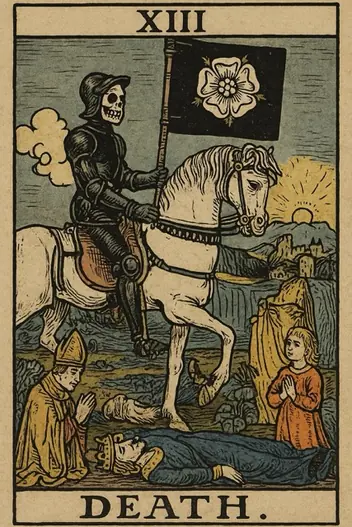
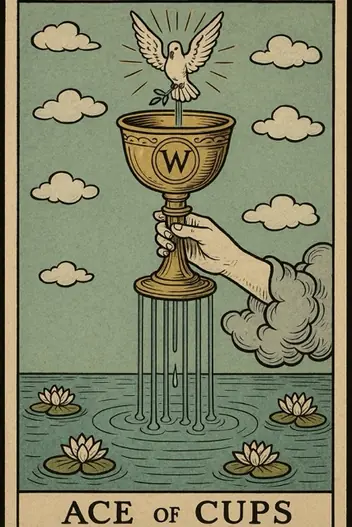
- Arcana
- Death — Major Arcana; Ace of Cups — Minor Arcana, Cups
- Elements
- Death — Water; Ace of Cups — Water
- Elemental interaction
- Same element — energies intensify each other
- Numerology
- 13 + 1 = 14 → 5
When the Death card meets the Ace of Cups, we witness a powerful psychological pivot: the dissolution of an old emotional structure to make room for an entirely new capacity for love, intuition, or creative flow. The Death card is not about literal demise—it is about necessary termination. The Ace of Cups, meanwhile, represents the raw, undiluted potential of emotional openness and connection.
In practical terms, this combination suggests that you are being asked to release a stagnant emotional pattern before you can access a deeper, more authentic wellspring of feeling. The collision of these archetypes creates a moment of strategic vulnerability: you must let go of what you know to receive what you have not yet imagined. This is not a gentle transition; it is a surgical removal of emotional baggage that blocks your capacity for joy.
Core Dynamics & Interpretation
The psychological state created by Death and Ace of Cups is one of controlled crisis. You are simultaneously experiencing the grief of an ending and the exhilarating, terrifying potential of a new beginning. The key insight here is that the cup cannot overflow if it is still filled with old, stagnant water. Your mind may resist the change, clinging to familiar pain, but your emotional self is already moving toward renewal.
This combination demands active participation in your own transformation. It is not enough to passively wait for things to change. You must identify the specific belief, relationship, or habit that is no longer serving your emotional growth and consciously choose to end it. The reward is not guaranteed, but the potential for a profound, life-affirming emotional experience is high if you act with intention.
From a Jungian perspective, this is the death of the persona—the social mask you wear—to allow the authentic Self to emerge. The Ace of Cups then becomes the vessel for this renewed, unburdened emotional expression. The most important takeaway is that you cannot skip the death stage. Trying to hold onto the old while reaching for the new will only create internal conflict and prolong suffering. Embrace the ending as the necessary first step.
Your pair is already on the table. Ask your question and draw the clarifying card
or simply focus on it
What Do Death and Ace of Cups Say About Love?
If you are single:
This combination suggests a necessary clearing of emotional residue from past relationships. Do not seek a new partner until you have fully processed the ending of the previous chapter. The Ace of Cups promises a new love, but only after the Death card's work is done.
If you are in a relationship:
A fundamental shift is required. This could mean ending a toxic dynamic, renegotiating boundaries, or letting go of a fantasy of who your partner "should be" to accept them as they are. The relationship can be reborn, but only through honest confrontation.
In relationships, the Death and Ace of Cups dynamic is about emotional honesty as a form of courage. You may need to have a difficult conversation that feels like an ending—but it is actually the beginning of deeper intimacy. The key advice is to stop avoiding the hard truths. Pretending everything is fine when it is not will only poison the well. Boldly naming what needs to change is the most loving action you can take for yourself and your partner. This combination rewards those who can sit with discomfort and still keep their hearts open.
What Do Death and Ace of Cups Indicate for Your Career?
Strategic Opportunities:
Pivot to a role or project that aligns with your core values. This is the time to leave a job that drains you emotionally for one that feeds your passion.
Strategic Opportunities:
Launch a creative or emotionally resonant venture. The Ace of Cups suggests that work tied to healing, art, counseling, or community will thrive after a period of closure.
Calculated Risks:
Avoid clinging to a failing business model or toxic workplace out of fear. The Death card warns that holding on will only increase the cost of the eventual collapse.
Professionally, this combination signals a strategic reset. You may feel a sense of loss or uncertainty, but this is the fertile ground for innovation. The most important financial warning is to resist the urge to make impulsive decisions driven by fear. Instead, treat this as a time for deliberate restructuring. Cut dead weight from your budget, end partnerships that are no longer productive, and invest in skills or projects that align with your emotional intelligence. The strategic tip is to view this period as a necessary pruning—removing the non-essential so that your true talents can flourish. The Ace of Cups promises that emotional fulfillment in your work is possible, but only after you release the security of what is familiar.
Get a personalized interpretation
Unlock the combined meaning of your cards in the context of your unique question — for free.
Reversed Death and Ace of Cups Explained
Reversed cards in this pair signal a blocked transformation process.
If "Death" is reversed:
This indicates a blocked potential for change. You are clinging to the past, fearing the void. This manifests as reckless sabotage: you may destroy relationships or projects, not to build something new, but simply to avoid uncertainty. Advice: acknowledge that your resistance to change causes more pain than the change itself. Start small — change one routine.
If the "Ace of Cups" is reversed:
This is a sign of internal resistance to feelings. You are blocking an emotional breakthrough, afraid of appearing weak or vulnerable. This leads to emotional rigidity and cynicism. You see the need for change ("Death" upright), but refuse to give yourself permission for a new attachment or joy. Advice: allow yourself one "weakness" a day — tell someone about your need or confess a fear.
If BOTH are reversed:
A complete imbalance of dynamics. This is a state of "frozen grief". You are stuck between the desire to destroy everything (suppressed "Death") and the fear of starting something new (suppressed "Ace"). The logical way to correct this is to artificially create a ritual of closure. Write a letter to the past, burn an old contract, physically remove items from your home that remind you of the pain. Only after this can you open yourself to the new.
Death and Ace of Cups: Warning Signs
When the energy of Death and Ace of Cups is blocked or misdirected, the shadow manifests as emotional paralysis or reckless escapism. You may refuse to let go of a relationship, job, or belief system that is clearly dead, leading to prolonged depression or resentment. Alternatively, you might rush into a new emotional situation without doing the necessary inner work, using the promise of "new love" as a way to avoid grief.
Cognitive biases at play include loss aversion—overvaluing what you have simply because you have it—and sunk cost fallacy—continuing a failing path because you have already invested so much. The shadow of the Death card can also appear as destructive impulsivity, where you cut ties too abruptly without a plan, leaving yourself emotionally exposed and vulnerable to manipulation. Self-sabotage occurs when you mistake the pain of change for a sign that you are doing something wrong. In reality, the discomfort is a sign that you are exactly where you need to be. The pitfall is to mistake the Ace of Cups' promise for a quick fix, rather than the long-term emotional cultivation it requires.
Death and Ace of Cups Combined Message
How can the energy of "Death" be used constructively to balance and activate the "Ace of Cups"? The answer lies in the realm of strategic humility. "Death" teaches us that we do not control life's cycles, while the "Ace of Cups" reminds us that we can control our attitude toward them. Your task is not to fight the current, but to become a skilled surfer on the wave of change.
The profound strategic advice is as follows: apply the "one-step principle." Do not attempt to transform your entire life in a single day. Choose one sphere (relationships or career) and one specific "death" (letting go of a habit, completing a project, severing a connection). Dedicate a week to this process. During that week, each time you feel fear or emptiness, consciously open yourself to one new emotional experience — pay a compliment to a stranger, listen to music that moves you to tears, sign up for a course you've long been interested in. Build a bridge between destruction and creation.
This combination offers you a rare opportunity: to free yourself from the burden of the past not through apathy, but through gratitude. You can let go of a situation without devaluing it. You can acknowledge the end of a chapter without burning the book. It is precisely this state — an active, conscious farewell with an open heart — that holds the key to the right decision. It allows you to emerge from the crisis not wounded, but renewed, with a clear understanding of what you truly want and deserve.
Your Next Step: Personal Context Matters
The Death and Ace of Cups combination is a call to end one emotional chapter with courage and open your heart to the next. The core message is clear: transformation is not optional, but it leads to a richer, more authentic life if you embrace it. However, the general meaning is only the starting point. The true power of Tarot lies in how these archetypes interact with your specific situation, your personal history, and the exact question you hold in your mind.
For a deep, personalized interpretation of this exact combination tailored to your unique circumstances, use the Fortune Cards app. Whether you are navigating a breakup, a career pivot, or a personal crisis, the app applies these psychological insights directly to your life. You can access it on the web or download it now to receive a clear, actionable reading that tells you exactly what to release and what to welcome.
Interpretation by the Fortune Cards editorial team, based on the Rider–Waite tradition and Jungian archetypes. About our methodology · Updated: 2026-08-26
Other Combinations with Death
Other Combinations with Ace of Cups
Explore Individual Card Meanings
Table of Contents
Ready to find answers to your questions?
Start your first reading now and look at your situation with fresh clarity. The cards are ready to reveal deeper meaning.