Love Tarot: The Devil and Eight of Cups

- Arcana
- The Devil — Major Arcana; Eight of Cups — Minor Arcana, Cups
- Elements
- The Devil — Earth; Eight of Cups — Water
- Elemental interaction
- Friendly elements — energies support each other
- Numerology
- 15 + 8 = 23 → 5
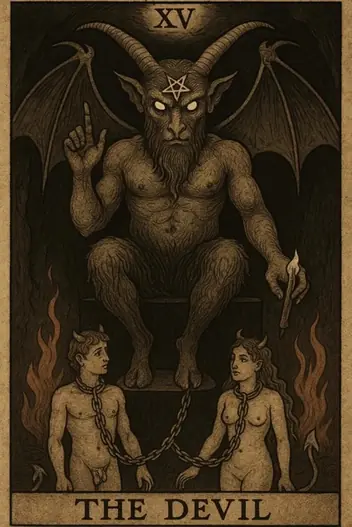
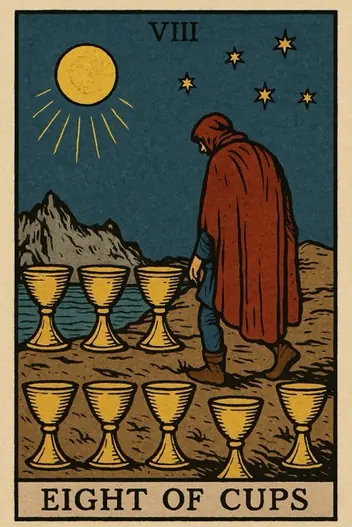
The Devil represents attachment, addiction, and the chains of material or psychological bondage. It signifies a pattern you feel trapped in—whether it's a toxic relationship, a limiting belief, or an unhealthy habit. The Eight of Cups, in contrast, is the card of deliberate departure: walking away from what no longer serves you, even when it’s familiar or comfortable. When these two cards appear together, they depict a critical moment of conscious disengagement. You are not being pushed out; you are choosing to leave a cage you helped build.
Psychologically, this combination signals a transition from unconscious compulsion to intentional action. The Devil represents the shadow—the parts of yourself you may deny or project onto others. The Eight of Cups shows the ego mustering the courage to step away, often at a cost. The real challenge here is not external circumstances but your own ambivalence: you know you need to leave, yet part of you still clings to the illusion of security. This is a pragmatic crossroads, not a mystical one. The question is: What are you willing to sacrifice to reclaim your autonomy?
What Do The Devil and Eight of Cups Mean Together?
The core dynamic of The Devil and Eight of Cups is a battle between attachment and liberation. The Devil binds through fear, desire, or habit—often making the seeker feel powerless, as if external forces control their choices. The Eight of Cups cuts through this illusion by showing that the power to leave lies within you. This is not a passive waiting game; it is a calculated retreat. The psychological state here is one of ambivalent resolve: you are simultaneously terrified of leaving and certain that staying is unsustainable.
In real-world terms, this pair often appears when someone is stuck in a compulsive loop—a job that drains them, a relationship built on codependency, or a financial strategy that exploits their fears. The Eight of Cups does not promise a painless exit; it promises a necessary one. The key insight is that the chains are largely self-imposed. The Devil’s chains are illusions of powerlessness. When you recognize that, the Eight of Cups becomes a strategic withdrawal, not a defeat. This is about reclaiming agency by acknowledging what you truly value—and what you are willing to walk away from to protect it.
Career and Finances
Strategic Opportunities:
Identify and cut ties with a toxic client, project, or job that drains your energy without fair compensation. This is the moment to prioritize your mental health over sunk costs.
Strategic Opportunities:
Redirect your resources toward a venture that aligns with your long-term values, even if it means short-term loss. The Eight of Cups rewards strategic risk.
Calculated Risks:
Avoid doubling down on a failing investment or partnership just because you’ve already invested time or money. The Devil amplifies the sunk-cost fallacy.
In your professional life, this combination suggests you are over-committed to a path that no longer serves you. You may feel trapped by golden handcuffs, a toxic boss, or a business relationship that exploits your skills. The Devil represents the illusion that you have no other options. The Eight of Cups counters that by showing the exit door—but it requires you to accept a period of uncertainty. Financially, this is a warning against chasing losses or staying in a role out of fear of instability. Bold financial warning: Do not let comfort with the known keep you in a situation that erodes your self-worth. Instead, create a disengagement plan: set a timeline, save an exit fund, and network strategically. The Eight of Cups is not impulsive; it is deliberate. Walk away with your dignity and a clear strategy, not in a panic.
Your pair is already on the table. Ask your question and draw the clarifying card
or simply focus on it
What Do The Devil and Eight of Cups Say About Love?
If you are single:
This combination warns against idealizing someone who triggers your fears or addictive patterns. Do not mistake intensity for intimacy. Evaluate whether the connection is based on mutual respect or a shared attraction to drama.
If you are in a relationship:
You may be aware of an unhealthy dynamic—such as control, jealousy, or financial entanglement—that you’ve rationalized. The Eight of Cups asks: Are you ready to leave, or are you waiting for permission?
In relationships, The Devil and Eight of Cups signals a power imbalance that has become unsustainable. One partner may feel trapped by the other’s demands, or both may be caught in a cycle of mutual dependency. The psychological insight here is that the bond is often maintained by fear of loneliness, not love. The Eight of Cups urges you to examine the cost of staying. Bold key relationship advice: Your next step is not to fix the other person—it is to fix your relationship with yourself. If you cannot imagine leaving, ask yourself: What am I afraid will happen if I do? The answer reveals the chain. For couples willing to work through it, this combination can be a catalyst for radical honesty about boundaries. But the Eight of Cups also says: sometimes the healthiest act of love is to walk away.
Reversed Positions: What Changes?
If The Devil is Reversed:
The dependency weakens, but the person may fall into recklessness, burning bridges without a plan. Advice: do not confuse liberation with destruction. Leave, but do not destroy what can be used as a resource.
If the Eight of Cups is Reversed:
Internal resistance to change takes over. The person knows they need to leave but finds excuses ("one more chance," "now is not the time"). Warning: this is a path to chronic depression and loss of self.
If BOTH are Reversed:
Complete paralysis of will. The person is stuck in a toxic situation, having no strength either to stay or to leave. Advice: seek professional help. You need an external anchor—a coach or therapist who can help break this vicious cycle.
Get a personalized interpretation
Unlock the combined meaning of your cards in the context of your unique question — for free.
What Are the Risks of The Devil and Eight of Cups?
The shadow of this combination manifests as paralysis or self-sabotage. You may intellectually know you need to leave, but cognitive biases—like loss aversion or the status quo bias—keep you stuck. The Devil’s shadow is the rationalization of suffering: “I’ve been here so long, I can’t start over.” The Eight of Cups’ shadow is escapism without resolution: walking away physically but carrying the same patterns into the next situation. Another pitfall is projecting the blame entirely onto others (the Devil as “them”) while ignoring your own role in the dynamic. Self-sabotage can also appear as sudden, reckless decisions—quitting without a plan, burning bridges out of anger, or abandoning a situation that could have been repaired with boundaries. The most dangerous trap is mistaking fear for intuition: convincing yourself that staying is “fate” when it’s really just comfort with the familiar.
The Devil and Eight of Cups Combined Message
Constructive use of this combination requires the cold pragmatism of the Devil and the emotional maturity of the Eight of Cups. Your task is not to flee into nowhere, but to reallocate resources (time, money, attention) from a zone of depletion into a zone of growth. The Devil is useful here because it provides clarity: you know exactly what is destroying you. The Eight of Cups gives you the courage to admit that these investments will never pay off.
Strategic advice: draw up a "loss balance sheet". Write down what you lose by staying (health, self-esteem, time) and what you lose by leaving (illusions, familiar discomfort, a false sense of security). Compare the two lists. If the first outweighs the second — act like an investor who cuts their losses to avoid losing their entire capital. You are not abandoning what you love — you are ceasing to fund what destroys you. This is not an escape, but a strategic regrouping.
Your Next Step: Personal Context Matters
The Devil and Eight of Cups together deliver a powerful message: You are not a victim of your circumstances, but you must act with courage and clarity. This is not about forcing a change; it is about recognizing that the chains you feel are real, but they are not unbreakable. The core message is one of accountability and agency: you have the power to leave, but you must first accept the cost of staying.
While this article provides the general archetype, the true magic happens when Tarot is applied to your unique situation. The meaning of these cards shifts depending on your specific question—whether it’s about a relationship, a career move, or a personal habit. Use the Fortune Cards app to get a deep, personalized interpretation of this exact combination for your particular context. You can access it on the web or download it now to receive tailored advice that respects your life’s nuances. Your next step is one click away.
Interpretation by the Fortune Cards editorial team, based on the Rider–Waite tradition and Jungian archetypes. About our methodology · Updated: 2026-08-26
Other Combinations with The Devil
Other Combinations with Eight of Cups
Explore Individual Card Meanings
Table of Contents
Ready to find answers to your questions?
Start your first reading now and look at your situation with fresh clarity. The cards are ready to reveal deeper meaning.