The Devil and Six of Swords Together in Tarot
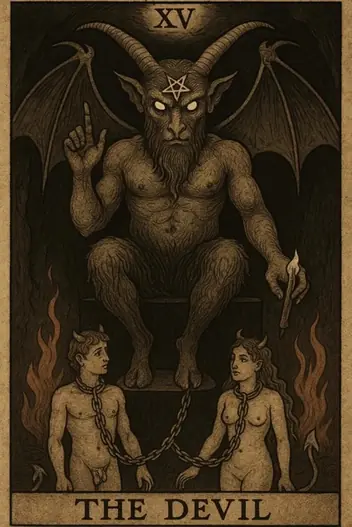

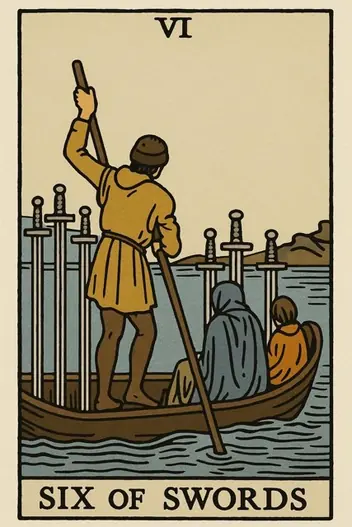
- Arcana
- The Devil — Major Arcana; Six of Swords — Minor Arcana, Swords
- Elements
- The Devil — Earth; Six of Swords — Air
- Elemental interaction
- Opposing elements — energies create tension
- Numerology
- 15 + 6 = 21 → 3
When the Devil’s material fixations collide with the Six of Swords’ call for transition, we witness a profound psychological paradox: the struggle to leave a toxic but comfortable shore. The Devil represents the shadow archetype—addiction, control, and the illusion of security in bondage. The Six of Swords symbolizes the painful but necessary journey toward healing, often requiring a literal or emotional departure. Together, they map the cognitive dissonance of knowing you must leave, yet feeling chained to the familiar.
This combination forces a confrontation with self-limiting beliefs and the hidden payoffs of suffering. The Devil whispers that the pain is safer than the unknown; the Six of Swords insists the boat is already moving. The key insight is that freedom requires a price—not martyrdom, but the willingness to trade short-term comfort for long-term autonomy. This is not a card of sudden liberation, but of deliberate, step-by-step disengagement from what binds you.
What Do The Devil and Six of Swords Mean Together?
The Devil and Six of Swords together create a psychological tug-of-war between attachment and escape. The Devil’s energy is dense, material, and often rooted in unconscious drives—addiction to a person, a job, a status, or a belief system. The Six of Swords represents the ego’s attempt to navigate this terrain, using reason and emotional distance to row toward safer waters. The result is a state of calculated ambivalence: you are aware of the trap, but the chains feel real.
In practical terms, this pair signals a transition that feels forced yet necessary. You may be leaving a situation that once offered security—a relationship, a career, a home—but has become a cage. The Devil reveals the shadow contract: the unspoken agreement to stay because leaving feels like losing part of yourself. The Six of Swords insists that loss is part of growth, and the journey, though cold and lonely, is the only path to psychological integration. The core dynamic is resistance versus momentum; the boat is moving, but you’re gripping the oars with trembling hands.
This combination also highlights cognitive biases like the sunk cost fallacy—the belief that because you’ve invested so much, you must continue. The Devil feeds this, while the Six of Swords demands a reappraisal of value. The most strategic action here is to identify the specific attachment (person, substance, identity) and reframe it as a transaction you can exit, not a fate you must endure. Freedom is a decision, not a destination.
Your pair is already on the table. Ask your question and draw the clarifying card
or simply focus on it
What Do The Devil and Six of Swords Indicate for Your Career?
Strategic Opportunities:
Use the Devil’s material focus to negotiate a severance package, exit a dead-end job, or pivot your career toward higher autonomy. The Six of Swords’ transition energy supports calculated career changes—not impulsive leaps, but well-planned moves.
Strategic Opportunities:
Monetize your shadow skills. The Devil can represent talents in sales, negotiation, or understanding human weakness. Apply this to a new industry or role that requires ruthless pragmatism.
Calculated Risks:
Avoid golden handcuffs—bonuses, stock options, or loyalty perks that tie you to a toxic environment. The Six of Swords warns that financial security is not worth psychological bondage. Specific warning: do not take on debt to fund an escape; instead, save strategically for the transition.
In career readings, this combination often appears when you are chained to a role that pays well but stifles growth. The Devil represents the material attachment—the salary, the title, the benefits—while the Six of Swords indicates the need to move on but with careful planning. Strategic advice: treat your job as a resource extraction tool (Devil) while quietly building an exit (Six of Swords). Financial warning: do not confuse income with identity. The Six of Swords’ journey is lean but purposeful; accept a temporary pay cut for long-term mental health. Key takeaway: your career is a vehicle, not a prison. Use the Devil’s energy to negotiate better terms or secure a parachute before the crossing.
The Devil and Six of Swords in Love Tarot
If you are single:
This combination warns against romanticizing toxic patterns. You may be drawn to partners who feel intense but ultimately confine you—think "bad boy/girl" allure or codependent dynamics. The Six of Swords advises emotional distance to see the red flags clearly before boarding the boat.
If you are in a relationship:
This pair signals a relationship that has become a mutual prison—addicted to drama, comfort, or fear of being alone. The Devil represents the power imbalance or unspoken control, while the Six of Swords demands a realistic exit strategy or a fundamental renegotiation of terms.
In relationships, the Devil and Six of Swords reveal a tension between passion and liberation. The Devil’s shadow is intensity without health—a bond that feels fated but is actually based on shared trauma or co-dependency. The Six of Swords offers a lifeline: the courage to leave the familiar chaos for uncertain calm. Key relationship advice: do not confuse attachment with love. If you feel trapped, ask: What am I gaining from staying? The answer is often a perverse sense of identity or control. Bold action: set a concrete boundary or timeline for change. This is not about dramatic breakups, but about incremental disengagement from the toxic dynamic. Emotional intelligence here means recognizing that the other person’s suffering does not obligate you to stay.
Deepen your understanding
Find out exactly what this reading means for your current life situation with our oracle.
The Devil and Six of Swords: Warning Signs
The shadow of this combination is paralysis by analysis—you see the trap but rationalize staying. The Devil’s cognitive bias is confirmation bias: you only notice evidence that staying is safe, ignoring the cost. The Six of Swords’ shadow is emotional avoidance: you may physically leave but carry the psychological chains with you. Self-sabotage manifests as procrastination, substance use, or picking fights to justify leaving. The most dangerous pitfall is romanticizing the suffering—believing that the pain of staying is noble or necessary. Poor judgment emerges when you confuse the Devil’s intensity with passion, or the Six of Swords’ distance with coldness. Key cognitive bias to watch for: the endowment effect—overvaluing what you have simply because you own it. The antidote is radical honesty: ask yourself, If I met this situation today, would I choose it? If the answer is no, the boat is already waiting.
What If The Devil or Six of Swords Appears Reversed?
When cards appear reversed, the dynamic becomes distorted, but it does not disappear.
If The Devil is reversed:
This signifies blocked potential or recklessness. You are denying your dependency, believing yourself to be "free," but in reality, you are a prisoner of your own pride. Advice: Stop trying to prove your independence—acknowledge that you need help. Or conversely: you have thrown off your shackles but don't know where to sail. Warning: Do not confuse liberation with chaos. The Six of Swords requires direction.
If the Six of Swords is reversed:
This indicates internal resistance and self-sabotage. You know you need to leave, but you are stalling for time. Advice: Take the first step—it doesn't have to be a big one. Just cancel one meeting or make an appointment with a therapist. Warning: Getting stuck in this position leads to depression and increased control by The Devil.
If BOTH are reversed:
Complete imbalance. You are simultaneously bound and fleeing, creating toxic chaos. A logical way to correct this: An artificial pause. Withdraw into an "information vacuum" for 72 hours. Disconnect all communication. This will break the vicious cycle of reactions and allow the rational mind (Six of Swords) to prevail over the emotions (The Devil).
Synthesis: Strategic Conclusion
Constructive use of this combination requires cold pragmatism. The Devil's energy grants you clarity of vision — you see the system from within, know its triggers and weak points. The Six of Swords' energy provides the route, but not the fuel. Your task is to use "devilish" insight to find the safest and fastest path to exit, without engaging in unnecessary conflicts.
A deep strategic counsel: Do not attempt to "heal" the situation or "defeat" the Devil. This is not a war; it is a negotiation. You are not escaping from hell — you are moving to a more comfortable apartment. Your strength lies in cold calculation of advantage. Ask yourself: "What part of me derives pleasure from this pain?" The answer to this question is the key to not repeating the cycle. The Six of Swords does not promise happiness; it promises movement. Accept the discomfort of the unknown as the price of freedom. Your decision must be based not on emotions, but on a risk map. Compile a list: "What do I lose by leaving?" and "What do I gain by staying?" If the balance tips toward losses — set sail. If you stay — do so consciously, without illusions that "everything will change on its own."
Your Next Step: Personal Context Matters
The Devil and Six of Swords together demand a pragmatic exit from a psychological prison. The core message is: you are not the chains; you are the one who forged them. Freedom requires acknowledging your role in the trap and taking deliberate, sequential action to leave. The boat is not a rescue—it is a tool you must row yourself. Your next step is to identify one concrete attachment (a person, a job, a belief) and begin the process of disengagement today, even if only mentally.
While this article provides the universal archetype, the true power of Tarot lies in applying these insights to your unique situation. The Fortune Cards app offers a deep, personalized interpretation of this exact combination for your specific question—whether it’s about a relationship, career move, or inner conflict. Use the app on the web or download it now to receive a tailored reading that maps the Devil’s chains and the Six of Swords’ crossing directly onto your life. Your journey is unique; don’t navigate it with generic advice.
Interpretation by the Fortune Cards editorial team, based on the Rider–Waite tradition and Jungian archetypes. About our methodology · Updated: 2026-08-26
Other Combinations with The Devil
Other Combinations with Six of Swords
Explore Individual Card Meanings
Table of Contents
- What Do The Devil and Six of Swords Mean Together?
- What Do The Devil and Six of Swords Indicate for Your Career?
- The Devil and Six of Swords in Love Tarot
- The Devil and Six of Swords: Warning Signs
- What If The Devil or Six of Swords Appears Reversed?
- Synthesis: Strategic Conclusion
- Your Next Step: Personal Context Matters
Ready to find answers to your questions?
Start your first reading now and look at your situation with fresh clarity. The cards are ready to reveal deeper meaning.