Love Tarot: The Fool and Eight of Cups
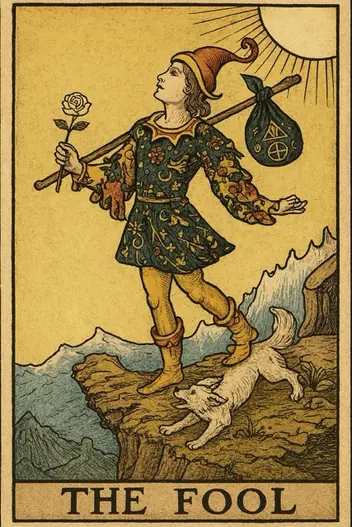

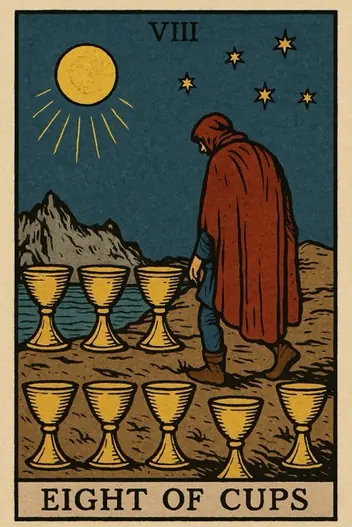
- Arcana
- The Fool — Major Arcana; Eight of Cups — Minor Arcana, Cups
- Elements
- The Fool — Air; Eight of Cups — Water
- Elemental interaction
- Neutral elements — energies coexist without conflict
- Numerology
- 0 + 8 = 8
When The Fool—the archetype of pure potential, risk, and unburdened beginnings—collides with the Eight of Cups—the card of deliberate withdrawal, emotional closure, and walking away from what no longer serves—you get a potent psychological cocktail. This is not a whimsical "follow your bliss" scenario. Instead, it signals a strategic abandonment of a familiar structure, driven by a clear-eyed assessment that the current path has reached its emotional or practical dead end.
In Jungian terms, this combination represents the integration of the Puer Aeternus (eternal child) with the Shadow of disappointment. The Fool provides the courage to step off the cliff; the Eight of Cups ensures you’ve already packed your bags and analyzed the terrain. Together, they ask: What are you finally ready to leave behind, not out of fear, but because staying is a greater risk than leaving?
What Do The Fool and Eight of Cups Mean Together?
This pairing creates a paradox of movement: one card is about naive initiation, the other about calculated retreat. The psychological state here is one of controlled disengagement. You are not running away impulsively; you are executing a premeditated exit strategy from a situation that has exhausted its emotional or material value. The Fool’s energy prevents paralysis by analysis, while the Eight of Cups prevents reckless leaps.
The core dynamic is emotional cost-benefit analysis. You have likely spent significant time in a relationship, job, or belief system that once held promise but now feels hollow. The Eight of Cups represents the recognition that you cannot pour from an empty cup—you must leave to find new water. The Fool then provides the catalyst to act on that realization, turning introspection into action. This is not a crisis of faith; it is a strategic pivot. The key insight here is that the Fool’s optimism is tempered by the Eight of Cups’ realism: you know the road ahead is uncertain, but you also know the road behind is a dead end.
In practice, this combination often appears when someone has exhausted all logical efforts to fix a situation. The Eight of Cups says “I’ve done the work,” while The Fool says “Now I take the leap.” The risk is not that you’ll fail—it’s that you’ll stay too long out of habit. Your greatest asset here is the ability to trust your own judgment over external validation.
Your pair is already on the table. Ask your question and draw the clarifying card
or simply focus on it
What Do The Fool and Eight of Cups Say About Love?
If you are single:
This combination suggests you are ready to walk away from a pattern—not a person. The Eight of Cups indicates you’ve learned the lesson from a past relationship dynamic (e.g., codependency, emotional unavailability). The Fool invites you to approach new connections with fresh eyes but a hardened heart—not cynical, but no longer naive.
If you are in a relationship:
You or your partner is contemplating a major exit—or a radical redefinition of the relationship. This is not about a petty argument; it reflects a deep emotional deficit that cannot be ignored. The Fool warns against dramatic ultimatums; the Eight of Cups advises a planned, honest conversation about unmet needs.
In relationships, this pair signals a threshold moment. The Eight of Cups represents the emotional labor of leaving—the packing of memories, the closure of chapters. The Fool represents the vulnerability of starting over. If you are in a partnership, do not mistake this for a temporary phase. This is a signal that one or both parties have reached a point of emotional exhaustion where the cost of staying outweighs the fear of leaving. For singles, it’s a powerful indicator that you are finally ready to release the ghost of an ex or a limiting belief about love. The strategic move is to honor the grief of leaving without romanticizing what you’re leaving behind.
Career and Finances
Strategic Opportunities:
This is an ideal time to quit a toxic job or industry after you’ve secured a backup plan. The Eight of Cups ensures you don’t burn bridges; The Fool ensures you don’t look back.
Strategic Opportunities:
Launch a side project or pivot that requires a clean break from your current routine. Use the Fool’s energy to prototype new ideas without overthinking.
Calculated Risks:
Do not make a financial move based on emotional impulse alone. The Fool’s optimism can blind you to practical costs. The Eight of Cups warns against “throwing good money after bad” in a failing venture.
For career, this combination is a wake-up call for strategic disinvestment. You may be in a job that pays well but drains your spirit, or a business partnership that has plateaued. The Eight of Cups says “cut your losses” —not because you failed, but because the returns have diminished. The Fool says “invest in yourself” —perhaps by taking a sabbatical, starting a new certification, or pivoting to a field that aligns with your values. Financially, this is not a time for high-risk speculation. Instead, redirect resources from a sinking ship to a lifeboat. The most pragmatic move is to build a 3-6 month runway before making the leap, then execute with confidence.
Ask your specific question
Don't rely on generic meanings. Get a customized reading tailored specifically to your energies.
Shadow Side & Pitfalls
The shadow of this combination manifests as avoidance disguised as enlightenment. The Fool’s “leap of faith” can become a rationalization for irresponsible flight—quitting a job without notice, ending a relationship via text, or abandoning a commitment because it feels uncomfortable. The Eight of Cups, in its shadow form, can become emotional perfectionism: the belief that any relationship or career that isn’t perfectly fulfilling must be abandoned. This leads to a cycle of serial quitting—always leaving, never building.
Cognitive biases here include the sunk cost fallacy (staying too long because you’ve invested too much) and its opposite, the “grass is greener” bias (leaving prematurely because the unknown seems more appealing). The danger is that you mistake boredom for betrayal or discomfort for danger. If you feel a constant urge to “start over” every few months, ask yourself: Am I running from something, or toward something? The Fool without the Eight of Cups is just a fool; the Eight of Cups without The Fool is just a lonely walk.
Reversed Positions: What Changes?
When cards appear reversed, the dynamic becomes distorted, and rational risk transforms into chaos or paralysis of will.
The Fool Reversed:
This is blocked potential. You want to leave (Eight of Cups), but you are afraid to take the first step. The fear of making a mistake paralyzes you, turning the Fool into an inner critic who whispers: "What if it doesn't work out?". Advice: start with a micro-step. Sign up for a course, send out your resume, but don't quit your job immediately. You need to reclaim your right to experiment without catastrophic consequences.
Eight of Cups Reversed:
Weakness and internal resistance. You understand the situation is a dead end, but you continue to endure it out of guilt or false loyalty. This is a state of emotional masochism. Warning: you risk losing your self-respect. The Fool's energy here is suppressed, and you get stuck in a swamp. The way out is to formalize the reasons for leaving (a list of "pros" and "cons") and act according to a plan, not based on your mood.
BOTH Reversed:
Complete imbalance. Irrational fixation on suffering. You are simultaneously afraid to leave and afraid to stay. This creates a toxic cycle of self-sabotage: you might start the process of quitting (The Fool), but then withdraw your resignation (Eight of Cups), or start a project and abandon it halfway through. How to fix it: you need an external anchor. Turn to a mentor, coach, or a level-headed friend who will be your "anchor of reality" and won't let you waver.
What Is the Overall Message of The Fool and Eight of Cups?
The ultimate psychological synthesis of The Fool and Eight of Cups is the art of strategic abandonment. You are not called to burn everything down; you are called to walk away from what is already dead and trust your ability to build anew. This requires a dual mindset: the clarity to know when to leave (Eight of Cups) and the courage to actually do it (The Fool). The most powerful action you can take is to reframe “leaving” as “investing in a better future.”
Practically, approach this as a decision-making framework. First, use the Eight of Cups to audit your current situation: What have you tried? What is the emotional cost of staying? What is the realistic probability of things improving? If the data says “leave,” then use The Fool to execute without regret. Do not wait for permission or perfect certainty. The only wrong move is staying out of fear.
Your strategic takeaway is this: You are not lost—you are leaving. The Fool’s journey is not about wandering aimlessly; it’s about trusting that the path unfolds as you walk it. The Eight of Cups ensures you carry only what you need. Together, they form a pragmatic blueprint for transformation: assess, detach, leap, and build. The risk is real, but the reward is authentic freedom—not from responsibility, but from the weight of what no longer fits.
Interpretation by the Fortune Cards editorial team, based on the Rider–Waite tradition and Jungian archetypes. About our methodology · Updated: 2026-08-26
Other Combinations with The Fool
Other Combinations with Eight of Cups
Explore Individual Card Meanings
Ready to find answers to your questions?
Start your first reading now and look at your situation with fresh clarity. The cards are ready to reveal deeper meaning.