Temperance and The Devil Meaning in Tarot
- Arcana
- Temperance — Major Arcana; The Devil — Major Arcana
- Elements
- Temperance — Fire; The Devil — Earth
- Elemental interaction
- Neutral elements — energies coexist without conflict
- Numerology
- 14 + 15 = 29 → 2
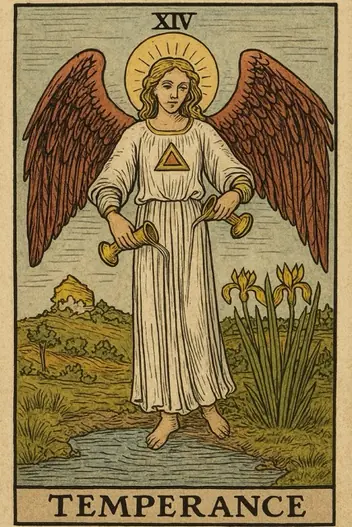
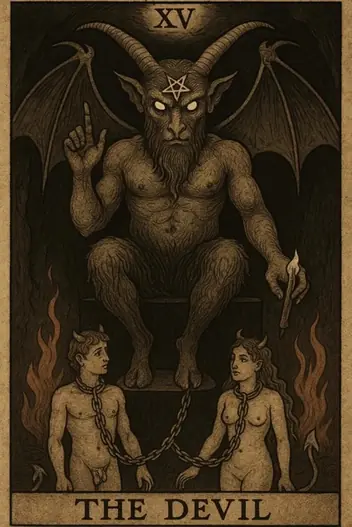
When the disciplined, harmonious energy of Temperance collides with the binding, compulsive force of The Devil, the result is a psychological tug-of-war between self-control and addiction, or between freedom and self-imposed bondage. In practical terms, this pairing often appears when you are aware of an unhealthy attachment—be it to a person, a habit, a job, or a belief—but you are simultaneously seeking a way to moderate or transform it. The core tension here is not about eliminating desire but about managing it with conscious awareness. Temperance asks you to find the middle path, while The Devil reveals the chains you have forged through your own choices. The real question is: can you channel that intense energy into something constructive, or will you let it consume you?
This combination is a call to strategic introspection. It suggests that what feels like an external trap—a toxic relationship, a financial dependency, or a compulsive behavior—is actually rooted in an internal conflict. The Devil represents the shadow side of your psyche: the unmet needs, the fear of scarcity, or the desire for control that drives you to cling. Temperance offers the antidote: mindful integration. Instead of trying to repress or fight the shadow, Temperance encourages you to blend it with your higher values, like a chemist mixing volatile elements into a stable compound. The outcome depends on your willingness to take responsibility for your own chains.
Temperance and The Devil: How These Energies Interact
The psychological state created by Temperance and The Devil is one of conscious negotiation with your own compulsions. You are likely feeling a powerful pull toward something or someone, but you also possess the self-awareness to recognize the potential for harm. This is not a state of passive victimhood; it is a dynamic tension where you must actively choose how to respond. The Devil provides the raw, instinctual energy—passion, ambition, or desire—while Temperance supplies the emotional regulation and strategic patience needed to channel it effectively. In real-world terms, this might manifest as someone who is deeply attached to a high-stakes career but is learning to set boundaries to avoid burnout, or a person in a codependent relationship who is beginning to seek therapy and balance.
The key insight here is that The Devil’s chains are often self-imposed, and Temperance holds the key to unlocking them. This combination suggests that you have the resources—whether through therapy, mentorship, or disciplined habit formation—to transform a destructive pattern into a source of growth. However, it also warns against false moderation. Trying to “just take the edge off” an addiction or “casually” engage with a toxic dynamic rarely works. Temperance is not about diluting the problem; it is about integrating the shadow so that its energy serves your higher purpose. For example, a person with a compulsive spending habit (The Devil) could use Temperance to create a structured budget that still allows for occasional indulgences, thereby satisfying the desire for control and pleasure without financial ruin.
Your pair is already on the table. Ask your question and draw the clarifying card
or simply focus on it
Temperance and The Devil in Love and Relationships
If you are single:
This pairing warns against romanticizing a connection that feels intense but is ultimately draining. Look for partners who respect your boundaries, rather than those who trigger your need to "fix" or rescue them. The attraction may be strong, but the foundation may be built on mutual insecurity.
If you are in a relationship:
You and your partner may be locked in a power struggle or a cycle of codependency. The Devil often appears when one or both partners feel trapped—by jealousy, financial dependence, or emotional manipulation. Temperance calls for open, non-judgmental communication to renegotiate the terms of your bond.
In relationships, this combination highlights the tension between attachment and autonomy. The Devil can represent intense sexual chemistry or a deep emotional bond that feels fated, but it also carries the risk of obsession or control. Temperance advises you to step back and assess whether the relationship is genuinely nourishing or if it has become a comfortable prison. The most pragmatic advice here is to practice emotional sobriety. This means identifying the specific fears driving your behavior—fear of loneliness, fear of rejection, fear of losing control—and addressing them directly, rather than projecting them onto your partner. For couples, this is a powerful time to seek couples therapy or to create a structured agreement about personal space, financial independence, and shared responsibilities. The goal is not to kill the passion but to make it sustainable.
Temperance and The Devil in Career Readings
Strategic Opportunities:
This is a prime time to leverage your intense focus on a long-term project or a high-stakes negotiation. Your ability to combine discipline (Temperance) with relentless drive (The Devil) can lead to significant breakthroughs.
Strategic Opportunities:
If you are in a creative or entrepreneurial field, consider channeling your compulsive energy into a structured routine. For example, a writer might set a daily word count that allows for obsessive drafting but also includes scheduled breaks to avoid burnout.
Calculated Risks:
Be wary of over-commitment or financial overreach. The Devil often manifests as a desire for more—more money, more power, more recognition—which can lead to risky investments or unethical shortcuts. Avoid deals that promise quick gains but require you to compromise your values.
In your professional life, this combination is a double-edged sword. On one hand, The Devil’s energy can fuel extraordinary ambition and resilience, making you a formidable competitor or a relentless innovator. On the other hand, Temperance’s absence would lead to burnout, exploitation, or legal trouble. The key is to balance your drive with pragmatic risk management. For instance, if you are negotiating a salary raise, use Temperance to prepare a logical, evidence-based case, while The Devil gives you the confidence to hold your ground. Financially, this is not a time for impulsive spending or gambling. Instead, create a budget that allows for controlled risk-taking, such as allocating a fixed percentage of your income to speculative investments while keeping the rest in stable assets. The most important financial warning here is to avoid debt that feels like a "quick fix." If a loan or credit offer feels too easy, it probably carries hidden chains.
Get a personalized interpretation
Unlock the combined meaning of your cards in the context of your unique question — for free.
Negative Meaning of Temperance and The Devil
When the energy of Temperance and The Devil is blocked or mishandled, the seeker may fall into self-sabotage through rationalization. The Devil’s shadow is the illusion of helplessness—the belief that you cannot change because the situation is "too big" or "too ingrained." Temperance’s shadow, when distorted, becomes toxic positivity or avoidance, where you pretend everything is fine by maintaining a superficial calm while the underlying problem festers. Cognitive biases such as the sunk cost fallacy (staying in a bad situation because you’ve already invested so much) or confirmation bias (only seeing evidence that supports your attachment) are common pitfalls. For example, someone might stay in a dead-end job because they fear the uncertainty of the job market, convincing themselves that "moderation" means tolerating the misery. The most dangerous manifestation is when the seeker uses Temperance as an excuse to avoid making a hard decision, convincing themselves that they are being "balanced" when they are actually just procrastinating. To avoid this, you must be brutally honest about whether your "patience" is actually fear disguised as wisdom.
Temperance and The Devil Reversed: What Changes?
When cards appear in a reversed position, the dynamic of control and obsession becomes distorted, exposing the weak points of the strategy.
If Temperance is Reversed:
The defense mechanism of self-control is shattered. The person can no longer restrain their impulses. This leads to recklessness and breakdown. If you were previously teetering on the edge, now you are falling into the abyss of addiction or chaos. Advice: acknowledge that the "control strategy has failed," and immediately seek external support (therapy, coaching), as you can no longer manage on your own.
If The Devil is Reversed:
Internal resistance and weakness of will. This is not liberation from addiction, but its suppressed form. The person denies their strong desires (The Devil), considering them shameful, and retreats into hyper-control (Temperance). This leads to apathy, loss of drive, and depression. Warning: Do not confuse asceticism with spirituality. You have not conquered The Devil; you have merely driven him underground, where he destroys your life force from within.
If BOTH are Reversed:
Total imbalance and chaos. Control (Temperance) is not working, and desires (The Devil) are denied or suppressed. The person is in a state of stupor: they can neither obtain what they want nor find peace. The logical way to correct this: a complete reset of priorities. Do not try to fix the old system. You need to radically shift your focus—step away from the situation causing tension and start with a clean slate, concentrating on basic needs (food, sleep, safety).
Temperance and The Devil: The Combined Message
Constructive use of this combination requires a radical rethinking of purpose. Your task is not to use Temperance to restrain the Devil, but to transform the Devil's energy by using Temperance as a tool of focus, not suppression. The Devil is a powerful vital force—passion, ambition. Temperance is the capacity for patience and planning. Instead of pitting them against each other, unite them in a single line.
Deep strategic advice:
Stop trying to "control your vice" and start channeling your obsession. If you are obsessed with power (the Devil), do not attempt to become a "kind boss" (false Temperance). Instead, use your obsession to build a system that delivers real value while demanding strict discipline (true Temperance). For example, become the world's leading expert in your niche, where your rigidity and perfectionism are assets, not problems.
Success here is possible only when you stop seeing the Devil as an enemy and Temperance as a jailer. True balance is not a compromise between good and evil, but an integration of strength and wisdom. Ask yourself: "What great but difficult goal can I achieve if I stop wasting energy suppressing my desires and instead use them as fuel for disciplined movement?" The answer to this question is the key to escaping the trap of this combination.
Where to Go From Here
The core message of Temperance and The Devil is that your greatest strengths and your deepest attachments are two sides of the same coin. You have the power to transform a destructive pattern into a source of disciplined passion, but only if you are willing to confront the fear or insecurity that keeps you bound. This is not about eliminating desire; it is about mastering it with conscious awareness. Whether you are navigating a relationship, a career challenge, or a personal habit, the path forward requires both courage and structure.
While this article provides the general archetype, the true magic happens when Tarot is applied to your unique situation. The Fortune Cards app offers a deep, personalized interpretation of this exact combination for your specific question—whether on the web or through a download. It uses your context to reveal the hidden dynamics at play and provides actionable steps tailored to your life. Don’t guess at the meaning; let the cards speak directly to your circumstances. Try it now and get the clarity you need to break free or to build something stronger.
Interpretation by the Fortune Cards editorial team, based on the Rider–Waite tradition and Jungian archetypes. About our methodology · Updated: 2026-08-26
Other Combinations with Temperance
Other Combinations with The Devil
Explore Individual Card Meanings
Table of Contents
- Temperance and The Devil: How These Energies Interact
- Temperance and The Devil in Love and Relationships
- Temperance and The Devil in Career Readings
- Negative Meaning of Temperance and The Devil
- Temperance and The Devil Reversed: What Changes?
- Temperance and The Devil: The Combined Message
- Where to Go From Here
Ready to find answers to your questions?
Start your first reading now and look at your situation with fresh clarity. The cards are ready to reveal deeper meaning.