Love Tarot: Ten of Wands and Six of Cups
- Arcana
- Ten of Wands — Minor Arcana, Wands; Six of Cups — Minor Arcana, Cups
- Elements
- Ten of Wands — Fire; Six of Cups — Water
- Elemental interaction
- Opposing elements — energies create tension
- Numerology
- 10 + 6 = 16 → 7
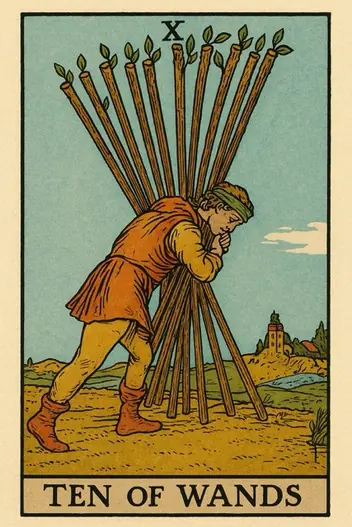
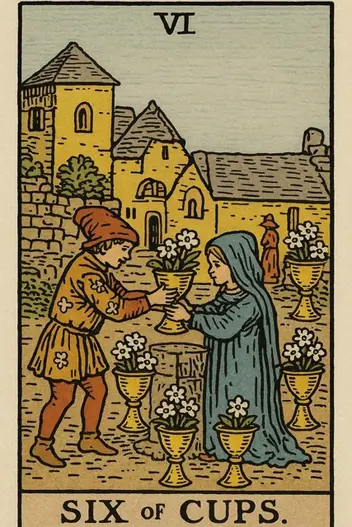
The intersection of the Ten of Wands and the Six of Cups reveals a powerful psychological tension: the weight of current responsibilities colliding with a longing for past simplicity. The Ten of Wands depicts a figure carrying a heavy load of ten poles, symbolizing burnout, duty, and the strain of overcommitment. The Six of Cups, by contrast, evokes childhood innocence, happy memories, and a desire to return to a time when life felt easier or more pure. Together, they ask: Are you carrying the past as a burden rather than a resource?
This combination often surfaces when a person is overwhelmed by obligations that stem from old loyalties, unresolved relationships, or a refusal to let go of a bygone era. The seeker may be trying to recreate a past experience or maintain a connection that no longer serves their present growth. Jungian psychology frames this as a conflict between the Shadow of the Past and the Persona of the Responsible Adult. The pragmatic task is to distinguish between honoring a memory and being imprisoned by it.
Ten of Wands and Six of Cups Combination Meaning
The core dynamic here is a cognitive dissonance between emotional nostalgia and practical exhaustion. The Ten of Wands signals that you are at your limit—physically, mentally, or emotionally. The Six of Cups suggests that the root cause of this overload is often a misplaced sense of duty toward people or situations from your past. You may be over-functioning to maintain a relationship, a family role, or a career path that no longer fits your current identity.
From a psychological perspective, this pairing activates the Wounded Inner Child archetype—the part of you that seeks approval, safety, or love through self-sacrifice. You might be repeating family patterns (e.g., being the "responsible one" who takes on everyone’s burdens) or clinging to a past success (e.g., a career peak you’re trying to replicate). The key insight is that nostalgia is not a strategy; it’s a feeling. To move forward, you must honor the emotional value of the past without letting it dictate your present decisions. Actionable takeaway: Audit your obligations. Ask: Is this task or relationship rooted in genuine current value, or am I just trying to relive or fix something old?
Your pair is already on the table. Ask your question and draw the clarifying card
or simply focus on it
Career and Finances
Strategic Opportunities:
Leverage your past experience as a foundation, not a ceiling. Use skills from previous roles to streamline current projects, but avoid taking on extra work just because "you've always done it."
Strategic Opportunities:
Identify one task or responsibility you can delegate or eliminate to reduce burnout. The Six of Cups here can mean finding joy in collaborative, less formal work environments—seek teams that value camaraderie over hierarchy.
Calculated Risks:
Avoid taking on a project or role solely because it reminds you of a past success. This is a high-risk time for overcommitting due to emotional attachment to a former boss, company, or career path.
Professionally, this combination often appears when you are overloaded with work that feels familiar but unfulfilling. You may be staying in a job or role because it feels safe or reminiscent of a time when you felt competent, even if it no longer challenges you. Financially, the risk is spending money on "nostalgia investments" —things that remind you of a past lifestyle but don’t build future wealth. Strategic advice: Create a mental "responsibility audit" —list all current tasks, then mark each with a "P" for past obligation (e.g., you inherited it from a former colleague) or "F" for future goal. Let go of at least one P-item this week. This frees energy for growth without sacrificing the emotional lessons of the past.
Your unique Tarot reading
See how these cards interact with your destiny. Start a free personal reading now.
Ten of Wands and Six of Cups in Love Tarot
If you are single:
This combination warns against idealizing a past relationship or a "type" of partner from your youth. You may be carrying the emotional weight of unresolved attachments, making it hard to see new partners clearly. Focus on what you need now, not what you lost then.
If you are in a relationship:
You or your partner may be over-functioning out of a sense of duty or nostalgia—staying together because of shared history rather than shared growth. This can lead to resentment or burnout if unaddressed.
In relationships, the Ten of Wands and Six of Cups signal a power imbalance rooted in past dynamics. One partner may be carrying the emotional or practical load while the other remains passive, perhaps because of a "rescuer" or "caretaker" role learned in childhood. The psychological pattern here is often codependency disguised as loyalty. To break the cycle, you must differentiate between healthy commitment and obligation-based guilt. Practical steps include dividing responsibilities more equally, having honest conversations about unmet needs, and setting boundaries on how much you give versus receive. Bold advice: If you feel drained by a partner who relies on your nostalgia for "how things used to be," it’s time to renegotiate the terms of the relationship.
What Are the Risks of Ten of Wands and Six of Cups?
The shadow of this combination manifests as martyrdom disguised as kindness. You may convince yourself that your exhaustion is noble because you are "helping" someone from your past—a family member, an old friend, or even a former version of yourself. The cognitive bias here is the Sunk Cost Fallacy: you keep investing time and energy because you’ve already given so much, not because it’s actually beneficial. Another pitfall is emotional regression—acting out old patterns (e.g., people-pleasing, avoiding conflict) because they feel familiar, even though they cause burnout. The most dangerous shadow is self-neglect: sacrificing your health, finances, or career advancement to maintain a past relationship or role that no longer reciprocates. If you feel resentful, exhausted, and unable to say no, you are likely in the shadow of this pairing.
Reversed Ten of Wands and Six of Cups Explained
When cards appear reversed, the dynamic becomes distorted, intensifying pathologies or indicating a way out of a deadlock.
If the Ten of Wands is reversed:
This points to a release of the burden, but an unconscious one. The person may abruptly quit their job, end a relationship, or abandon commitments (Ten of Wands reversed), but does so not from strategy, but from an impulsive desire to "regain lightness" (Six of Cups). Warning: This is not liberation, but escape. You risk losing valuable resources along with the toxic ones.
If the Six of Cups is reversed:
This is blocked nostalgia or a rejection of the past. The person is so overloaded (Ten of Wands upright) that they cannot afford the luxury of remembering the good. Advice: This is a state of emotional burnout. You need to artificially, even by force, introduce elements of self-care into your routine (an analogue of the healthy Six of Cups).
If BOTH are reversed:
Complete imbalance. Cynicism and apathy. The person believes the past was a sham and the future is hopeless. Method of correction: A radical reassessment of values is required. Start small: find one single positive experience from the past (reversed Six of Cups) and one step to reduce the load (reversed Ten of Wands). This will restore the connection between cause and effect.
What Is the Overall Message of Ten of Wands and Six of Cups?
The constructive use of this combination is the transformation of nostalgia into strategy. The Ten of Wands provides you with energy for action, but it is misdirected. The Six of Cups offers you an emotional compass, but it points backward. Your task is to turn this compass toward the future.
Strategic Algorithm of Action:
Analyze the "Burden":
List all your current responsibilities. Next to each, write whether it brings you a feeling of a "safe past" (Six of Cups) or is an investment in the future.Choose an "Anchor":
From the past, select only one element (a skill, a memory, a person) that genuinely helps you now. The rest is scenery that needs to be burned away.Delegation and Rituals:
Relieve yourself of 30% of the load (Ten of Wands) and replace that time with creating a new, conscious ritual (a new, healthy Six of Cups). For example, instead of working in the evenings, spend an hour reading or taking a walk.
Deep advice: Do not try to reclaim the "carefreeness" of the past. Strive for the "conscious lightness" of the future. These are different things. The first is regression, the second is progression. You cannot become a child again, but you can become an adult who knows how to care for their inner child without letting it take control in moments of crisis.
Applying This to Your Situation
The core message of Ten of Wands and Six of Cups is this: Honor your past, but don’t let it carry you into burnout. The nostalgia you feel is a compass pointing to unmet emotional needs—not a map for your future. To move forward, you must consciously separate the feeling of the past from the actions of the present. Your next step is to identify one obligation rooted in memory rather than current value and release it.
This general interpretation is a starting point, but your specific situation holds the real insight. The exact meaning of this combination depends on your unique history, relationships, and goals. To get a deep, personalized reading tailored to your exact question, use the Fortune Cards app—available on the web or for download. It applies Jungian psychology and Tarot wisdom directly to your context, helping you make clear, strategic decisions about what to carry forward and what to finally put down.
Interpretation by the Fortune Cards editorial team, based on the Rider–Waite tradition and Jungian archetypes. About our methodology · Updated: 2026-09-24
Other Combinations with Ten of Wands
Other Combinations with Six of Cups
Explore Individual Card Meanings
Table of Contents
- Ten of Wands and Six of Cups Combination Meaning
- Career and Finances
- Ten of Wands and Six of Cups in Love Tarot
- What Are the Risks of Ten of Wands and Six of Cups?
- Reversed Ten of Wands and Six of Cups Explained
- What Is the Overall Message of Ten of Wands and Six of Cups?
- Applying This to Your Situation
Ready to find answers to your questions?
Start your first reading now and look at your situation with fresh clarity. The cards are ready to reveal deeper meaning.