Six of Cups and Nine of Swords Together in Tarot
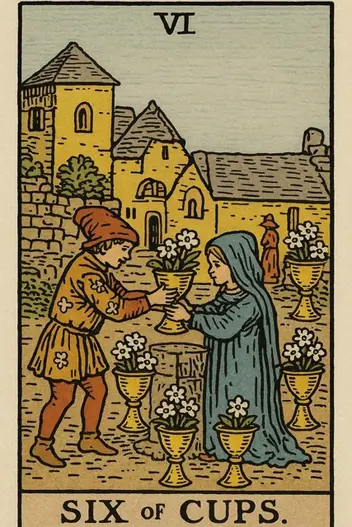
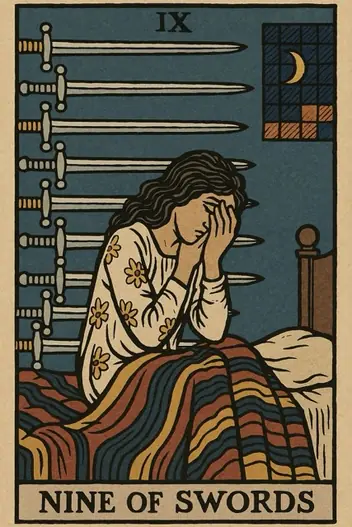
- Arcana
- Six of Cups — Minor Arcana, Cups; Nine of Swords — Minor Arcana, Swords
- Elements
- Six of Cups — Water; Nine of Swords — Air
- Elemental interaction
- Neutral elements — energies coexist without conflict
- Numerology
- 6 + 9 = 15 → 6
When the Six of Cups—a card of innocent memory, nostalgia, and simple pleasures—collides with the Nine of Swords—a card of anxiety, guilt, and sleepless nights—you are looking at a psychological tug-of-war. The past is not a safe harbor here; it is a source of unresolved pain. This pairing often surfaces when a person is revisiting old wounds, comparing a present situation to an idealized past, or feeling trapped by a memory they cannot let go of. The core conflict is between the desire for emotional security and the fear that it has been irretrievably lost.
In practical terms, this combination signals a need for cognitive reframing. The seeker may be projecting past disappointments onto current circumstances, creating a self-fulfilling prophecy of failure. The strategic move is to separate the emotional memory from the factual reality of the present. Your mind is telling you a story about the past being better or worse than it actually was, and that story is generating unnecessary suffering.
Core Dynamics & Interpretation
The psychological state created by the Six of Cups and Nine of Swords is one of emotional dissonance. You are trying to draw comfort from a memory (Six of Cups) while simultaneously being tormented by the guilt, regret, or anxiety associated with that same memory (Nine of Swords). This is not simple nostalgia; it is a compulsive rumination on a past that feels both safe and terrifying. The key insight here is that the seeker is often stuck in a loop of idealization and self-blame. They may believe that if they could just return to a specific moment or relationship, all their current worries would vanish—yet they also know that returning is impossible, leading to despair.
From a Jungian perspective, this combination represents a confrontation with the Shadow of the Past. The Six of Cups is the Persona of the happy child, while the Nine of Swords is the Shadow of the wounded child. The real-world implication is that you cannot heal by revisiting the past; you must integrate it. The mind is trying to solve a present problem—anxiety, insomnia, or relationship stress—by looking backward, but the solution lies in acknowledging the loss and choosing to move forward anyway. This is a call for emotional closure, not for digging up old graves.
Your pair is already on the table. Ask your question and draw the clarifying card
or simply focus on it
Career and Finances
Strategic Opportunities:
Use your past experience—especially failures—as a competitive advantage in negotiations or interviews. Your "wisdom from mistakes" is a unique selling point.
Strategic Opportunities:
This combination is excellent for legacy work—rebuilding a business, restoring a brand reputation, or mentoring junior colleagues. Your empathy for past struggles makes you a better leader.
Calculated Risks:
Do not make major financial decisions based on nostalgia. Avoid investing in a "sure thing" that reminds you of a past success. The market has changed. Objectively review the numbers, not the emotional story.
In a professional context, this card pair often signals career anxiety rooted in past performance. You may be haunted by a previous failure, a missed promotion, or a toxic workplace. The result is paralysis by analysis—you overthink every decision because you are terrified of repeating a past mistake. The strategic pivot is to reframe failure as data. Write down exactly what went wrong before, identify the controllable variables, and create a risk-mitigation plan for the current situation. Financially, be wary of "nostalgia spending"—buying things that remind you of a happier time to soothe anxiety. This is a trap. Instead, allocate a small, fixed budget for comfort purchases and invest the rest in assets that build real security, like an emergency fund or a skill-building course.
Love and Relationships
If you are single:
This pairing warns against comparing a new potential partner to an idealized ex or a past "what if." You are likely projecting your own insecurities onto the situation, creating anxiety where none exists. Focus on the actual person in front of you, not the ghost of someone else.
If you are in a relationship:
The dynamic here is often one of unspoken guilt or unresolved past conflicts. One partner may be holding onto a past mistake (infidelity, a broken promise) while the other is clinging to a memory of when things were "perfect." This creates a cycle of blame and avoidance.
In relationships, the Six of Cups and Nine of Swords demand radical honesty about the past. The couple must acknowledge the wound without using it as a weapon. If one partner is constantly apologizing for a past transgression (Nine of Swords) while the other romanticizes how things used to be (Six of Cups), the relationship is stuck in a time loop of resentment. The strategic advice is to schedule a specific, time-boxed conversation about the past—no more than 30 minutes—and then agree to move on. Emotional intelligence here means recognizing that the past is a reference point, not a prison. The couple must build a new, shared narrative that honors the lessons learned without being defined by the pain.
Deepen your understanding
Find out exactly what this reading means for your current life situation with our oracle.
What Are the Risks of Six of Cups and Nine of Swords?
The shadow manifestation of this combination is self-sabotage through rumination. The seeker may become addicted to the emotional drama of the past, using it to avoid taking responsibility for the present. Cognitive biases at play include the "rosy retrospection" bias (believing the past was better than it was) combined with catastrophizing (believing the future will be worse). This leads to poor judgment: staying in a dead-end job because it reminds you of a mentor, or rejecting a good partner because they aren't exactly like an ex. The most dangerous pitfall is using guilt as a shield. The Nine of Swords can make you feel so bad about a past mistake that you believe you don't deserve happiness now. This is a self-imposed sentence. The shadow asks: Are you using your past pain to avoid the risk of being happy again?
Reversed Six of Cups and Nine of Swords Explained
Reversed cards often indicate blocked or distorted energy, which in this pair creates specific scenarios.
Six of Cups Reversed:
This points to blocked access to resources from the past. You cannot learn lessons from experience or, conversely, you reject valuable memories, falling into cynicism. Advice: Consciously return to your roots and successful strategies to find a foothold, not for escape, but to strengthen your foundation.
Nine of Swords Reversed:
Classic anxiety transforms into deaf internal resistance. This is not fear, but apathy and denial of the problem. You don't wake up in a cold sweat, but you also don't act. Warning: This state is more dangerous than direct anxiety. It leads to an accumulation of critical errors that you refuse to notice. You need to forcibly pull yourself out of your stupor through action.
Both Cards Reversed:
Complete imbalance. The past offers no support, and the future is not frightening enough to mobilize resources. A state of "emotional pendulum" emerges: swinging from baseless optimism to deep pessimism and back again. Logical way to correct it: Rigid structure and routine. You need an external action plan (lists, deadlines, consultations with a mentor) because your internal compass is broken. Focus on the "here and now," ignoring both the past and the distant future.
Synthesis: Strategic Conclusion
How to use the Six of Cups to overcome the Nine of Swords? The key lies in reframing. Nostalgia is not a refuge, but an archive of data. The Nine of Swords is not an enemy, but an alarm system. Your task is to transform past experience into a tool, and anxiety into fuel for action.
The "Archaeologist and Strategist" Strategy. First, you become the archaeologist (Six of Cups): excavating your past successes, skills, and resources that can be applied now. Write down 5 specific qualities or achievements from the past that made you stronger. Then, you become the strategist (Nine of Swords): you take your anxiety and turn it into a concrete action plan. What exactly are you afraid of? Make a list of 3 fears and next to each one, write a single logical step that would reduce the likelihood of that fear.
For example, the fear "I will lose my job" (Nine of Swords) + nostalgia "I used to be valued" (Six of Cups) = the strategy "Update portfolio and negotiate for a raise." You take confidence from past experience and use anxiety as motivation for concrete actions in the present. Do not heal the past, do not fear the future—use them as resources for building the present. This is the pragmatic synthesis of these two powerful archetypes.
Your Next Step: Personal Context Matters
The Six of Cups and Nine of Swords together tell a story of a mind caught between memory and worry. The core message is that you cannot change the past, but you can change its meaning. The path forward requires you to stop romanticizing what was and stop punishing yourself for what went wrong. Your next step is to choose one actionable insight from this reading—perhaps the 30-minute conversation with a partner, or the risk-mitigation plan for your career—and act on it today.
However, this article provides only the general archetype. The true magic happens when Tarot is applied to your unique situation. Your specific question, your personal history, and the other cards in your spread will shift the meaning in ways a general guide cannot capture. To get a deep, personalized interpretation of this exact combination for your specific question right now, use the Fortune Cards app. Available on the web or as a download, it analyzes your context and delivers a reading tailored to you. Stop guessing—get the clarity you need.
Interpretation by the Fortune Cards editorial team, based on the Rider–Waite tradition and Jungian archetypes. About our methodology · Updated: 2026-08-26
Other Combinations with Six of Cups
Other Combinations with Nine of Swords
Explore Individual Card Meanings
Ready to find answers to your questions?
Start your first reading now and look at your situation with fresh clarity. The cards are ready to reveal deeper meaning.