The Fool and Nine of Swords Tarot as Feelings
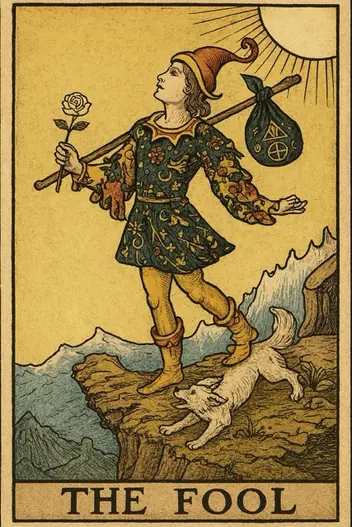
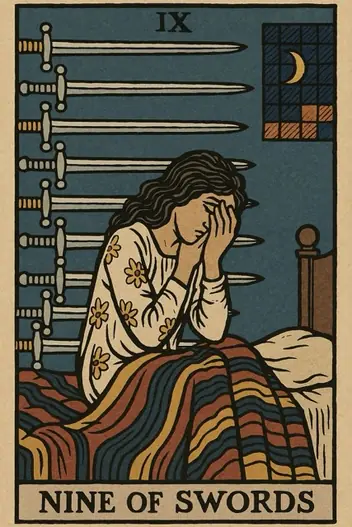
- Arcana
- The Fool — Major Arcana; Nine of Swords — Minor Arcana, Swords
- Elements
- The Fool — Air; Nine of Swords — Air
- Elemental interaction
- Same element — energies intensify each other
- Numerology
- 0 + 9 = 9
When the boundless optimism of The Fool collides with the crippling anxiety of the Nine of Swords, we witness a classic psychological tug-of-war. The Fool represents a fresh start, a leap of faith, and a willful ignorance of potential consequences. The Nine of Swords, conversely, embodies the internal prison of overthinking, regret, and worst-case scenario spirals. Together, they depict a person standing at a new threshold, paralyzed by the very fears that their own untested optimism has triggered. This is not a battle between external forces, but a war within the seeker’s own psyche—a conflict between the desire to move forward and the terror of what might happen if they do.
In practical terms, this combination signals a moment where a new opportunity (The Fool) is being sabotaged by intrusive, repetitive thoughts (Nine of Swords). The seeker is likely facing a choice that feels both liberating and terrifying. The key insight here is that the fear is not necessarily a warning against the action itself, but rather a symptom of the seeker’s cognitive patterns. The Nine of Swords often exaggerates risks, turning a simple step into a potential catastrophe. The strategic task is to separate objective risk from subjective anxiety before making a decision.
The Fool and Nine of Swords Combination Meaning
At its core, this pairing reveals a cognitive dissonance between action and analysis. The Fool urges spontaneity and trust in the universe, while the Nine of Swords demands a detailed risk assessment. The psychological state created is one of paralysis by analysis—the seeker wants to jump, but every time they look down, they imagine the fall. This is not a sign to stop, but a sign that the seeker’s internal alarm system is overactive. The fear is often rooted in past traumas or a perfectionist mindset that cannot tolerate the possibility of failure.
The real-world implication is a decision-making bottleneck. The energy of The Fool is raw potential, but without a clear plan, it can lead to reckless choices. The Nine of Swords adds a layer of self-doubt that can either be a useful caution or a destructive block. The healthiest integration is to acknowledge the fear without letting it dictate the outcome. This means creating a simple, concrete action plan that addresses the specific worries (e.g., “What is the worst that can happen, and how would I handle it?”). The goal is not to eliminate fear, but to move forward despite it.
Another critical dynamic is the projection of internal fears onto external situations. The seeker may believe that a new job, relationship, or move is dangerous, when in reality, the danger is their own lack of confidence. This combination asks: Are you truly afraid of the new path, or are you afraid of your own ability to navigate it? The Fool’s courage is not about being fearless; it’s about acting in the face of fear.
Your pair is already on the table. Ask your question and draw the clarifying card
or simply focus on it
What Do The Fool and Nine of Swords Say About Love?
If you are single:
This pairing suggests you may be sabotaging a new connection by over-analyzing every text, date, or silence. Your anxiety is creating problems that don’t exist. Focus on the present moment rather than projecting five years into the future.
If you are in a relationship:
There is a significant communication gap. One partner (The Fool) may be pushing for a new phase (moving in, marriage, a big trip), while the other (Nine of Swords) is consumed by worries about logistics, trust, or past failures. This is not a deal-breaker; it’s a call for structured dialogue.
The relationship dynamic here is often a power struggle between hope and fear. The Fool partner may feel held back, while the Nine of Swords partner feels unheard and pressured. The solution lies in emotional intelligence and boundary setting. The anxious partner must learn to voice their specific fears (e.g., “I’m scared we can’t afford this”) rather than vague doom (e.g., “This feels wrong”). The optimistic partner must practice active listening without rushing to dismiss the concerns. The key relationship advice is to establish a “reality check” ritual—a weekly, 15-minute conversation where both partners can state their biggest fear about the relationship without judgment. This transforms the Nine of Swords’ anxiety from a silent saboteur into a manageable data point.
What Do The Fool and Nine of Swords Indicate for Your Career?
Strategic Opportunities:
Starting a new project or venture that requires a calculated first step rather than a full commitment. Use a pilot program or a trial period to test the waters.
Strategic Opportunities:
Delegating the risk assessment to a trusted mentor, financial advisor, or partner. Let someone else objectively evaluate the downsides so you can focus on execution.
Calculated Risks:
Avoid making major financial decisions (investments, large purchases, quitting a job) while you are in a state of high anxiety. The fear will distort your risk/reward calculation.
In a professional context, this combination often appears when someone is considering a major career pivot—starting a business, changing industries, or taking a leadership role. The Fool represents the opportunity, but the Nine of Swords represents the internalized imposter syndrome that makes you doubt your competence. The practical advice is to separate the strategy from the emotion. Create a pros and cons list, but then have a third party review it. The biggest financial warning here is the cost of inaction. The anxiety of the Nine of Swords can keep you in a comfortable but stagnant job, costing you more in lost potential than any risk ever would. Strategically, the best move is to commit to a small, irreversible action (e.g., signing up for a class, scheduling a meeting with a potential partner) that forces the decision out of your head and into reality.
Ask your specific question
Don't rely on generic meanings. Get a customized reading tailored specifically to your energies.
Shadow Side & Pitfalls
The shadow manifestation of The Fool and Nine of Swords is self-sabotage through catastrophic thinking. The seeker may convince themselves that the new path is doomed, and then unconsciously act in ways that make that prophecy come true. This is a classic cognitive bias known as “confirmation bias” —where you only look for evidence that supports your fear. The shadow also includes a paralyzing perfectionism that demands absolute certainty before any action. This is a trap, because The Fool’s energy requires a leap into the unknown. The worst outcome is not failure, but never taking the leap at all, leading to a life of regret and “what ifs.” Another pitfall is projecting your internal anxiety onto others, blaming a partner, boss, or circumstance for the fear you are generating yourself. This avoids personal responsibility and prevents growth.
Reversed The Fool and Nine of Swords Explained
When cards are reversed, the dynamic is distorted but does not disappear. If The Fool is reversed and the Nine of Swords is upright — this is a sign of blocked potential. You are so afraid of making a mistake (Nine of Swords) that you refuse even to try. The reversed Fool is recklessness that has already led to problems, and now you are trapped by post-traumatic stress. Advice: start small. Do something that carries no risk but breaks the routine. This will restore your sense of control.
If The Fool is upright and the Nine of Swords is reversed — this is the most insidious scenario. The reversed Nine of Swords often points to repressed anxiety. The person appears carefree and cheerful (The Fool), but tension is building inside that they are ignoring. This is a path to emotional breakdown or psychosomatic issues. Warning: do not ignore your fears. Give yourself time for "procrastination" to let the subconscious process the information, then act consciously.
If BOTH cards are reversed — this is complete imbalance. Impulsivity combines with paranoia, leading to chaotic and destructive actions. A person may commit irrational acts and then experience deep shame without understanding why. Method of correction: a full stop. Take a 24-48 hour pause. Turn off notifications, avoid making any decisions. Return to basic needs: sleep, food, physical activity. Only when the body has calmed down can you begin to analyze the situation.
The Fool and Nine of Swords Combined Message
How can the Fool's energy be used constructively to balance the Nine of Swords? The answer is paradoxical: you must tame fear, not conquer it. The Nine of Swords is not an enemy, but a hypertrophied protector. Its task is to shield you from pain. The problem is that it protects you even from imagined pain, depriving you of experience. The Fool, meanwhile, is your inner explorer who wants to live life to the fullest. Their union requires creating a "container for risk."
Imagine you want to go skydiving (The Fool). The Nine of Swords screams, "You'll crash!" Instead of arguing, strike a deal: "Alright, I acknowledge the risk. I will undergo full training, check the equipment three times, and take an experienced instructor. Only then will I jump." You are not denying fear—you are insuring against it. You use the vigilance of the Nine of Swords to create the safest possible conditions, and then you use the Fool's energy for the action itself. This is mature, conscious risk-taking.
Strategically, this combination demands discipline within chaos from you. You need a plan, but it must be flexible. Create a "rule of three questions" before any significant step: 1) What is the worst that could happen? (Nine of Swords). 2) How can I prevent it? (Rational mind). 3) What will I gain if I take the risk? (The Fool). If the answer to the third question outweighs the first two—act. If not—postpone. This simple framework turns anxiety into an analytical tool and impulse into conscious action. Remember: true courage is not the absence of fear, but action in spite of it, with a plan to minimize it.
Your Next Step: Personal Context Matters
The core message of The Fool and Nine of Swords is clear: your fear is a liar, but it is also a valid signal. The path forward requires courage, not recklessness. You must acknowledge the anxiety, create a simple plan to mitigate real risks, and then take the first step anyway. The energy is not about eliminating doubt, but about action in the presence of doubt.
While this article provides a deep archetypal analysis, the true power of Tarot lies in its application to your unique situation. Your specific question, your personal history, and the exact context of your life changes the meaning of this combination. To get a personalized, AI-driven interpretation of The Fool and Nine of Swords for your specific relationship, career, or personal dilemma, use the Fortune Cards app. You can access it on the web or download it now to receive a deep, customized reading that turns these archetypes into actionable guidance for your life, right now.
Interpretation by the Fortune Cards editorial team, based on the Rider–Waite tradition and Jungian archetypes. About our methodology · Updated: 2026-08-26
Other Combinations with The Fool
Other Combinations with Nine of Swords
Explore Individual Card Meanings
Table of Contents
- The Fool and Nine of Swords Combination Meaning
- What Do The Fool and Nine of Swords Say About Love?
- What Do The Fool and Nine of Swords Indicate for Your Career?
- Shadow Side & Pitfalls
- Reversed The Fool and Nine of Swords Explained
- The Fool and Nine of Swords Combined Message
- Your Next Step: Personal Context Matters
Ready to find answers to your questions?
Start your first reading now and look at your situation with fresh clarity. The cards are ready to reveal deeper meaning.