Love Tarot: Judgement and Six of Cups
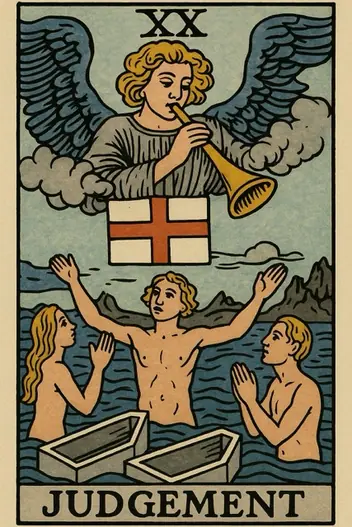

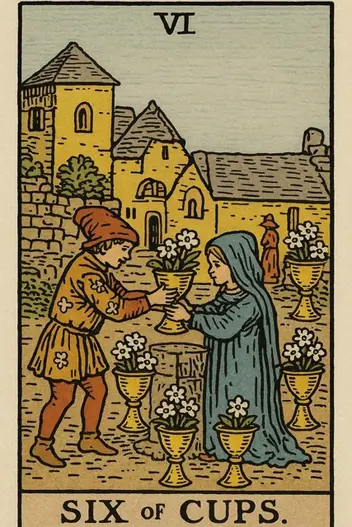
- Arcana
- Judgement — Major Arcana; Six of Cups — Minor Arcana, Cups
- Elements
- Judgement — Fire; Six of Cups — Water
- Elemental interaction
- Opposing elements — energies create tension
- Numerology
- 20 + 6 = 26 → 8
When the Judgement card’s call for radical accountability meets the Six of Cups’ pull toward sentimental past connections, you face a psychological pivot point. This combination asks you to re-evaluate a cherished memory, a past relationship, or an old habit through the lens of adult responsibility. It is not about wallowing in nostalgia, but about calling yourself to account for what you have outgrown—and what you must consciously choose to keep or discard.
In practical terms, this pairing often appears when you are being asked to revisit an unfinished emotional chapter. The Six of Cups provides the warm, familiar imagery of innocence and generosity, but Judgement demands you look at that past without rose-tinted glasses. Together, they create a tension between emotional comfort and necessary truth. The strategic move is to honor the positive aspects of the past without letting them dictate your future decisions.
Core Dynamics & Interpretation
The core psychological dynamic here is integrating the shadow of the past. Judgement represents a moment of self-evaluation—a Jungian call to confront your personal myth and the stories you tell yourself. When combined with the Six of Cups, the specific story under review is often one of childlike trust, unmet needs, or unfinished business with a significant figure from your history. You are not being asked to forget, but to re-interpret that memory with the wisdom of your present self.
This combination forces a pragmatic reconciliation between who you were and who you are becoming. The Six of Cups can tempt you to regress—to seek safety in what is familiar, even if it is no longer healthy. Judgement’s energy cuts through that illusion by illuminating the truth of your current growth. The result is a strategic decision to either reintegrate a past relationship or project on new terms, or to consciously release it as a learning experience. The key insight is that you cannot move forward authentically until you have acknowledged what the past has taught you, without letting it define your worth or your next move.
Another layer involves karmic patterns. The Six of Cups often points to a cycle of giving and receiving that may have become imbalanced. Judgement says it is time to break that cycle through honest communication or boundary-setting. For example, you might realize you have been replaying a caregiver dynamic from childhood in your adult relationships. The combination demands you call yourself to account for your role in perpetuating that pattern, then choose a more conscious path. Bold action here means making a clear, non-negotiable decision about what you will no longer tolerate, even if it means disappointing someone you care about.
Your pair is already on the table. Ask your question and draw the clarifying card
or simply focus on it
What Do Judgement and Six of Cups Indicate for Your Career?
Strategic Opportunities:
Reconnect with a former mentor, colleague, or client who can offer perspective or a new opportunity. The Six of Cups suggests old networks hold value, but Judgement says you must approach this reconnection with clear intentions and realistic expectations.
Strategic Opportunities:
Use past successes as a foundation, not a blueprint. Review what worked in a previous role or project, but adapt it to your current context. This is a prime time for portfolio reviews or career audits that honor your history while pushing for innovation.
Calculated Risks:
Avoid repeating past financial mistakes. The Six of Cups can tempt you to invest in a “sure thing” based on emotional attachment or nostalgia. Judgement warns you to scrutinize any deal that feels too familiar or comfortable. Objectively assess the numbers, not the story.
Professionally, this combination suggests a strategic pivot rooted in past experience. You may be offered a chance to return to a former employer, revive an old project, or work with someone from your past. The pragmatic approach is to evaluate this opportunity with cold objectivity. Ask: “Does this move advance my current goals, or does it simply feel safe because I have done it before?” Bold financial warning—do not let the comfort of familiarity cloud your judgment. If you are considering a business partnership, run a background check and review contracts with extra care. The Six of Cups can represent generosity, but Judgement says that generosity must be earned through mutual accountability. For entrepreneurs, this is a powerful time to revisit your original mission and see if your current actions align with it. Strategic advice—create a decision matrix that weights past success factors against your current priorities.
Get a personalized interpretation
Unlock the combined meaning of your cards in the context of your unique question — for free.
Love and Relationships
If you are single:
This pairing suggests you are being drawn to someone who reminds you of a past love or a childhood ideal. Evaluate whether this attraction is based on genuine compatibility or a desire to replay an old script. The healthiest move is to ask yourself what you learned from that past connection, and whether this new person can meet your current needs, not your past ones.
If you are in a relationship:
You and your partner may be revisiting a past conflict or a shared memory. The goal is not to repeat the past but to resolve it with new understanding. This is a powerful time for couples therapy or a difficult but necessary conversation about old wounds that need healing.
In relationships, this combination often signals a reckoning with a shared history. You or your partner may be feeling nostalgic for an earlier, simpler phase of the relationship. The danger is mistaking comfort for growth. Bold relationship advice is to use this energy to redefine your terms of engagement. If you are feeling pulled toward a past partner, ask yourself: “Am I seeking closure, or am I avoiding the discomfort of my present?” If you are in a current relationship, this is a call to recommit with full awareness of what has changed. Emotional intelligence requires you to separate the positive essence of a past connection from the actual, flawed person involved. Boundaries are crucial here—do not let nostalgia override your knowledge of why things ended or why changes are needed.
Reversed Positions: What Changes?
If Judgment is reversed and the Six of Cups is upright, you are facing blocked potential for change. You know you need to change, but you get stuck in pleasant memories, afraid to make a tough decision. Warning: this is a state of a "sweet prison" — you are voluntarily giving up the future for the comfort of the past. Advice: start with a small action that will break the cycle of repetition (e.g., delete old contacts or change your route to work).
If the Six of Cups is reversed and Judgment is upright, this indicates internal resistance to healing. The past is perceived not as a resource, but as a trauma or an anchor. A person may deny the value of their roots, making the awakening of Judgment painful and chaotic. Advice: you need to separate facts from interpretations. Your history is not a sentence, but simply data for analysis.
If BOTH are reversed, a complete imbalance arises: denial of both the past and the need to change. This is a state of psychological stupor. A person simultaneously fears returning to their origins and fears moving forward. A logical method for correction: a forced pause. It is necessary to consciously stop all current processes to give the psyche time for integration. The only way out is to acknowledge your powerlessness in the situation and seek external support (therapy, coaching).
What Are the Risks of Judgement and Six of Cups?
The shadow side of this combination is regressive escapism. When blocked or unintegrated, you may find yourself idealizing a past relationship, job, or phase of life to avoid facing the demands of your present. This is a cognitive bias known as the rosy retrospection effect—you remember the good parts while forgetting the reasons you left. Self-sabotage occurs when you use nostalgia as a reason to delay a necessary decision, convincing yourself that “things were better before” rather than taking responsibility for creating a better now.
Another pitfall is false forgiveness or premature reconciliation. You might feel compelled to reconnect with someone from your past out of a sense of duty or guilt, without doing the hard work of addressing the original conflict. Poor judgment here means mistaking emotional comfort for genuine resolution. The shadow warning is to avoid making decisions based on unprocessed grief or fear of loneliness. If you find yourself romanticizing a past connection, pause and ask: “What need am I trying to fill, and can I meet that need in a healthier, more present way?” Bold self-awareness is the antidote—recognize when you are using the past as a shield against the uncertainty of the future.
Synthesis: Strategic Conclusion
Constructive use of this energy requires you to assume the role of an archaeologist of your own soul. You must not blindly follow nostalgia (Six of Cups) or thoughtlessly sever ties with the past (Judgment). Your task is to find the "golden grain" within old experiences and use it as the foundation for a new structure. Judgment grants you permission to change, but the Six of Cups reminds you that building on empty ground means ignoring your own history.
Strategically, this union demands a balance between heartfelt gratitude and cold calculation. Make a list: "What from my past do I want to take with me into the future?" and "What must I leave behind forever?". Judgment is an act of will, while the Six of Cups is an act of recognition. By uniting them, you perform a "rite of passage into adulthood": you acknowledge the value of who you were, but take responsibility for who you are becoming.
A deep strategic piece of advice: use the "Letter from the Past" technique. Write a letter to yourself from that point in the past which feels like a resource. In this letter, answer the question: "What would I advise myself today?". Then, guided by the Judgment card, make one concrete decision that you have been putting off. This will connect the emotional resource (Six of Cups) with action (Judgment). Only in this way can you transform nostalgia from a brake into an engine.
Where to Go From Here
The core message of Judgement and Six of Cups is that you cannot move forward until you have made peace with your past, but that peace must be based on truth, not fantasy. This combination calls for a conscious decision—to either reintegrate a past element into your life on new, healthier terms, or to release it with gratitude and clear boundaries. The answer depends entirely on your unique history, current circumstances, and emotional readiness.
While this article provides a general archetypal analysis, the true power of Tarot lies in its application to your specific situation. The Fortune Cards app offers a deep, personalized interpretation of this exact combination for your unique question. Whether you are navigating a relationship decision, a career pivot, or a personal growth challenge, the app provides actionable insights based on your context. Use it on the web or download it now to get the clarity you need to make your next move with confidence.
Interpretation by the Fortune Cards editorial team, based on the Rider–Waite tradition and Jungian archetypes. About our methodology · Updated: 2026-08-26
Other Combinations with Judgement
Other Combinations with Six of Cups
Explore Individual Card Meanings
Ready to find answers to your questions?
Start your first reading now and look at your situation with fresh clarity. The cards are ready to reveal deeper meaning.