Temperance and Three of Swords Together in Tarot
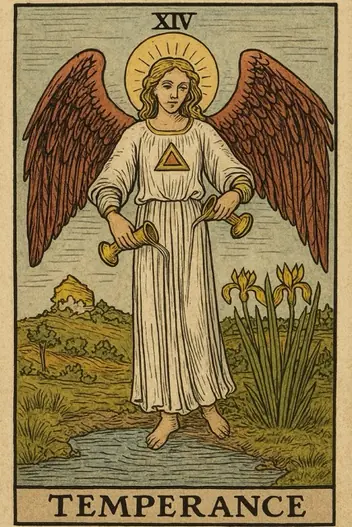

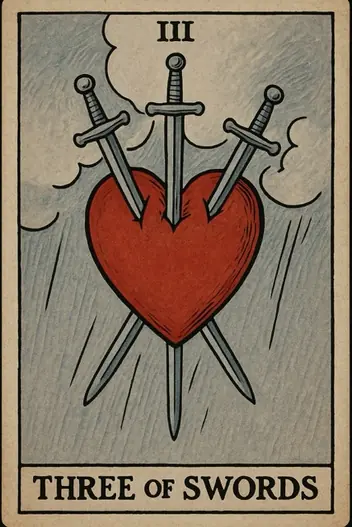
- Arcana
- Temperance — Major Arcana; Three of Swords — Minor Arcana, Swords
- Elements
- Temperance — Fire; Three of Swords — Air
- Elemental interaction
- Friendly elements — energies support each other
- Numerology
- 14 + 3 = 17 → 8
When the disciplined alchemist of Temperance meets the piercing anguish of the Three of Swords, the result is not a simple cancellation of pain, but a sophisticated psychological process of integration through conscious suffering. Temperance represents the archetype of the harmonizer—the part of us that seeks balance, patience, and the synthesis of opposites. The Three of Swords, by contrast, is the raw, unprocessed wound of betrayal, grief, or cognitive dissonance. Together, they signal a critical juncture: you are being asked to hold the pain without being consumed by it, and to find a higher-order meaning in what feels like a senseless rupture. This is not about bypassing the hurt with forced positivity; it is about using the crucible of emotional pain as a catalyst for genuine psychological growth.
Temperance and Three of Swords Combination Meaning
The core dynamic here is the tension between emotional chaos and deliberate containment. The Three of Swords introduces a sharp, often sudden, truth—a realization that a relationship, a belief, or a self-image has been shattered. Temperance’s role is to provide the psychological container for this fragmentation. Instead of letting the pain spiral into reactive blame, avoidance, or self-destruction, this combination demands a stoic, almost clinical, observation of the wound. The key psychological concept is cognitive reappraisal: you are not asked to deny the hurt, but to reframe its role in your larger narrative. Practically, this means acknowledging the betrayal or loss while simultaneously asking, “What does this experience teach me about my boundaries, my expectations, or my patterns?” This is the alchemical process—transforming base metal of pain into the gold of self-awareness. The risk lies in over-intellectualizing the pain as a defense mechanism; true integration requires feeling the sorrow fully, but for a measured duration, rather than indefinitely.
Temperance and Three of Swords in Love Tarot
If you are single:
This combination suggests you may be attracted to emotionally unavailable partners or carrying unprocessed grief from a past relationship. The advice is to delay new commitments until you have objectively analyzed the patterns that led to the heartbreak.
If you are in a relationship:
You are likely navigating a period of painful honesty—either a secret has been revealed, or a fundamental incompatibility has surfaced. The task is to decide if the relationship can be rebalanced through transparent communication, or if the core values are irreconcilable.
In relationships, the Temperance-Three of Swords pairing signals a critical communication event. The Three of Swords often indicates words that cut deeply—either spoken or withheld. Temperance introduces the pragmatic need for emotional regulation. The healthiest path forward involves structured dialogue: schedule a time to discuss the rupture, use “I” statements to own your feelings, and set a clear boundary against blame cycles. Avoid the trap of emotional flooding where one partner overwhelms the other with raw pain, or the opposite extreme of stonewalling where pain is suppressed for the sake of “peace.” The goal is not to erase the hurt, but to create a new equilibrium that acknowledges the damage while renegotiating the terms of connection. If the wound is too deep, professional mediation is not a sign of weakness but of strategic wisdom.
Your pair is already on the table. Ask your question and draw the clarifying card
or simply focus on it
Career Meaning of Temperance and Three of Swords
Strategic Opportunities:
Use this period to conduct an honest audit of a failing project or partnership. The pain of admitting a mistake now can prevent larger losses later.
Strategic Opportunities:
Channel the emotional intensity into creative problem-solving or re-negotiating contracts that were previously unbalanced. Temperance ensures you do this with composure.
Calculated Risks:
Avoid making major financial decisions while in a state of emotional distress. The Three of Swords can cloud judgment with a desire for revenge or escape.
In the professional realm, this combination often appears when a deal collapses, a key employee resigns, or a strategic error is exposed. The psychological dynamic is one of cognitive dissonance—your previous assumptions about a career path or financial plan are now invalidated. Temperance provides the executive function to pause, assess the damage objectively, and create a recovery timeline. Do not rush to fill the void with a new venture or impulsive spending; this is a time for consolidation and recalibration. Financially, the advice is to cut your losses on emotionally charged investments (e.g., a business tied to a personal relationship) and reallocate resources to more stable, liquid assets. The biggest pitfall is letting wounded pride drive you into a riskier position to “win back” what was lost. Instead, embrace the boring virtue of patience—Temperance reminds you that sustainable growth is slow and deliberate.
Reversed Positions: What Changes?
When cards appear in a reversed position, the dynamic becomes distorted, and the task grows more difficult.
If Temperance is Reversed:
This indicates a blocked potential for healing. The person either falls into an extreme (recklessness, impulsive decisions) or, conversely, gets stuck in a state of apathy, refusing to change anything. Advice: you urgently need to restore your sense of balance. Find the "golden mean" between suppressing emotions and chaotically releasing them. Without this, you risk turning a crisis into chronic depression.
If the Three of Swords is Reversed:
Classic pain is being denied or repressed. The person inwardly resists acknowledging the problem, pretending that "everything is fine." This is a dangerous position, as suppressed pain will find an outlet in psychosomatics or a sudden breakdown. Warning: ignoring a problem does not make it any less real. You need to honestly ask yourself: "What exactly am I refusing to see?"
If BOTH are Reversed:
Total imbalance. This is chaos without hope for a quick resolution. Emotional instability (Three of Swords reversed) combines with a lack of strategy (Temperance reversed). The logical way to correct this is: reduce your pace of life to a minimum. Decline all non-essential commitments. Your only task is to stabilize your basic state: sleep, food, safety. Any active actions now will be misguided.
Your unique Tarot reading
See how these cards interact with your destiny. Start a free personal reading now.
Temperance and Three of Swords: Warning Signs
The shadow manifestation of this combination is emotional bypassing disguised as spiritual wisdom. A seeker may use the language of “balance” and “healing” to avoid confronting the raw, ugly reality of their pain. This looks like premature forgiveness—saying “I forgive them” while still seething with resentment, or toxic positivity—insisting “everything happens for a reason” while suppressing legitimate anger. Another pitfall is intellectualization, where the seeker analyzes the wound so thoroughly that they never actually feel it, leading to a dissociative state where they are “fine” on the surface but disconnected from their own vitality. On the flip side, the shadow of the Three of Swords can also manifest as self-pity or martyrdom, where the seeker clings to the pain as an identity, refusing the alchemical process of Temperance. The cognitive bias at play is confirmation bias—seeking evidence that confirms the wound is permanent and unhealable. True integration requires the uncomfortable middle path: feeling the pain fully, but for a defined period, and then deliberately choosing to move forward.
What Is the Overall Message of Temperance and Three of Swords?
How can the energy of Temperance be constructively used to balance the Three of Swords? The answer is simple: you need not to "endure" the pain, but to "process" it. Temperance provides you with the resource of time and calm, allowing you to examine your wound without panic. The Three of Swords is a scalpel that lances an abscess. Your task is not to tear the scalpel from the surgeon's hands, but to trust the process.
The strategic advice lies in separating emotions from facts. Write down three columns: 1) What objectively happened? 2) What do I feel about it? 3) What can I do right now to improve the situation by 1%? This simple cognitive act is the work of Temperance. You take chaotic pain (Three of Swords) and structure it.
The deep conclusion: this combination does not promise quick happiness. It promises depth and wholeness. A person who has passed through this synthesis becomes significantly wiser and more resilient to future stresses. You cannot avoid pain, but you can choose how to respond to it. Use the energy of Temperance to make this choice consciously, not impulsively. Only then will you transform a crisis into a point of growth, rather than a breaking point.
Your Next Step: Personal Context Matters
The core message of Temperance and Three of Swords is that healing is not the absence of pain, but the conscious integration of it into a larger, more resilient self. You are being asked to sit with the wound, extract its lesson, and then release its hold on your identity. This is not a quick fix; it is a psychological craft that requires patience, honesty, and a willingness to feel uncomfortable.
While this analysis provides the universal archetype, the true power of Tarot lies in its application to your unique situation. The Fortune Cards app allows you to input your specific question—about a person, a decision, or a fear—and receive a deeply personalized interpretation of this exact combination. You can use it on the web or download it to get the guidance you need, right now.
Interpretation by the Fortune Cards editorial team, based on the Rider–Waite tradition and Jungian archetypes. About our methodology · Updated: 2026-08-26
Other Combinations with Temperance
Other Combinations with Three of Swords
Explore Individual Card Meanings
Table of Contents
- Temperance and Three of Swords Combination Meaning
- Temperance and Three of Swords in Love Tarot
- Career Meaning of Temperance and Three of Swords
- Reversed Positions: What Changes?
- Temperance and Three of Swords: Warning Signs
- What Is the Overall Message of Temperance and Three of Swords?
- Your Next Step: Personal Context Matters
Ready to find answers to your questions?
Start your first reading now and look at your situation with fresh clarity. The cards are ready to reveal deeper meaning.