The Hierophant and Six of Swords Together in Tarot
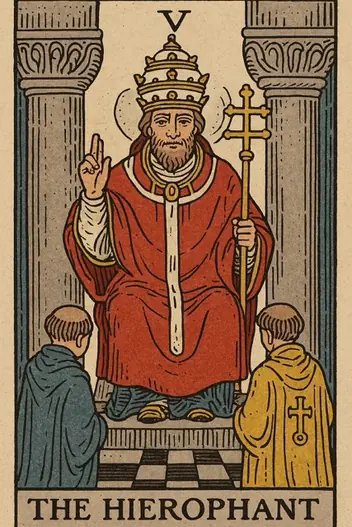
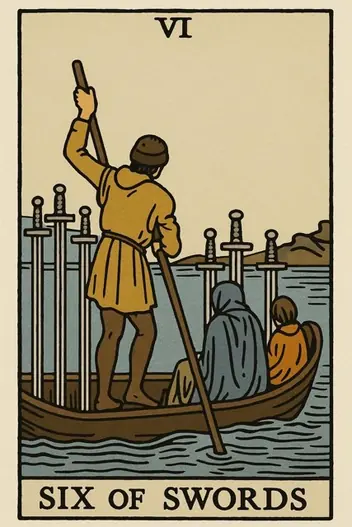
- Arcana
- The Hierophant — Major Arcana; Six of Swords — Minor Arcana, Swords
- Elements
- The Hierophant — Earth; Six of Swords — Air
- Elemental interaction
- Opposing elements — energies create tension
- Numerology
- 5 + 6 = 11 → 2
When The Hierophant meets the Six of Swords, we witness a profound psychological negotiation between the need for established structure and the imperative to move forward. The Hierophant represents the collective wisdom of institutions, mentors, and proven systems—the archetype of the wise elder or the organizational blueprint. The Six of Swords, conversely, signals a necessary departure from a painful or stagnant situation, often involving a literal or emotional journey toward calmer waters. The collision of these cards creates a tension: how do you honor tradition while still leaving it behind?
This combination suggests a strategic retreat, not a chaotic escape. The seeker is likely leaving a familiar but troubled context—a job, a relationship, a belief system—but doing so under the guidance of a mentor, a formal process, or a time-tested methodology. Psychologically, this represents the conscious integration of past lessons into a new framework. The key insight is that you are not abandoning the past entirely; you are selectively carrying its wisdom forward while releasing its painful constraints. This is a transition that requires discipline, not rebellion.
What Do The Hierophant and Six of Swords Mean Together?
The core dynamic here is controlled evolution. The Hierophant’s energy provides a container—a set of rules, a curriculum, or a support network—that makes the Six of Swords’ journey safe and purposeful. Without this structure, the Six of Swords can feel like drifting; with it, the transition becomes a calculated relocation of your life’s center. You are moving from one defined territory to another, not into the unknown wilderness. This is a time for consulting experts, reading contracts carefully, and following established procedures.
Psychologically, this pairing activates the ego’s capacity for deferred gratification. The seeker accepts short-term discomfort (the boat ride in the Six of Swords) in exchange for long-term stability (the Hierophant’s promise of belonging to a new system). The mindset required is one of patience and trust in process. You may feel a sense of grief or loss for what you are leaving, but the Hierophant reminds you that this grief is part of a meaningful ritual of passage. The real-world implication is clear: do not rush this transition. Follow the map, even if the map feels old. The structure you adopt now will become the foundation for your next chapter.
Career Meaning of The Hierophant and Six of Swords
Strategic Opportunities:
Leverage a mentor or established institution to facilitate a career change. Apply for a formal program, certification, or internal transfer.
Strategic Opportunities:
Use a structured transition plan (e.g., a 90-day notice period, a phased handover) to leave a current role professionally.
Calculated Risks:
Avoid burning bridges. The Six of Swords warns against abrupt exits that damage your reputation. The Hierophant demands you follow protocol.
In your career, this combination is a powerful signal to professionalize your transition. If you are changing industries, consider going back to school or earning a formal credential. If you are leaving a job, negotiate a graceful exit that preserves your network. Financially, this suggests moving assets from volatile positions to safer ones—a conservative rebalancing of your portfolio. Bold important financial warnings: Do not take on new debt to fund this transition. The Hierophant cautions against over-leveraging; the Six of Swords prioritizes liquidity and security. The strategic move is to cut costs and build a cash reserve before making the leap. Seek the counsel of a financial advisor or a senior colleague before signing any agreements.
Your pair is already on the table. Ask your question and draw the clarifying card
or simply focus on it
The Hierophant and Six of Swords in Love Tarot
If you are single:
This combination suggests you are attracted to partners who represent stability, maturity, or a traditional path. However, you must first resolve a past emotional burden before fully committing. A potential relationship may require a period of distance or healing first.
If you are in a relationship:
You and your partner are navigating a significant transition together—perhaps a move, a career shift, or a family decision. The relationship is the "boat" carrying you both. Open communication about the rules of this new chapter is critical.
In relationships, The Hierophant and Six of Swords often point to a couple seeking therapy, pre-marital counseling, or a formal commitment ceremony to heal old wounds. The partnership is being redefined through a structured process. Bold key relationship advice: Avoid making unilateral decisions. The power dynamic must be balanced; one partner cannot be the sole "captain" steering the boat. Instead, act as co-navigators who agree on the destination and the route. This is a time for contracts, agreements, and shared goals—not emotional guesswork. If you are single, the advice is to seek a mentor or trusted friend to help you evaluate a new connection objectively. Your judgment is clouded by the past; lean on a wise third party.
Ask your specific question
Don't rely on generic meanings. Get a customized reading tailored specifically to your energies.
Reversed Positions: What Changes?
If The Hierophant is Reversed:
Blocked potential or recklessness. You are either rejecting any structure and rules ("rebellion without a cause"), or conversely, clinging to a toxic dogma that suffocates any change. Advice: Find a "third party"—a neutral expert or mentor who can help you separate the wheat from the chaff.
If the Six of Swords is Reversed:
Internal resistance and weakness. You know you need to leave, but you cannot pull yourself together. The boat is stuck on a sandbar. This is a state of paralysis of the will, where the fear of the unknown is stronger than the discomfort of the current situation. Warning: Do not wait for the situation to force you out. Initiate movement; start with a small step.
If BOTH are Reversed:
Complete imbalance of dynamics. You are simultaneously rebelling against all rules and unable to move from your spot. This is cognitive dissonance and chaos. Method for correction: Return to a basic structure. Create a simple daily routine and a weekly plan. Only through restoring order (The Hierophant) will you find the strength for movement (Six of Swords).
The Hierophant and Six of Swords: Warning Signs
The shadow of this combination manifests as rigidity disguised as wisdom. The seeker may use "tradition" or "the right way" as an excuse to avoid necessary change, clinging to a failing institution or relationship out of fear. Alternatively, the shadow appears as a passive, victimized journey—the seeker allows others to steer their boat, abdicating responsibility for their own direction. Cognitive biases at play include status quo bias (overvaluing the current system) and sunk cost fallacy (staying in a bad situation because of past investment). Self-sabotage occurs when the seeker idealizes the new destination so much that they ignore the practical steps required to get there. The greatest pitfall is mistaking movement for progress. Just because you are in a boat does not mean you are heading to a better shore. You must actively choose the destination and the vessel.
Synthesis: Strategic Conclusion
How can the energy of the Hierophant be constructively used to activate the Six of Swords? The answer is paradoxical: you need to create a temporary structure for the transition. Do not try to change everything at once. Instead, develop a "transition ritual." For example, if you are leaving a job, draw up a formal action plan for the first 90 days after your resignation. This will give you the sense of security and control that the Hierophant so desperately needs.
Your strategic task is to become your own authority. Instead of seeking approval from external figures (boss, parents, guru), you need to internalize their voice. Ask yourself: "What rule would I set for myself if I were a wise mentor?" The answer will be your compass in this boat.
A deep strategic piece of advice: don't burn your bridges, but don't build a new life on them either. Take with you what is most valuable—knowledge, connections, reputation—and leave behind the burden of expectations and obligations that were imposed upon you. Clarity will come not when you reach the shore, but when you clearly decide what exactly you are taking with you on this journey. This is the true wisdom of the Hierophant, applied to the dynamic of the Six of Swords.
Where to Go From Here
The core message of The Hierophant and Six of Swords is this: you are in a necessary transition, and you need a wise guide and a clear plan to navigate it successfully. Honor the past, but do not be trapped by it. Use structure to facilitate your freedom, not to constrain it. The archetypes provide the map, but only you know the terrain of your own life.
To truly unlock the power of this reading, you need to apply it to your specific situation. Use the Fortune Cards app to get a deep, personalized interpretation of this exact combination for your unique question. The app analyzes your context—your relationship history, career stage, and emotional state—to give you actionable advice that generic articles cannot provide. Whether you are on the web or mobile, download Fortune Cards now and discover the precise path forward that these cards are revealing for you today.
Interpretation by the Fortune Cards editorial team, based on the Rider–Waite tradition and Jungian archetypes. About our methodology · Updated: 2026-08-26
Other Combinations with The Hierophant
Other Combinations with Six of Swords
Explore Individual Card Meanings
Table of Contents
Ready to find answers to your questions?
Start your first reading now and look at your situation with fresh clarity. The cards are ready to reveal deeper meaning.