Love Tarot: The Devil and Three of Swords
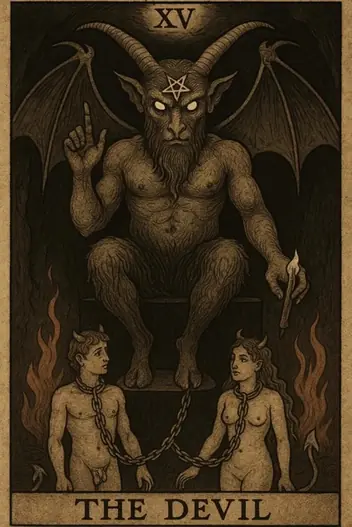
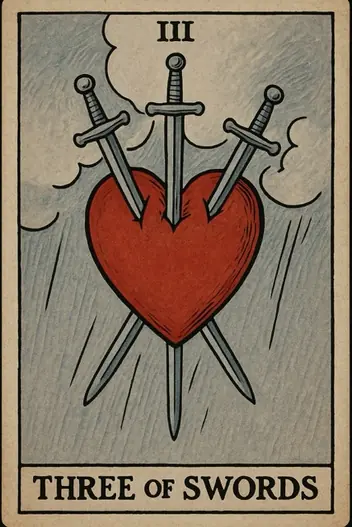
- Arcana
- The Devil — Major Arcana; Three of Swords — Minor Arcana, Swords
- Elements
- The Devil — Earth; Three of Swords — Air
- Elemental interaction
- Opposing elements — energies create tension
- Numerology
- 15 + 3 = 18 → 9
When the Devil’s shadow of bondage meets the Three of Swords’ piercing grief, you are confronting a psychological storm. This is not a card pair for the faint of heart; it represents a crisis of perception where a painful truth shatters a comfortable but toxic illusion. The Devil binds you to a pattern—often addiction, codependency, or fear-based control—while the Three of Swords reveals the emotional cost of staying trapped. The collision forces a choice: remain enslaved by a familiar pain, or use the sharp edge of reality to cut the chain.
The Devil and Three of Swords Combination Meaning
The core dynamic here is cognitive dissonance pushed to a breaking point. The Devil represents a shadow attachment—a relationship, habit, or belief system that provides a perverse sense of security, even as it drains your vitality. The Three of Swords then arrives as the unwelcome truth—a betrayal, a harsh criticism, or a sudden realization that the foundation you stood on was rotten. Psychologically, this is the moment your ego’s defense mechanisms collapse, and you must face the pain of disillusionment.
The energy is not purely destructive. It is a catalyst for radical honesty. You are being asked to stop rationalizing suffering. The Devil’s chains are often self-imposed through fear of change, while the Three of Swords’ tears are the pressure release valve. Together, they demand you differentiate between a temporary setback and a systemic problem. If you feel trapped by a situation that consistently causes heartache, this pair is a clear signal to stop investing in the hope of change and start investing in the act of leaving.
Career Meaning of The Devil and Three of Swords
Strategic Opportunities:
The painful truth is a competitive advantage. A negative performance review or a failed project reveals exactly what needs to change. Use this data to pivot your strategy, not your self-worth.
Strategic Opportunities:
Cutting a toxic client or partnership. If a relationship consistently drains resources and morale, this is the permission to sever it. The short-term loss is an investment in long-term stability.
Calculated Risks:
Avoid doubling down on a failing venture out of pride. The Devil’s grip is strongest when you refuse to admit a sunk cost. Do not confuse persistence with self-sabotage.
Professionally, this pair signals a high-stakes reckoning. You may be trapped by a golden handcuff—a high salary in a soul-crushing job—or by a fear of financial instability that keeps you in an exploitative role. The Three of Swords here is often a betrayal by a colleague, a public failure, or a harsh audit. The strategic mindset is to separate the pain of the event from the lesson of the system. Ask: “What structural flaw in my career plan allowed this to happen?” Financially, this is a warning against leveraging debt to maintain an unsustainable lifestyle. The only sound move is to liquidate toxic assets—both financial and relational—and rebuild on a foundation of objective data, not hope. Bold action means renegotiating contracts, leaving a toxic team, or accepting a demotion to escape a damaging environment.
Your pair is already on the table. Ask your question and draw the clarifying card
or simply focus on it
What Do The Devil and Three of Swords Say About Love?
If you are single:
This combination warns against romanticizing a partner who triggers both obsession and anxiety. If a connection feels like a repetitive cycle of high highs and crushing lows, it is not passion—it is a trauma bond. Objectively assess whether this person respects your boundaries or feeds your insecurities.
If you are in a relationship:
You are likely in a dynamic where one partner controls through guilt or fear, while the other feels emotionally stabbed. This is not a partnership but a mutual hostage situation. The pain you feel is a signal that the core contract is broken.
In relationships, this pair reveals a power imbalance masked as love. The Devil’s influence often manifests as jealousy, possessiveness, or a refusal to release a partner who is clearly incompatible. The Three of Swords then brings the pain of infidelity, harsh words, or the realization that you have been lying to yourself. The critical psychological move here is to stop seeking external validation from a source that consistently wounds you. Bold action is required: you must define non-negotiable boundaries and be prepared to enforce them, even if it feels like a death. The relationship can only heal if both parties acknowledge the toxicity without blame-shifting and commit to structural change, not just apologies.
The Devil and Three of Swords: Warning Signs
The shadow of this combination is masochistic self-victimization. The seeker may become addicted to the drama, interpreting the pain of the Three of Swords as proof of their own depth or martyrdom. The cognitive bias at play is learned helplessness: you know the situation is toxic, but you believe you are powerless to change it. This leads to revenge fantasies, passive-aggressive behavior, or a cold withdrawal that punishes both parties. The pitfall is confusing suffering with growth. Not all pain is useful; some pain is just the signal of a bad system. If you find yourself repeating the same story of betrayal without altering your choices, you are not healing—you are rehearsing a trauma. The Devil's shadow also manifests as manipulation—using the other person’s guilt or your own pain as a weapon to maintain control.
Your unique Tarot reading
See how these cards interact with your destiny. Start a free personal reading now.
What If The Devil or Three of Swords Appears Reversed?
If The Devil is Reversed:
The deadlock of addiction weakens, but the risk of reckless denial of reality arises. You may abruptly sever ties without assessing the consequences. Advice: do not burn bridges until you find a new foundation. Only resign if you have an offer in hand; only separate if you have a separation plan.
If the Three of Swords is Reversed:
The pain is denied or suppressed. This leads to internal resistance to change. You feel discomfort but are not ready to acknowledge its cause. Warning: this is a dangerous position—it leads to psychosomatic issues or sudden breakdowns. Start keeping a symptom diary (insomnia, irritability, procrastination)—they will point to the true problem.
If BOTH are Reversed:
Complete imbalance: the addiction is denied, and the pain is not recognized. This is a state of frozen trauma. The logical way to correct this: artificially create a crisis. For example, take a one-month break in the relationship or request an audit from your boss. The shake-up will force the system to reveal its hidden defects.
What Is the Overall Message of The Devil and Three of Swords?
The energy of the Devil is tremendous willpower and focus. The Three of Swords is precision and clarity of diagnosis. To use them constructively, you need to redirect your will from holding on to destruction. Instead of wasting energy maintaining an illusion, channel it into dismantling the old structure with surgical precision.
Strategic Algorithm for Action:
- Identify the "hook." What exactly is holding you? (Fear of loneliness, financial debt, reputation). Write it down.
- Determine the "breaking point." What single fact causes the most pain? (A partner's words, a figure in a report, a date on a calendar). This is your anchor.
- Make a decision based on "minimal regret." Ask yourself: "In a year, will I regret more what I did, or what I didn't do?" The answer is your compass.
Deep Advice:
Do not try to "heal" the relationship or project. This combination is not about healing, but about amputation. Cut off the rotten part to save the whole. Yes, it will hurt. But it is a clean, liberating pain that ends, unlike the chronic pain of addiction. Use the energy of the Devil for the discipline of the break — set clear deadlines and act without looking back at emotions.
Your Next Step: Personal Context Matters
The Devil and Three of Swords is a brutal but clarifying pair. Its core message is: the pain you are feeling is not a punishment; it is a permission slip to leave the prison you built for yourself. You cannot heal a wound you refuse to look at, and you cannot break a chain you refuse to acknowledge. The truth hurts, but the lie hurts more. Your next step is to stop explaining your suffering and start executing your exit strategy.
This analysis provides the archetypal pattern, but your specific circumstances—the person involved, the history, the stakes—change everything. The true power of Tarot is in the personal context. To get a deep, personalized interpretation of exactly how The Devil and Three of Swords applies to your unique relationship, career, or life question, use the Fortune Cards app. You can access it on the web or download it now to receive a reading tailored to your exact situation, helping you turn this painful insight into a concrete plan of action.
Interpretation by the Fortune Cards editorial team, based on the Rider–Waite tradition and Jungian archetypes. About our methodology · Updated: 2026-08-26
Other Combinations with The Devil
Other Combinations with Three of Swords
Explore Individual Card Meanings
Table of Contents
- The Devil and Three of Swords Combination Meaning
- Career Meaning of The Devil and Three of Swords
- What Do The Devil and Three of Swords Say About Love?
- The Devil and Three of Swords: Warning Signs
- What If The Devil or Three of Swords Appears Reversed?
- What Is the Overall Message of The Devil and Three of Swords?
- Your Next Step: Personal Context Matters
Ready to find answers to your questions?
Start your first reading now and look at your situation with fresh clarity. The cards are ready to reveal deeper meaning.