The Emperor and Ten of Swords Tarot Combination

- Arcana
- The Emperor — Major Arcana; Ten of Swords — Minor Arcana, Swords
- Elements
- The Emperor — Fire; Ten of Swords — Air
- Elemental interaction
- Friendly elements — energies support each other
- Numerology
- 4 + 10 = 14 → 5
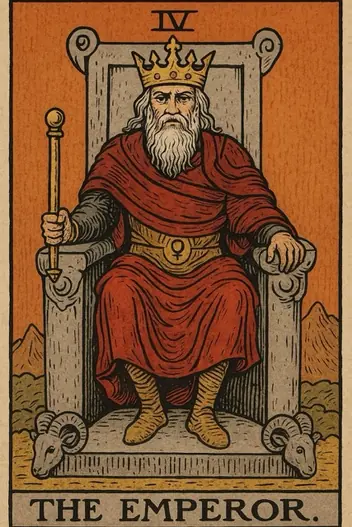
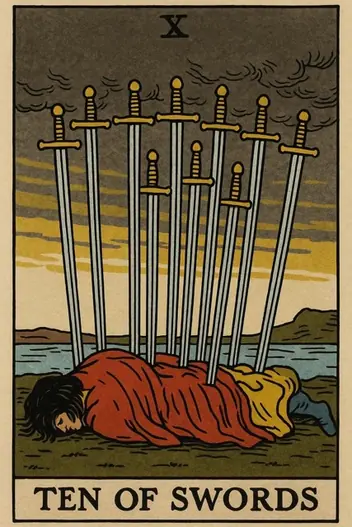
When the structured, commanding energy of The Emperor collides with the catastrophic finality of The Ten of Swords, we witness a profound psychological and strategic crisis. The Emperor represents order, control, and the establishment of firm boundaries—the archetype of the patriarch, the CEO, or the disciplined self. The Ten of Swords, however, signals a painful ending, a betrayal, or a total collapse of a mental framework. This combination asks a brutal question: What happens when your system of control fails, and you are left pinned to the ground by your own rigid thinking? In practice, this often signifies a moment where a leader, a plan, or a personal authority structure has been completely overruled by reality—a necessary, though devastating, death of a worldview.
Psychologically, this pairing forces an uncomfortable confrontation with the shadow of control. The Emperor’s strength can become a defensive fortress; the Ten of Swords is the event that shatters its walls. The key insight here is that this is not a random disaster but a predictable consequence of over-rigidity. The swords represent thoughts, and ten of them indicate a mental overload or a final, painful truth that can no longer be ignored. The path forward requires moving from reactive control to adaptive wisdom.
The Emperor and Ten of Swords: How These Energies Interact
The core dynamic of The Emperor and Ten of Swords is a psychological implosion of a belief system. The Emperor’s energy is about structure, rules, and the maintenance of a stable reality. The Ten of Swords is the ultimate disruption—a mental or physical defeat that feels absolute. When combined, they suggest a situation where a person’s authority or plan has been fatally undermined by a truth they refused to see. This is not a gentle lesson; it is a coup d'état of the ego.
The mindset here is one of post-traumatic reckoning. The seeker may feel they have been betrayed, defeated, or publicly humiliated. However, the Ten of Swords carries a crucial caveat: the worst is over. The swords are in the back, but the figure is still alive. The Emperor’s role is to reassert order, but not in the same way. This combination demands a strategic retreat and a re-evaluation of power. The practical implication is to stop fighting the loss. Accept the collapse of the old structure. The psychological task is to mourn the loss of control and then rebuild a more resilient, less brittle system of authority—one that includes humility and flexibility.
In practical terms, this card pair is a red flag for burnout and stubbornness. It warns against “ruling” a situation that is already dead. The seeker must ask: What belief am I clinging to that is now causing my downfall? The Ten of Swords shows the painful end of a thought pattern; The Emperor shows the need for a new foundation. The most strategic action is to stop managing the inevitable and instead, surrender to the painful clarity, using the Emperor’s discipline to plan the next phase with cold, clear logic.
Your pair is already on the table. Ask your question and draw the clarifying card
or simply focus on it
The Emperor and Ten of Swords for Career and Money
Strategic Opportunities:
The end of a toxic project or a failed strategy creates space for a completely new foundation. Use the Emperor’s discipline to create a post-mortem analysis and a leaner, more resilient plan.
Strategic Opportunities:
This is a powerful moment to cut losses and walk away from a sinking ship. The Ten of Swords confirms it is over. Your authority (The Emperor) is best used to manage the exit strategy with dignity and minimal damage.
Calculated Risks:
Do not try to salvage a reputation or a deal that is already dead. The biggest risk is pride. Avoid the cognitive bias of “sunk cost fallacy.” Do not throw good money or energy after bad.
In a professional context, The Emperor and Ten of Swords is a harsh but clarifying signal. It often appears when a manager, business owner, or ambitious professional has faced a major defeat—a project failure, a public mistake, a layoff, or a partnership betrayal. The psychological trap is to immediately try to reassert control or find someone to blame. The strategic move is to accept the defeat as data. The Ten of Swords forces a complete mental reset about your career path or financial strategy. The Emperor’s energy must be redirected from defending the old to building the new.
Financially, this is a warning against leveraged positions or high-stakes gambles that rely on your authority alone. If you have been overconfident in an investment or a business decision, the Ten of Swords suggests a sharp correction is imminent or has already occurred. The pragmatic action is to consolidate assets, pay down debt, and adopt a defensive posture. Do not try to “win back” losses with aggressive moves. Use the Emperor’s strategic mind to create a conservative, long-term recovery plan. This is a time for financial triage, not expansion.
Uncover hidden insights
Let our advanced Tarot system interpret these archetypes specifically for your personal path.
The Emperor and Ten of Swords in Love and Relationships
If you are single:
This combination suggests you are emerging from a relationship or a dating pattern that ended in a painful betrayal or final rejection. Do not immediately seek to rebuild your romantic authority. Instead, use this time to analyze what rigid expectations or control issues led to the collapse. The next relationship requires a softer, more adaptable approach.
If you are in a relationship:
You are likely facing a crisis of power or trust. A partner may feel controlled, or a secret has come to light that has “killed” the previous dynamic. The relationship as you knew it is over. The key is to avoid a power struggle over who is “right.” Accept the ending of this chapter, and if you choose to stay, negotiate a new structure based on mutual respect, not dominance.
The relationship dynamics under this pair are stark. This is not a time for romantic sweetness; it is a time for brutal honesty and clear boundaries. The Emperor’s shadow is authoritarianism, and the Ten of Swords is the result of that dynamic. If you are the one feeling defeated, you must reclaim your self-worth without reverting to control. If you are the one who caused the “death” (by betrayal or harshness), you must own the destruction you have wrought. The only path forward is to admit the system failed. Do not try to patch up the old rules. Instead, focus on emotional accountability and the willingness to rebuild from a place of mutual vulnerability. The relationship can survive this, but only if both parties agree to a new, more equitable constitution.
The Emperor and Ten of Swords Reversed Meaning
If The Emperor is Reversed:
This indicates recklessness and tyranny without strategy. The person is losing control but refuses to acknowledge it. Instead of constructive destruction (Ten of Swords), a chaotic collapse occurs. Advice: urgently delegate authority and seek a mentor, otherwise you will destroy everything around you.
If the Ten of Swords is Reversed:
This is resistance to an inevitable end. The person refuses to let go of the situation, clinging to an illusion of control. They are already "killed" by circumstances but continue to fight a corpse. Warning: this leads to prolonged depression and loss of resources. The only solution is to accept defeat.
If BOTH are Reversed:
Complete imbalance. This is paralysis of the will — neither structure (The Emperor) nor the ability to complete a cycle (Ten of Swords). The person is stuck between the desire to control and the fear of collapse. Logical way to correct: start small — create at least one clear boundary (The Emperor) and voluntarily end one harmful project (Ten of Swords) to break the cycle.
The Shadow Side of The Emperor and Ten of Swords
The shadow side of this combination is tyranny in the face of collapse. The Emperor’s shadow is the dictator, the micromanager, or the person who cannot admit fault. When paired with the Ten of Swords, this creates a dangerous psychological state: denial of reality. The seeker may refuse to accept the “death” of their plan, relationship, or identity, leading to bitter fights, legal battles, or self-destructive behavior. The cognitive bias at play is the illusion of control—the belief that if they just try harder or exert more force, they can reverse the inevitable.
Another pitfall is victimhood masquerading as wisdom. The Ten of Swords can feel like a martyrdom, but The Emperor warns against using the defeat to justify a new, rigid victim identity. The shadow here is using the “betrayal” to justify a permanent state of distrust or isolation. This is a form of self-sabotage where the seeker becomes their own worst enemy, locking themselves in a fortress of resentment. The key is to avoid the trap of catastrophizing (seeing the end as the end of everything) or rigid cynicism (believing all authority is corrupt). The path out requires radical acceptance and the humility to ask for help or guidance.
Overall Meaning of The Emperor and Ten of Swords
Constructive use of the Emperor's energy paired with the Ten of Swords requires disciplined release. Your task is not to fight destruction, but to lead it. Become the architect of your own crisis. Instead of waiting for everything to collapse on its own, make the decision to end the process voluntarily. This is the only way to save face and resources.
A deep strategic counsel: use logic to analyze pain, not to suppress it. The Emperor (ratio) must be placed in service to the Ten of Swords (experience). Ask yourself: "Which exact structure in my life needs to be destroyed so that I can move forward?" The answer will be painful, but liberating.
Clarity comes through accepting the end. The paradox of this combination is that through full acknowledgment of your defeat (Ten of Swords), you attain true, unshakable power (Emperor). One who has survived the collapse of their system and not broken becomes invulnerable. Do not try to restore the old — build the new, but on a foundation of honesty, not illusions of control.
Applying This to Your Situation
The Emperor and Ten of Swords is a powerful call to accept a painful ending and rebuild your foundation with humility. The core message is that your old system of control has failed, and the only way forward is to surrender to the truth of the defeat. Your authority is not destroyed, but it must be redefined. The psychological task is to move from a rigid, defensive posture to a resilient, adaptive one. The strategic action is to stop fighting the past and start planning the next chapter with clear eyes.
This article provides the universal archetype, but your situation is unique. The true power of Tarot lies in applying these insights to your specific question. Are you struggling to let go of a failed project? Are you trying to control a partner who has already left? To get a deep, personalized interpretation of The Emperor and Ten Of Swords for your exact situation, use the Fortune Cards app. You can use it on the web or download it now to receive a custom reading that addresses your unique context, giving you the clarity and strategic advice you need to move forward.
Interpretation by the Fortune Cards editorial team, based on the Rider–Waite tradition and Jungian archetypes. About our methodology · Updated: 2026-08-26
Other Combinations with The Emperor
Other Combinations with Ten of Swords
Explore Individual Card Meanings
Table of Contents
- The Emperor and Ten of Swords: How These Energies Interact
- The Emperor and Ten of Swords for Career and Money
- The Emperor and Ten of Swords in Love and Relationships
- The Emperor and Ten of Swords Reversed Meaning
- The Shadow Side of The Emperor and Ten of Swords
- Overall Meaning of The Emperor and Ten of Swords
- Applying This to Your Situation
Ready to find answers to your questions?
Start your first reading now and look at your situation with fresh clarity. The cards are ready to reveal deeper meaning.