Ten of Swords and Page of Pentacles Together in Tarot
- Arcana
- Ten of Swords — Minor Arcana, Swords; Page of Pentacles — Minor Arcana, Pentacles
- Elements
- Ten of Swords — Air; Page of Pentacles — Earth
- Elemental interaction
- Opposing elements — energies create tension
- Numerology
- 10 + 11 = 21 → 3
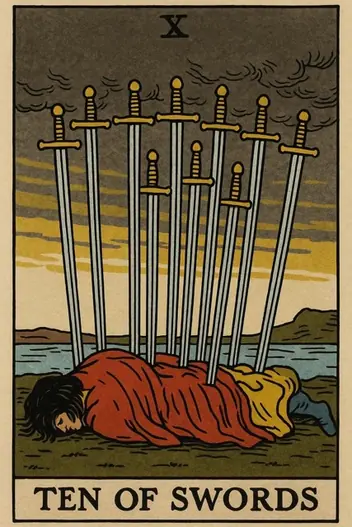
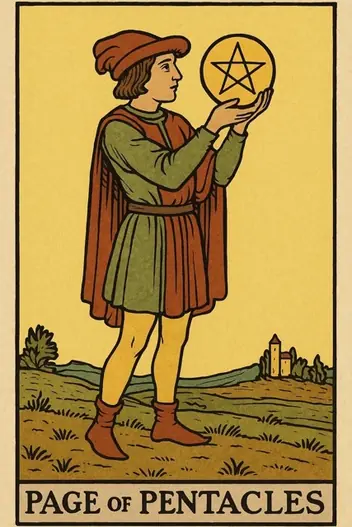
When the stark ending of the Ten of Swords meets the cautious curiosity of the Page of Pentacles, we witness a psychological pivot from catastrophic closure to methodical renewal. The Ten of Swords represents an inevitable, often brutal conclusion—the moment when a painful truth can no longer be ignored. The Page of Pentacles, by contrast, embodies the beginner’s mind, focused on practical learning and tangible first steps.
This collision creates a unique tension: the seeker is simultaneously processing a profound loss and feeling the faint pull of a new, grounded direction. It is not a card of instant healing, but of strategic recovery—the decision to stop bleeding and start building, even with trembling hands. The key insight here is that closure is not the end of the story; it is the foundation stone for a more realistic chapter.
Core Dynamics & Interpretation
The psychological state generated by this pairing is one of resilient pragmatism. The Ten of Swords shatters illusions, often through betrayal, failure, or a painful realization that a situation cannot be salvaged. The Page of Pentacles then steps in not with grand visions, but with a notebook and a ruler. This is the mind of a Jungian "wounded healer" archetype—someone who uses their pain as a data point, not as an identity.
The core dynamic is a shift from passive suffering to active learning. The seeker is encouraged to treat their recent crisis as a case study. What specific actions led to this downfall? What resources were mismanaged? The Page of Pentacles asks for meticulous documentation of the lesson, rather than emotional catharsis alone. This combination suggests that the most effective way to process trauma is to channel it into a tangible skill or project.
In practical terms, this means avoiding the urge to immediately "move on" in a grand, dramatic way. Instead, the cards recommend a period of low-stakes experimentation. This is not a time for grand declarations or risky investments. It is a time for education, saving, and small, verifiable wins. The mind is healing by focusing on what it can control—the next small step, the next budget line, the next skill to master.
Career and Finances
Strategic Opportunities:
Rebuild from a low-risk position. Consider a new certification, a part-time course, or a side project that teaches you a completely new skill set. Your career path may need a 90-degree turn, not a sprint forward.
Strategic Opportunities:
Use your failure as a resume asset. Frame a recent job loss or project failure as a learning experience. The Page of Pentacles thrives on documented growth—create a portfolio or case study of what went wrong and how you would fix it.
Calculated Risks:
Avoid any investment or job offer that promises "quick recovery" or "easy money." The Page of Pentacles is slow, steady, and skeptical. Do not take financial risks to "make up for lost ground." This is a time for saving, not speculating.
Professionally, this combination is a wake-up call to reassess your foundational skills. The Ten of Swords may represent a layoff, a failed business, or a toxic work environment that finally imploded. The Page of Pentacles advises you to become a student of your own industry again. Read the manuals, take the beginner courses, and network with people who are just starting out. Financially, the warning is clear: do not leverage debt to maintain your previous lifestyle. Accept a temporary step back in income to gain long-term stability. This is a time for boring, disciplined financial habits—budgets, emergency funds, and skill-building.
Your pair is already on the table. Ask your question and draw the clarifying card
or simply focus on it
What Do Ten of Swords and Page of Pentacles Say About Love?
If you are single:
This combination warns against rushing into a new relationship to numb a recent heartbreak. Instead, focus on rebuilding your self-worth through concrete achievements—a new hobby, a fitness goal, or a career certification. The next partner will find you not in a state of dramatic recovery, but of quiet competence.
If you are in a relationship:
You or your partner may be processing a significant betrayal or disappointment. The relationship is not doomed, but it requires a fundamental reset. The Page of Pentacles suggests couples therapy, a structured communication plan, or a shared financial project to rebuild trust through action, not words.
In relationships, the Ten of Swords and Page of Pentacles often point to a power dynamic where one partner feels "stabbed in the back" while the other feels stuck or immature. The psychological work here is to separate the story of victimhood from the reality of accountability. The Page of Pentacles asks: "What did you ignore? What did you avoid learning?" Boldly, this card pair advises against dramatic breakups or reconciliations. Instead, it recommends a 30-day "observation period" where both parties focus on practical, non-emotional tasks together. This creates a safe container for rebuilding trust without the pressure of immediate forgiveness.
Uncover hidden insights
Let our advanced Tarot system interpret these archetypes specifically for your personal path.
What If Ten of Swords or Page of Pentacles Appears Reversed?
Ten of Swords Reversed:
The crisis is denied or prolonged. Instead of a decisive break, there is a lingering, low-grade agony. The Page of Pentacles in this situation will not yield growth, as energy is spent maintaining the old. Advice: Acknowledge the loss, even if it is painful. Without this step, the "student" cannot begin to learn.
Page of Pentacles Reversed:
Internal resistance to learning and order. You know what needs to be done (small steps), but you sabotage discipline. This combination with the upright Ten of Swords can indicate depression or apathy. Warning: Do not confuse rest with inaction. You need a strict external deadline or a mentor.
BOTH Reversed:
Complete imbalance. Chaos (reversed Ten) mixes with laziness (reversed Page). This is a state of cognitive impasse. Method of Correction: You need an external structure. Consult a psychologist, a coach, or take out a strict loan with a repayment plan. Artificial constraints are the only way to break out of this cycle.
Shadow Side & Pitfalls
The shadow of this pairing manifests as cognitive rigidity and learned helplessness. The Ten of Swords can create a "catastrophizing" bias, where the seeker believes every new attempt will end in disaster. The Page of Pentacles, in its shadow form, becomes obsessive perfectionism or analysis paralysis. The seeker may become so focused on gathering information that they never take action, using "research" as a shield against risk.
Another common pitfall is misplaced guilt. The seeker may blame themselves excessively for the past failure (Ten of Swords), and then try to over-compensate by being overly cautious with the Page of Pentacles. This leads to a fear-based, joyless approach to life. The shadow also includes a tendency to romanticize the "fresh start" while ignoring the emotional debris. The Page of Pentacles can be naive, believing that a new project or relationship can erase the past without doing the psychological work. The trap is to skip the mourning phase and jump straight into busywork.
Ten of Swords and Page of Pentacles Combined Message
How to constructively use the energy of the Ten of Swords to activate the Page of Pentacles? The key principle is ritualizing closure. You must symbolically or literally "bury" the old situation to free up cognitive resources for the new. Write a letter you won't send, close an old bank account, or delete contacts. This sends a signal to your brain: "The time of mourning is over; construction begins."
Next, use the "micro-step" method. The Ten of Swords creates a sense of global catastrophe, which paralyzes. The Page of Pentacles only works with specifics. Break your main goal down into steps that take no more than 15 minutes. For example: "Find three job openings" or "Open the expense spreadsheet." Each completed action lowers cortisol levels and boosts dopamine.
Finally, adopt the psychology of the "craftsman." Give up the search for a "great mission." Focus on the quality of a single process. The energy of the Ten of Swords is the energy of ego destruction. Use this to become humbler and more attentive to details. Your new strength lies not in grand plans, but in the ability to perform small, routine work with full dedication. This is true healing.
Applying This to Your Situation
The core message of the Ten of Swords and Page of Pentacles is that every ending contains the seed of a grounded beginning. Your pain is not a life sentence; it is a curriculum. The cards urge you to treat your recent crisis with the detached curiosity of a scientist, not the raw emotion of a victim. Your next step is to identify one small, practical skill you can learn in the next 30 days that directly addresses the lesson from your past failure.
This analysis provides the general archetype, but your specific situation carries unique nuances. The true power of Tarot lies in its application to your personal timeline, your specific relationship dynamics, and your exact financial context. To get a deep, personalized interpretation of this exact combination for your unique question right now, use the Fortune Cards app. You can access it on the web or download it to receive a reading that accounts for your specific circumstances, turning this general insight into a precise, actionable plan.
Interpretation by the Fortune Cards editorial team, based on the Rider–Waite tradition and Jungian archetypes. About our methodology · Updated: 2026-08-26
Other Combinations with Ten of Swords
Other Combinations with Page of Pentacles
Explore Individual Card Meanings
Table of Contents
Ready to find answers to your questions?
Start your first reading now and look at your situation with fresh clarity. The cards are ready to reveal deeper meaning.