Three of Swords and Ace of Pentacles Reversed in Tarot
- Arcana
- Three of Swords — Minor Arcana, Swords; Ace of Pentacles — Minor Arcana, Pentacles
- Elements
- Three of Swords — Air; Ace of Pentacles — Earth
- Elemental interaction
- Opposing elements — energies create tension
- Numerology
- 3 + 1 = 4
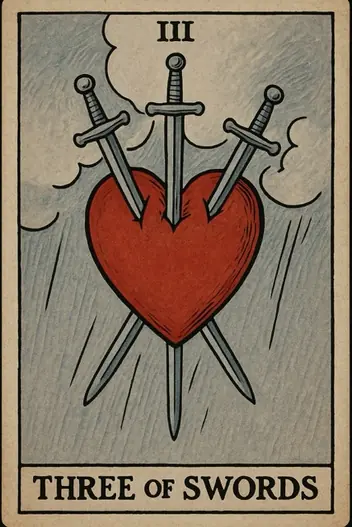
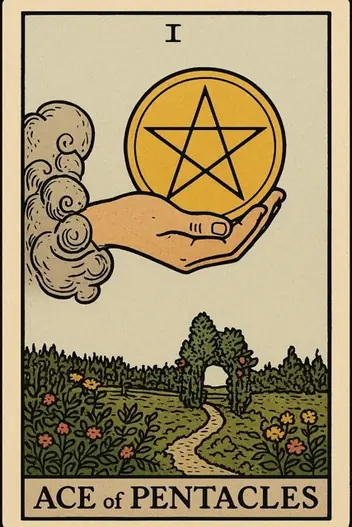
The intersection of the Three of Swords and the Ace of Pentacles represents a profound psychological pivot point. The Three of Swords embodies emotional pain, cognitive dissonance, and the shattering of a cherished illusion. It is the archetype of the "wounded thinker"—a state where a harsh truth cuts through denial, leaving the seeker raw but newly clear-eyed. In stark contrast, the Ace of Pentacles is the seed of tangible opportunity, material stability, and grounded new beginnings. It is the promise of a fertile foundation, built not on fantasy, but on practical effort and sensory reality.
When these two cards appear together in a reading, they do not signal a simple transition from pain to reward. Instead, they create a powerful psychological mandate: use the clarity born from heartbreak to build something real and lasting. The pain is not a detour; it is the necessary excavation that clears the ground for a new foundation. The pragmatic question becomes: How can I channel this emotional reckoning into concrete, measurable progress? This combination demands that you stop ruminating and start building.
Three of Swords and Ace of Pentacles Card Meaning Explained
The core dynamic here is a catalyst of crisis leading to constructive action. The Three of Swords forces a confrontation with an uncomfortable truth—a betrayal, a failure, or a deep disappointment. This is not random suffering; it is often the result of a cognitive bias where the seeker ignored red flags or clung to an idealized narrative. The pain is a signal that the old mental model has collapsed. Psychologically, this is a necessary phase of ego dissolution; the false self must be wounded before a more authentic one can emerge.
The Ace of Pentacles then enters as the antidote to paralysis. It offers a concrete, physical focus for the newly released energy. Instead of spiraling into depression or revenge fantasies, the seeker is guided toward a tangible project, a new skill, a financial plan, or a health regimen. This is not about "healing first, then acting." It is about healing through acting. The repetitive, grounding nature of building something with your hands or managing a budget becomes a form of active meditation, slowly integrating the emotional wound.
This pairing also highlights a key risk management principle: do not make major financial decisions while emotionally volatile. The Ace of Pentacles represents potential, not immediate wealth. The seeker must channel the raw energy of the Three of Swords into planning and preparation, not impulsive spending or quitting a stable job. The psychological task is to hold the tension between grief and hope, using the pain as fuel for disciplined, long-term effort. The combination rewards patience and methodical action over dramatic escape.
Your pair is already on the table. Ask your question and draw the clarifying card
or simply focus on it
Three of Swords and Ace of Pentacles: Career and Money
Strategic Opportunities:
Re-evaluate your core skill set. The pain of a job loss or a failed project (Three of Swords) forces a brutally honest assessment of your strengths and weaknesses. Use this clarity to acquire a new, marketable certification or skill (Ace of Pentacles).
Strategic Opportunities:
Turn a conflict into a contract. A difficult negotiation or a professional betrayal can be the catalyst to start your own solo venture or side hustle. The emotional sting provides the motivation to build something independent.
Calculated Risks:
Do not make a major investment immediately. The emotional volatility of the Three of Swords clouds judgment. Instead, use the Ace of Pentacles energy to create a detailed financial plan for the next 6-12 months. The risk is acting on impulse; the reward is in waiting and preparing.
In the professional realm, this combination is about strategic reinvention. The Three of Swords often appears when a career path, a business partnership, or a financial strategy has failed. The pain is real, but it provides unfiltered data about what does not work. The Ace of Pentacles invites you to use that data to build a more resilient foundation. This is not a time for grand, risky pivots. It is a time for incremental, practical steps—saving a specific amount each month, building a prototype, or networking with a clear, value-driven pitch.
A key financial warning:
beware of the "sunk cost fallacy." The Three of Swords represents the emotional investment you have already lost. The Ace of Pentacles asks you to cut your losses and start fresh with a clear ledger. Do not pour more money or time into a failing venture just to avoid the pain of admitting it was a mistake. Instead, treat the loss as tuition. The most strategic move is to invest in tangible assets or skills that generate long-term, stable returns, not speculative gambles designed to quickly recover lost pride.
Uncover hidden insights
Let our advanced Tarot system interpret these archetypes specifically for your personal path.
Three of Swords and Ace of Pentacles in Love and Relationships
If you are single:
This combination suggests you must first identify the painful pattern that keeps repeating in your romantic history. The new "opportunity" (Ace of Pentacles) will only be healthy if you have done the cognitive work of breaking the illusion (Three of Swords).
If you are in a relationship:
This pairing often signals a painful but necessary conversation about a core issue (finances, trust, or long-term goals). The relationship can survive and even strengthen if both partners commit to a practical, step-by-step plan to rebuild trust.
In relationships, this combination is a powerful indicator of post-traumatic growth. The Three of Swords may represent a specific betrayal or a long-held disappointment that has finally surfaced. The key psychological insight is that the relationship cannot return to its previous state; that illusion is dead. The Ace of Pentacles offers a choice: build a new, more honest, and more grounded partnership from the ashes. This requires intense emotional intelligence—the ability to express pain without blame, and to negotiate concrete boundaries and shared goals.
The most critical advice here is to avoid the "rescue fantasy." Do not assume that a new financial opportunity or a grand gesture will magically erase the emotional wound. The work is slow, tangible, and requires mutual accountability. For couples, this is a time to create a shared budget, a therapy schedule, or a detailed plan for the future. If you are single, this combination warns against jumping into a new relationship to distract from the pain. Instead, invest in yourself—take a course, fix your finances, or start a fitness routine. The right connection will emerge when you are grounded, not when you are bleeding.
Negative Meaning of Three of Swords and Ace of Pentacles
The shadow side of this combination manifests when the seeker intellectualizes the pain to avoid feeling it. They might analyze the betrayal endlessly (Three of Swords) but never take the practical action (Ace of Pentacles) to move forward. This creates a stagnant loop of rumination where insight never translates into change. Another common pitfall is using material acquisition as a bandage—buying a new car, taking a new job, or starting a new project specifically to numb the emotional wound. This leads to a hollow success, where the foundation is built on unresolved grief.
A more dangerous shadow expression is vengeful ambition. The seeker, fueled by the pain of betrayal, uses the Ace of Pentacles energy to build a career or fortune solely to prove the other person wrong. While this can produce temporary results, it is a neurotic drive that leads to burnout and isolation. The cognitive bias at play is "emotional reasoning" —believing that because you feel hurt, you are justified in ruthless, unethical behavior. The shadow warns that a foundation built on resentment will eventually crack. The true work is to integrate the pain, not to weaponize it.
Three of Swords and Ace of Pentacles Reversed: How to Read It
If the Three of Swords is reversed, emotional pain is being denied or suppressed. This is a dangerous state of "freezing." Warning: you are ignoring the problem, but the Ace of Pentacles is still offering you a chance. You risk losing it because you cannot acknowledge your vulnerabilities and ask for help. Advice: start small — admit that you are in pain, and only then take on a new endeavor.
If the Ace of Pentacles is reversed, an opportunity has been missed or blocked. This could mean that your pain (Three of Swords) is preventing you from seeing a real chance, or that the chance was illusory. Advice: verify the facts. A reversed Ace often points to an unfavorable offer that seems like a lifeline. Don't grasp at straws — it's better to wait.
If BOTH cards are reversed, there is a complete imbalance: you are stuck in a state of chronic pain while simultaneously rejecting any attempts at help. A logical way to correct this: external intervention. You need a mediator (therapist, financial advisor, friend) who will act as the "Ace of Pentacles" — providing a concrete plan and compelling you to take action.
Three of Swords and Ace of Pentacles: Tarot Advice
How to constructively use this energy? Imagine the Three of Swords as a scalpel that lances an abscess. Your task is not to let the wound fester, but to use this incision to drain the pus (toxic beliefs, harmful connections) and begin healing. The Ace of Pentacles is a clean bandage and medical instruments. This is not healing itself, but the conditions for healing.
Your strategic move is to divide the task into two phases. Phase one (1-3 days): acknowledge the damage and accept the loss. Write a list of what you have lost (money, time, relationships). Do not judge, simply record it. Phase two (the next 30 days): focus on asset growth. Not on what you lost, but on what you can create now. Each day, take one concrete action that brings you a resource (money, knowledge, useful connections). The main conclusion: pain is fuel, but only if you control its flow. Do not let it burn you; use it to start the engine.
Your Next Step: Personal Context Matters
The core message of Three of Swords and Ace of Pentacles is this: your pain is not a punishment; it is preparation. The clarity you have gained from a difficult truth is the most valuable asset you now possess. Do not waste it on despair. Channel it into a single, concrete, measurable step forward. Whether that step is a budget, a new skill, a difficult conversation, or a physical health goal, the act of building will slowly heal the wound. The future is not a fantasy; it is a foundation you lay, brick by brick.
However, this general interpretation is only the starting point. The true power of Tarot lies in its ability to speak directly to your unique situation. Your specific question, your past experiences, and the exact context of your pain will change how this combination applies to you. To get a deep, personalized interpretation of the Three of Swords and Ace of Pentacles for your exact question—whether about a specific relationship, a career decision, or a personal challenge—use the Fortune Cards app. You can access it on the web or download it now. Let the cards guide your next step with precision, not just theory.
Interpretation by the Fortune Cards editorial team, based on the Rider–Waite tradition and Jungian archetypes. About our methodology · Updated: 2026-08-26
Other Combinations with Three of Swords
Other Combinations with Ace of Pentacles
Explore Individual Card Meanings
Table of Contents
- Three of Swords and Ace of Pentacles Card Meaning Explained
- Three of Swords and Ace of Pentacles: Career and Money
- Three of Swords and Ace of Pentacles in Love and Relationships
- Negative Meaning of Three of Swords and Ace of Pentacles
- Three of Swords and Ace of Pentacles Reversed: How to Read It
- Three of Swords and Ace of Pentacles: Tarot Advice
- Your Next Step: Personal Context Matters
Ready to find answers to your questions?
Start your first reading now and look at your situation with fresh clarity. The cards are ready to reveal deeper meaning.